Japan is the hardest country in the world for gluten-free travellers — wheat hides in soy sauce, dashi and “healthy” soba.
小麦なしで、日本を食べる
⚠️Safety notice — read this first
Safety notice — This guide is for reference only. It does not guarantee that any food or restaurant is safe for you. Menus, ingredients and kitchen practices can change. Always confirm directly with the restaurant before ordering — show the chef card and tell staff about your allergy. If you have coeliac disease or a severe wheat allergy, ask your doctor about eating out. If you feel unwell after eating, call 119 in an emergency.
✓
About this guide
A guide to eating gluten-free in Japan, for travellers with coeliac disease and anyone who must avoid wheat. Every listing is a place or product whose own published words say it offers gluten-free food — gathered here so you can see, before you go, what each kitchen says about itself.
How listings are checked
Nothing is listed on a rumour. A place appears only with the venue's own official statement — on its website or its official social-media accounts — quoted on its card together with the date it was checked. Listings are re-checked every month, and places that change or close are updated.
How to read Safety 1–3
🛡️
Safety 3 — Dedicated kitchenNo wheat is cooked in this kitchen at all. The dedicated-kitchen level — you can order across the menu.
🛡️
Safety 2 — GF menu, trained kitchenA full gluten-free menu with stated cross-contact care, but wheat is still cooked on site. Held by the two nationwide chain programmes at the end of the Places list.
⚠️
Safety 1 — GF dishes, mixed kitchenThe venue advertises gluten-free dishes, but wheat is cooked alongside them. Order only dishes marked GF, and show the chef card first.
The guide lists 231 restaurants and eateries and 24 souvenir products, across Japan — from Hokkaido to Okinawa — in 7 languages.
What Premium adds
Everything about every listing — its statement, address and checked date — is free for everyone. Premium adds travel tools on top: unlimited label scans (5 trial scans are free) and an unlimited trip pack for saving the places you want to visit (3 saves are free). Per-dish ordering guides are now available for a first group of venues, with more being added. Premium comes with the $10 guide, unlocked by the license key in your purchase email.
01
Start here: the three walls
Almost every gluten accident in Japan comes from one of these. Learn them and you are ahead of most guidebooks.
The soy sauce wall
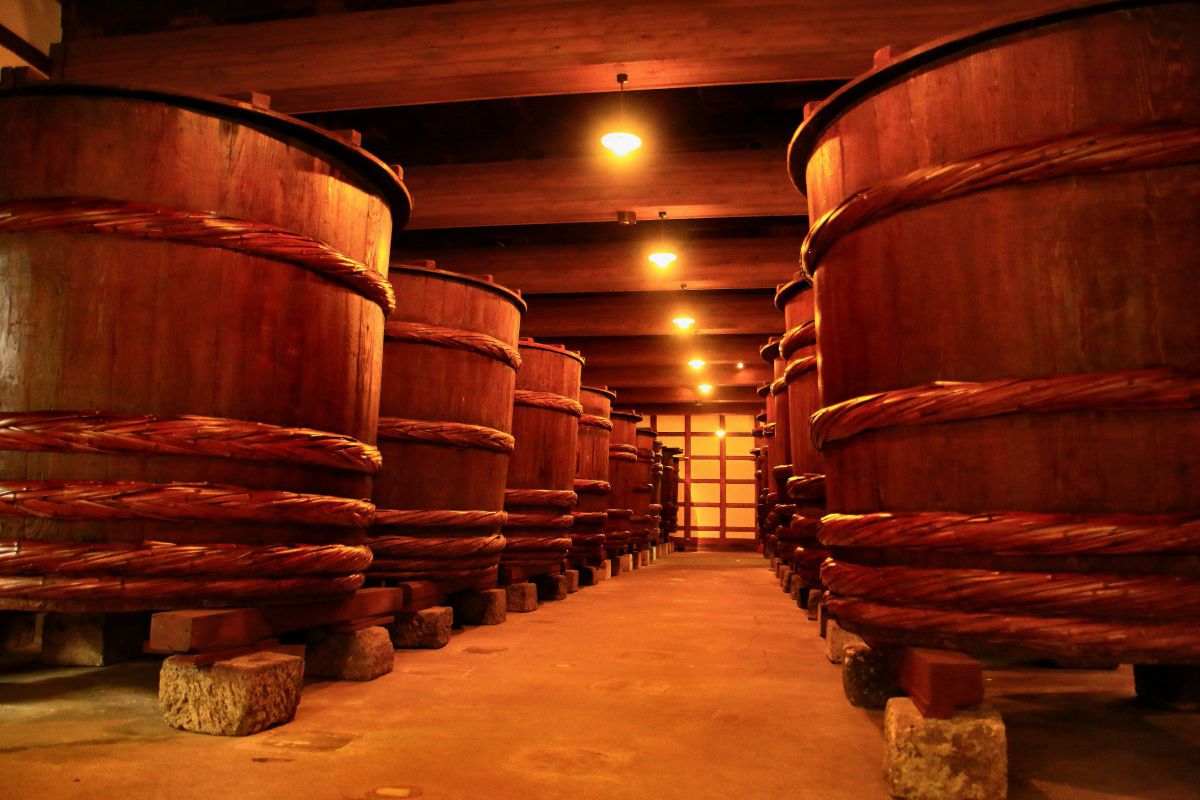
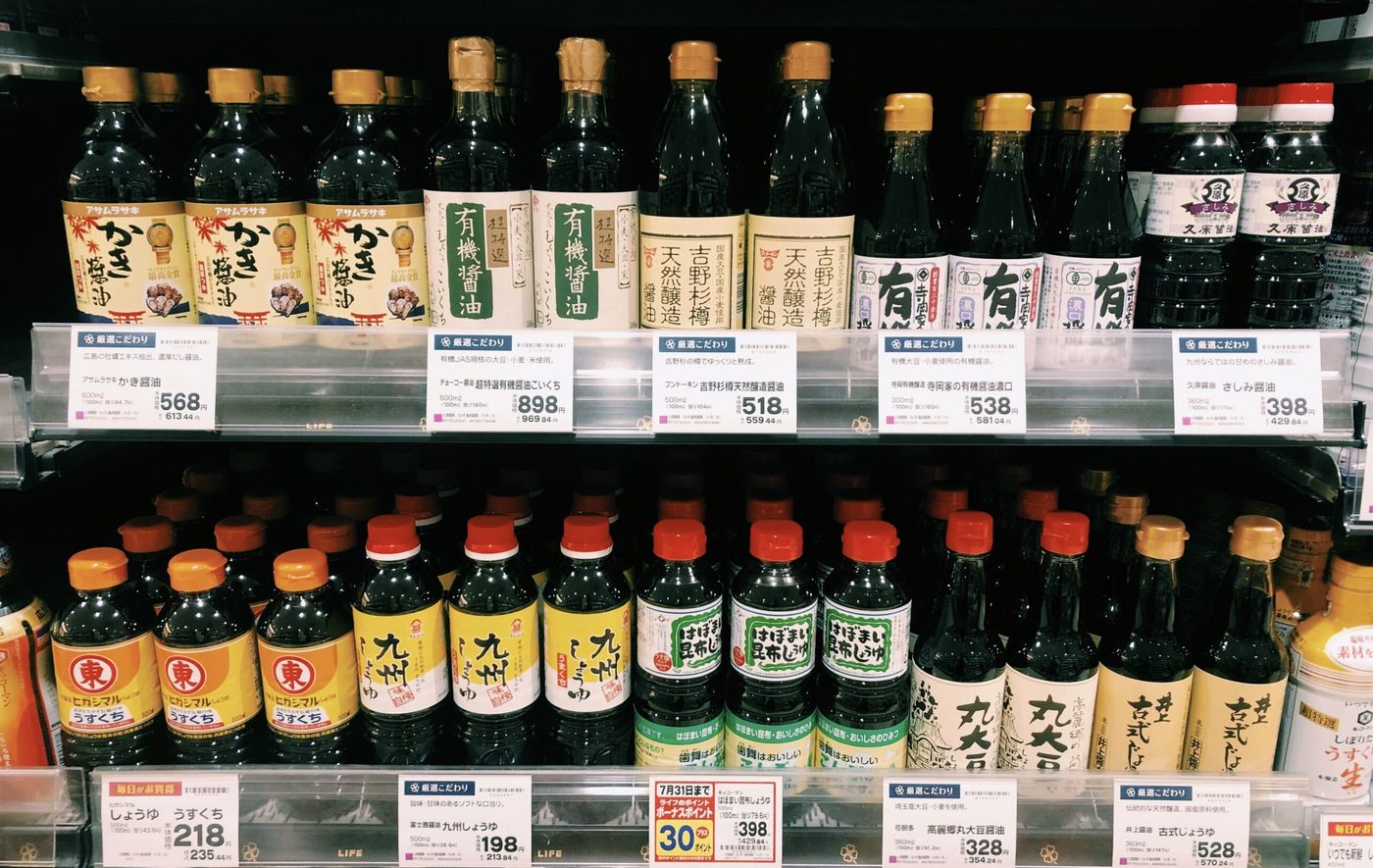
Regular Japanese soy sauce (醤油) is brewed with wheat. It is in sushi rice seasoning, noodle broth, marinades, dressings — nearly everything savoury. Your swap is tamari, or a label that says グルテンフリー.
The dashi wall
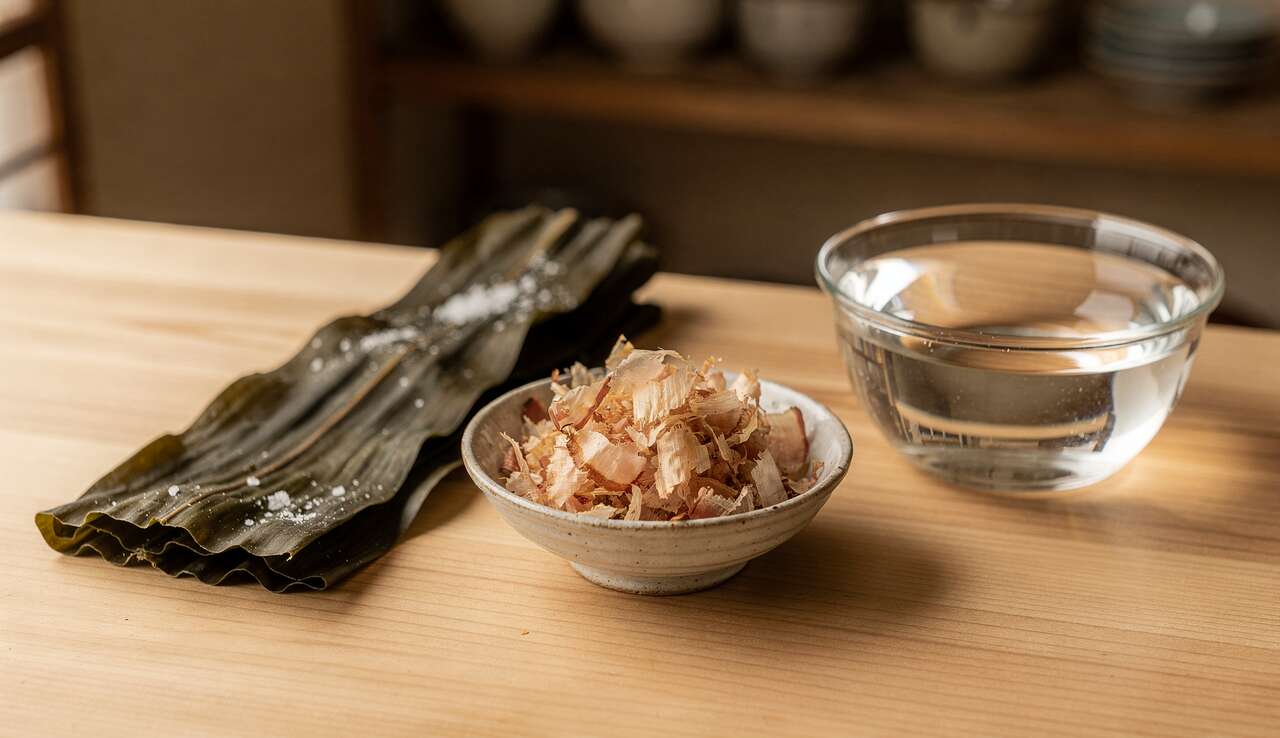
Dashi stock itself is usually safe, but the seasoned versions it swims in — mentsuyu, tentsuyu, sukiyaki broth — are built on soy sauce. “Just grilled fish” can arrive lacquered in it.
The label wall
Japan labels wheat, not “gluten”. Wheat (小麦) is one of 9 allergens that must be declared on packaged food — good news. But barley and rye are not required, and restaurants have no labelling duty at all.
小麦なしで、日本を食べる
02
Why this guide exists
Japan may be the most rewarding food country on earth — and for anyone who cannot eat wheat, one of the hardest to read.
Read the story
This guide began with a simple frustration: the information existed, but scattered — a chain’s allergen PDF here, a blog post there, a rumour in a forum. Nothing brought it together, and nothing said where each claim came from. So every listing here is checked against the shop’s or maker’s own published words, with the wording recorded as they wrote it — and where a listing shows a checked date, that is the date it was verified.
It will not promise you safety — no honest guide can. Menus change, kitchens change, and the last word belongs to the label in your hand and the staff in front of you. What it can do is hand you the words, the questions and the evidence to ask well — and then step aside for a very good meal.
03
The full guide
This app is the free companion. The complete Gluten-Free Japan Guide e-book goes deeper: every chapter from this app, expanded, plus city-by-city restaurant field notes beyond Tokyo, the printable chef card, and a gluten-free souvenir list.
Why Japan is the hardest country for gluten-free travellers
Reading ingredient labels — spotting wheat like a local
The convenience-store safe list, decoded
The chef card (printable, wallet size)
The dish-by-dish danger map
City guides: Tokyo, Kyoto, Osaka — and the regions most guides skip
Emergency phrases for pharmacies and clinics
$10· on sale now · every listing in this app is free to read · Premium (unlimited scanner and trip pack) unlocks with the license key issued with each purchase
04
Keep reading — free
1
Why Japan is the hardest country for gluten-free travellers
The three walls, explained — start with chapter 1 of the Guide tab.
2
10 things you can safely buy at a Japanese convenience store
Onigiri rules, salads, eggs and the yoghurt trap — Guide chapter 3.
3
The soy sauce trap: a hidden-wheat checklist
Twelve places wheat hides that nobody warns you about — Guide chapter 6.
4
Jūwari vs nihachi soba — what’s actually in your noodles
One is 100% buckwheat. The other is 20% wheat. Guide chapter 6.
5
Five Japanese phrases that keep you safe
All in the Tell tab, with tap-to-play audio.
6
Drinks cheat sheet: sake and shōchū yes, beer no
And the “malt” drinks in between — Guide chapter 6.
7
How to read Japan’s allergen labels, with photos in mind
The 9 mandatory allergens and where the box hides — Guide chapter 2.
8
Eating gluten-free outside the big cities
Rural Japan strategy: supermarkets, roadside stations, and the rice farmer’s table.
9
Field notes: eating my way through dedicated GF kitchens
The Places tab — tempura, izakaya and bakeries that use no wheat at all.
10
The celiac traveller’s Japan packing checklist
Tamari packets, translation cards, meds, and a spare stomach plan — Guide chapter 10.
Out on the street, the guide rides in your pocket — one tap from every shopfront.
05
Add it to your home screen
iPhone (Safari)
Tap the Share button in Safari
Choose Add to Home Screen
Tap Add — the guide now opens like an app, offline
Android (Chrome)
Tap the ⋮ menu in Chrome
Choose Install app (or “Add to Home screen”)
Confirm — it installs like a store app, no account needed
No app-store account, no review queue, no 30% cut — it installs straight from this page and keeps working on trains, in basements, and everywhere the wheat is hiding.
Label scanner
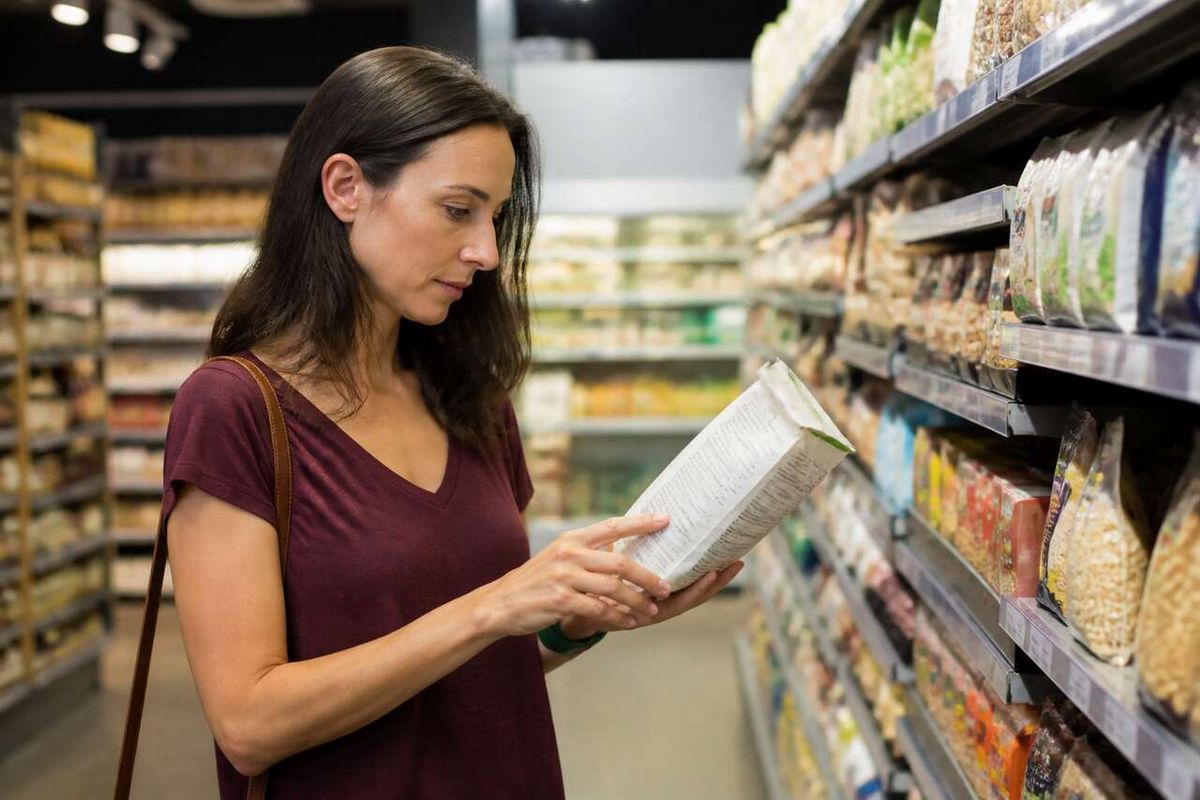
Take a photo of the ingredient label — or a restaurant menu — or pick one from your library. The photo is sent to Google’s cloud reader (Cloud Vision), which reads the Japanese text and drops it into the box below so you can check and fix it before the colour check runs. Scanning needs an internet connection, because the reading happens in the cloud, not on this device. You can still type or paste text by hand, or tap any word below.
Fit the back label in the frame
Example image — a demonstration of what to photograph, not a verdict on a real product.
How to take the photo — 4 steps
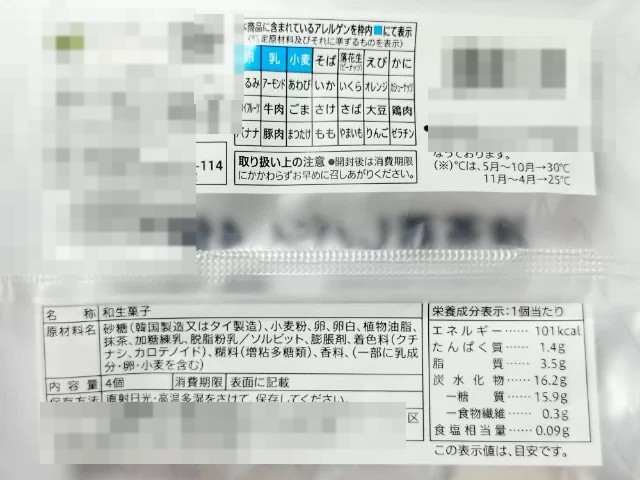
First, photograph the panel on the back of the pack headed 原材料名 — look for these exact characters. If the allergen list is in a separate panel, include that panel too.
Fill the whole frame with the ingredients list and the allergen box — get all of it in.
Shoot so the text reads straight and upright. For a wide label, turn your phone sideways too — the text comes out bigger.
Shoot somewhere bright, keep shadows and glare off the label, and let the camera focus before you tap.
Your photo is sent to Google (Cloud Vision) to be read — this app does not store it. Scanning needs an internet connection.
Your 5 free trial scans are used up. With Premium the scanner is unlimited — enter the license key that came with your guide.
Read the photo — whole, or cropped
Whole-label reading is the default — just tap “Read the whole photo”. If the print is small or the pack is curved, drag the corners to frame only the 原材料名 (ingredients) and アレルギー表示 (allergen) area and read just that part instead. Either way, only the part you choose is sent to the cloud reader.
Your label photo stays here — compare the recognised text below against this image, word by word.
Reading the label…0%
Tap a suggestion to add the exact dictionary word — no typos, no need to type it all:
Text read from your photo — flagged parts highlighted
Translation — for understanding the dishes
Machine translation, shown for understanding only. The wheat check above always runs on the Japanese original — dish names can translate literally or awkwardly, so keep the original beside it.
This scanner only flags words it finds. “Nothing detected” never means safe — a typo, a misread, or a word left out of the text can all hide wheat. Always compare the text above with the real label, and check the allergen box for 小麦 yourself.
⚠️
The cloud reader can misread small print. Before you trust the result, compare every recognised word against the real label in your hand and fix any mistakes in the box above. This scanner only detects words — it never declares a product “safe”.
No hit does not mean safe: barley malt, malt extract and some starch syrups slip past keyword checks, and shared fryers don’t appear on labels at all. When in doubt, don’t eat it — and for packaged food, always confirm 小麦 is absent from the allergen box.
The Guide
Twelve short chapters. Everything here reads offline once the app is installed — the one exception is the label scanner, which sends photos to a cloud reader and so needs an internet connection.
1
Why Japan is the hardest country
›
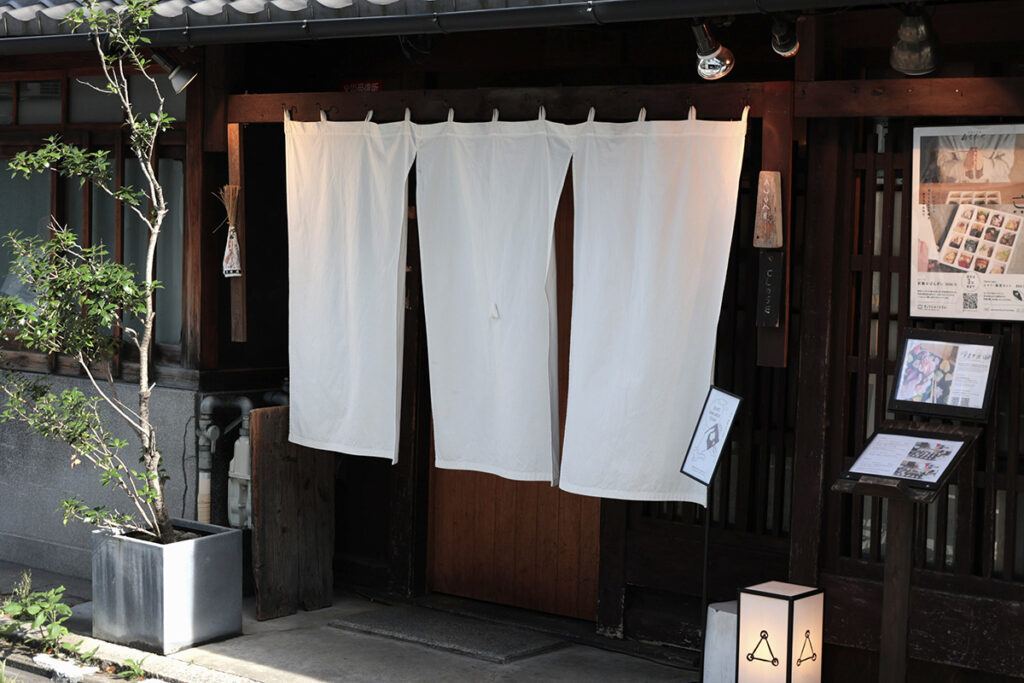
Behind the noren: most kitchens have never been asked about gluten — the asking is your job.
In Italy, a waiter hears “celiac” daily. In Japan, the word グルテンフリー is only just arriving — and three structural things work against you:
Soy sauce is wheat-brewed and is treated as a seasoning, not an ingredient worth mentioning. It is in sushi, broths, glazes, pickles and most “plain” grilled dishes.
Labels declare wheat, not gluten. Packaged food must declare 小麦 (wheat) — but barley (大麦) and rye (ライ麦) don’t have to be declared, and barley is the base of beer and mugicha barley tea.
Restaurants owe you nothing. There is no allergen-labelling duty for restaurants, and “no wheat” is often understood as “no bread or noodles” — the sauce on top doesn’t count in many kitchens’ minds.
The good news: Japan is a rice civilisation. Under the sauces, an enormous amount of Japanese food is naturally wheat-free — and a small, serious scene of dedicated gluten-free kitchens now exists. This guide is about reaching both.
2
Reading labels — spot wheat like a local
›
The answer is always on the back: find the allergen box before the front's promises.
Japan’s Consumer Affairs Agency requires 9 allergens to be declared on packaged food: shrimp, cashew, crab, walnut, wheat, buckwheat, egg, milk and peanut. Cashew joined the list in April 2026, and during the transition period (until 31 March 2028) products made, processed or imported before then may still carry labels that do not show it. Wheat is your friend here — if a product contains wheat as an ingredient, 小麦 must appear.
Find the allergen box (アレルギー表示) near the ingredients: a short list in brackets, e.g. (一部に小麦・大豆を含む) — “contains wheat and soy”.
Then scan the ingredients (原材料名) for the words the allergen box can’t cover: 大麦 barley, ライ麦 rye, 麦芽 malt, モルト malt.
醤油 (soy sauce) in the ingredients almost always means wheat unless the label says グルテンフリー — soy sauce’s own wheat doesn’t always surface clearly, so treat its presence as a warning.
“May contain” lines (本品製造工場では…) tell you about the factory, not the recipe. Celiacs: weigh them seriously for fried and baked goods.
Use the Label scanner in the Scanner tab: take a photo of the label, or pick one from your library, and it flags every risky word — the photo is read in the cloud, so the scanner needs an internet connection.
3
Konbini — shopping guide & verified staples
›
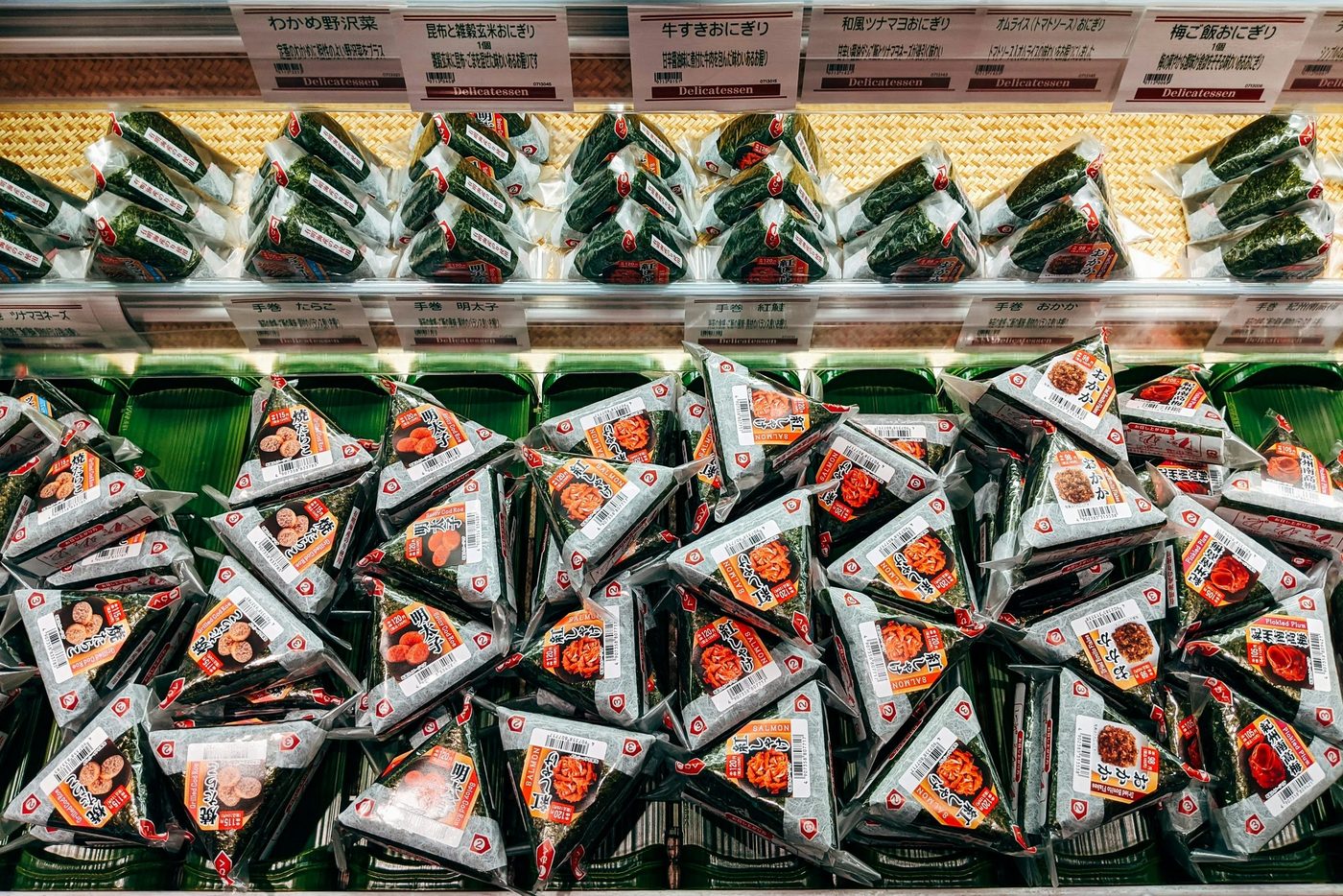
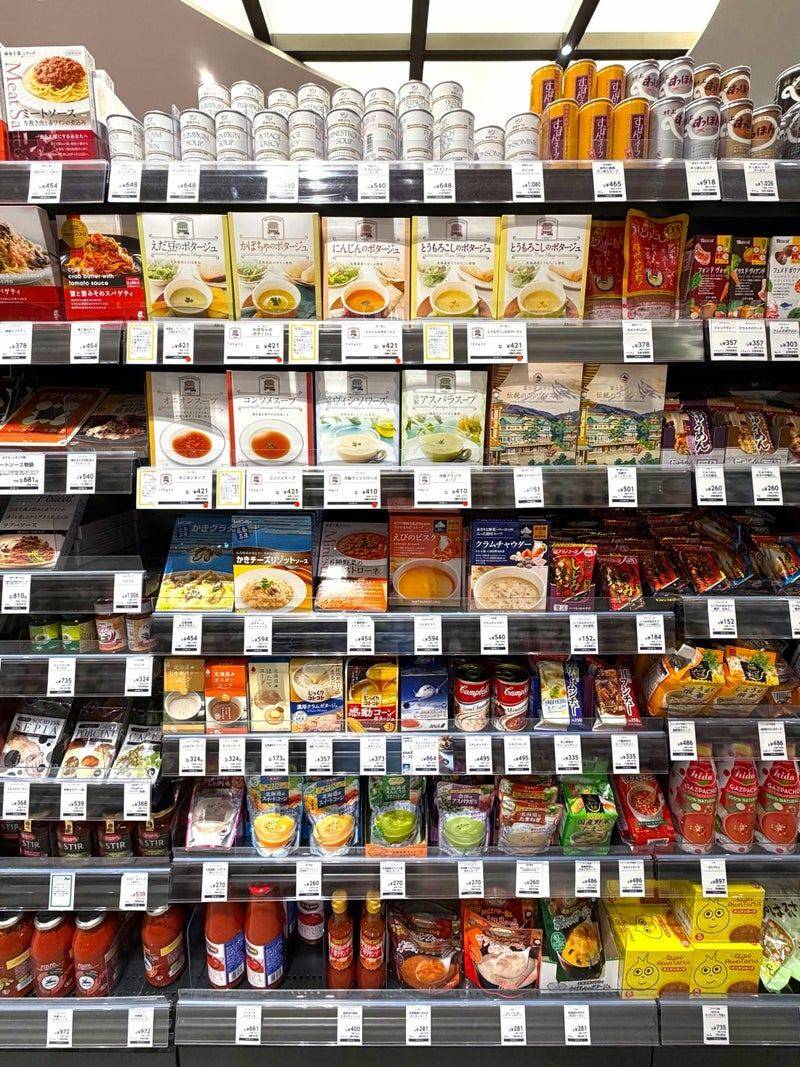
The onigiri wall: dozens of choices, and the label on the back decides which ones are yours.
This chapter does two jobs. First, the general rules for walking a konbini — the habits that hold in any branch. Then the shelf itself: the specific, repeatable products that travellers end up buying every day — each one checked against the chain’s or maker’s own official product or allergen page, with the official wording quoted as published. Nothing in the verified list is declared “safe for coeliac”: an entry records what the label and the official page state, no more. Items we could not verify against an official page are not listed as verified entries at all — the general rules below are shopping habits, not verdicts on specific products. One counting note: the allergen lines quoted in this chapter were published under the framework of their day — some say 8 mandatory items, others 28 items in total. The current framework is 9 mandatory items and 29 in total (Chapter 2), and the quotations are reproduced exactly as published.
How to walk a konbini — the general rules
Konbini are a celiac’s best friend in Japan — if you read the back, not the front.
Start plain, then check the pack. The plainest formats are where a check most often passes: plain onigiri, plain salads and edamame, plain yoghurt and cheese, plain mochi. “Plain” is a starting point, not a verdict — seasoned onigiri fillings are seasoned with soy sauce by default, flavoured yoghurts and “dessert” dairy often carry starch syrups and flavourings, and even eggs split on one word: the salt-seasoned ゆでたまご in the verified list below is a Buy, the soy-simmered 煮たまご an Avoid. Flip every pack over and check for 小麦 and 醤油 every time; recipes change.
Dressings are separate for a reason. A plain salad is one thing; its dressing is another — dressings are usually soy-sauce based. Skip the dressing or bring your own; the Check section of the verified list shows the pattern on real packs.
Rice crackers are glazed, not plain. Mochi is rice. Senbei rice crackers are usually glazed with soy sauce — check the pack; two crackers in the Avoid list below show exactly how the wheat arrives.
Skip whole categories. Sandwiches, pasta salads, fried chicken (breading + shared oil), inari sushi (the tofu pouch is simmered in soy sauce), and anything built around a sauce sachet are wheat by construction — no label check rescues them.
Read this first — the standing warning. Konbini private-brand food is reformulated often, and 7-Eleven’s range differs by region (the same product name can be a separate SKU in each region). The in-store package label — the 一括表示 on the pack in your hand — is always the final authority; every chain’s own FAQ says exactly this. Check the pack every time, even for a product on this list.
How to read the entries: Buy the chain’s or maker’s official allergen line lists no wheat. Check the product can look fine while the label gives a gluten-reader no usable signal — read the ingredients, not just the allergen box. Avoid the official line lists wheat, or wheat is a stated ingredient. All entries were checked on 2026-11-13. A † after a product name means the official wording was confirmed via the official site’s text as indexed in search on that date, and still awaits one direct page re-check — one more reason the pack in your hand rules. Labels record ingredients, not shared-line guarantees: FamilyMart states on its allergen pages that products may share manufacturing, cooking and selling processes with allergen-containing products, and no konbini fresh-food line is a dedicated gluten-free line.
Onigiri — buy
Buy塩むすび / 銀しゃりむすび 塩むすび †7-Eleven
Official wording: allergen line (8 mandatory items) 「なし」 — none. Rice and salt: the plainest item in the store.
Buy手巻おにぎり 熟成仕立て紀州南高梅 †7-Eleven
Official wording: 8 mandatory items 「なし」 — none. Plain ume only — the ume-okaka version under Avoid is a different product. The page checked was the Hokkaidō SKU; other regions sell the same name as separate SKUs, so the pack check still applies.
Buy手巻おにぎり 熟成紀州南高梅Lawson
Official wording: 「本品には特定原材料等28品目のアレルギー物質は含まれておりません」 — none of all 28 allergen items. The strongest wording of the three chains.
Category rule: seasoned and mixed fillings (高菜, 昆布佃煮, seasoned しゃけフレーク, 炊き込みご飯 styles) are seasoned with soy sauce by default — in our 7-Eleven checks, every seasoned filling sampled listed 小麦. Treat any filling other than plain salt or plain ume as a pack check, every time.
Eggs & protein — buy
Buy7プレミアム 味付き半熟ゆでたまご †7-Eleven
Official wording: 8 mandatory items 「卵」のみ — egg only. Salt-seasoned: the konbini protein anchor. Not the 煮たまご under Avoid — one word changes the verdict.
Buy7プレミアム サラダチキン スモーク †7-Eleven
Official wording: 8 mandatory items 「なし」 — none. Compare the “plain” version under Avoid before you assume anything about salad chicken.
Buy素材そのままサラダチキン †Lawson
Official wording: allergen information lists only 鶏肉 (chicken) of the 28 items. The page copy retrieved was dated 2024-09 — one more reason to let the pack rule.
Salads, sides & fruit — buy
Buy7プレミアム ポテトサラダ †7-Eleven
Official wording: 8 mandatory items 「卵」のみ — egg only. Mayonnaise-based; no wheat listed.
Buy7プレミアム フルーツミックス 180g †7-Eleven
Official wording: 8 mandatory items 「なし」 — none; sold nationwide. Mandarin, pineapple and yellow peach in light syrup, pouch type. Fresh whole fruit (bananas and the like) needs no label at all and every chain stocks it.
Yoghurt, dairy & cheese — buy
Buy明治ブルガリアヨーグルト LB81 プレーン (400g / 180g)Meiji
Official wording: the maker’s allergen information marks 乳成分 (milk) only; ingredients 生乳、乳製品. The fat-0 and drink-type versions are separate SKUs — check each one.
BuyQBB ベビーチーズ(プレーン)4個Rokko Butter (六甲バター)
Official wording: ingredients ナチュラルチーズ/乳化剤(一部に乳成分を含む); allergen 乳成分. Flavoured variants (明太子風味, ゆず胡椒入り and others) are different products — check each flavour.
Drinks — buy
Buyポカリスエット (Pocari Sweat)Otsuka
Official wording: allergen (specified items) 「該当なし」 — none. The rehydration staple; イオンウォーター lists 該当なし as well.
Buy緑茶 伊右衛門Suntory
Official wording: the maker’s ingredient table lists 緑茶(国産)/ビタミンC、酵母粉末, and the allergen column is blank — no allergens listed. Plain unsweetened green teas generally follow this pattern, but this is the one verified against the maker’s own table.
Rice snacks — buy (verified with the souvenir list, same standard)
Buyハッピーターン 96g (standard)Kameda Seika (亀田製菓)
Official wording: allergen: soy only. The maker notes the factory also produces wheat products. Variants differ — check each one.
Buyソフトサラダ 20枚Kameda Seika (亀田製菓)
Official wording: allergen: soy only — no powdered soy sauce. The maker notes the factory also produces wheat products.
Emergency calories & dessert — buy
BuySOYJOYOtsuka
Official wording: the maker’s site states the bars are made with no wheat flour at all (小麦粉を一切使用せず) and describes the dough as グルテンフリー; per-flavour pages list allergens such as 卵・乳成分・大豆 (nuts in some flavours) — no flavour sampled listed 小麦. Check the flavour in your hand: allergen lines vary by flavour. The portable, shelf-stable staple of this list.
Buyinゼリー エネルギー (マスカット味)Morinaga (森永製菓)
Official wording: the product page’s allergen grid marks all 28 items as not used (使用していません). A 180 kcal pouch. Morinaga notes it does not track shared equipment for the quasi-allergen grid, and other inゼリー flavours have different grids — check each.
Buyプッチンプリン 67g×3Glico (江崎グリコ)
Official wording: allergens contained (of 28 items): 卵・乳成分 — egg and milk. The pick-me-up item; Bigプッチンプリン lists the same.
Check — the label gives you no signal
CheckGreen & chopped salads with dressingcategory
The dressing is the wheat vector: 和風ドレッシング and チョレギ-style seasonings are soy-sauce based. Verified example from 7-Eleven’s own pages: ハムとポテトのサラダ lists 卵・乳・小麦 †, and most mixed salads sampled listed 小麦. A salad is only as good as its dressing line — read the allergen line on each pack. Undressed cut vegetables are a separate, simpler case (not individually verified for this list).
Check麦茶 (barley tea) — e.g. 健康ミネラルむぎ茶Ito En
The product is brewed from 大麦 (barley) — the main ingredient on the maker’s own product material — but barley is not one of Japan’s 29 allergen items, so the allergen field reads 「なし」 and nothing on the bottle flags it. Ito En’s official FAQ, asked whether people with a wheat allergy can drink mugicha, notes that barley protein differs from wheat protein but is structurally similar and advises care; it does not address coeliac disease. Recorded as stated: a barley drink whose label gives a gluten-reader no signal. Chapter 6’s drinks table already files mugicha under Avoid — this is why.
CheckBlended “health teas” — e.g. 伊右衛門 特茶 カフェインZEROSuntory
Official wording: the first ingredients are 大麦(カナダ、オーストラリア)、はと麦、炒り米、大豆… — while the allergen field lists only 大豆. The same invisibility as mugicha: barley appears in the ingredient list, never in the allergen box. Any 茶 whose ingredient list starts with 大麦 or はと麦 is a barley drink, whatever the branding.
Avoid — official lines that list wheat
Avoid手巻おにぎり ツナマヨネーズ †7-Eleven
Official wording: 8 mandatory items 「卵・小麦」. Japan’s best-selling onigiri filling is seasoned with soy sauce — the single most likely first mistake in a konbini.
Avoid手巻おにぎり 梅おかか †7-Eleven
Official wording: 8 mandatory items 「小麦」. The trap that looks like the safe choice: the おかか bonito flakes are simmered in sweet soy sauce (醤油). “Ume” on the front does not mean the filling is only ume.
Avoid7プレミアム 半熟煮たまご †7-Eleven
Official wording: 8 mandatory items 「卵・小麦」. 煮たまご is simmered in soy-sauce broth; the 味付き半熟ゆでたまご above is salt-only. The cleanest one-word lesson in the whole konbini.
Avoid7プレミアム サラダチキン プレーン †7-Eleven
Official wording: 8 mandatory items 「卵・乳・小麦」. The counterintuitive trap: at 7-Eleven the “plain” salad chicken lists wheat (and egg and milk) while the smoked one lists none of the 8 — the flavour name points the wrong way. ほぐしサラダチキン also lists 小麦. Salad chicken is a per-product check, never a category assumption.
Avoidおにぎりせんべい †Masuya (マスヤ)
Official wording: 7-Eleven’s product page lists 8 mandatory items 「卵・小麦」; the maker’s ingredient list shows しょうゆ seasoning. A rice cracker shaped like an onigiri, seasoned with soy sauce.
Avoid雪の宿 †Sanko Seika (三幸製菓)
Official wording: the maker’s product pages list 粉末しょうゆ(小麦・大豆を含む) in the standard recipe; allergen 小麦・乳成分・大豆・ゼラチン. A sweet, milky rice cracker that reads as plain — the wheat arrives via powdered soy sauce.
Avoidカロリーメイト ブロックOtsuka
Official wording: first ingredient 小麦粉 (wheat flour); allergens 卵・乳成分・小麦・大豆・アーモンド. The default Japanese “emergency food” bar is a wheat bar — from the same maker as SOYJOY and Pocari Sweat. Brand tells you nothing; the product line does.
The pattern, once you see it: plain salt onigiri, plain ume onigiri, the salt-seasoned egg, potato salad, the fruit mix, plain yoghurt, plain baby cheese, Pocari Sweat, plain green tea, SOYJOY and inゼリー carry official allergen lines with no wheat — and almost everything seasoned, even a “plain” salad chicken, lists wheat. When a product is not on this list, that means it was not verified, not that it failed: the pack in your hand, checked against Chapter 2, is the list that matters.
4
Hotel breakfast — the meal already in your bill
›
Most visitors book breakfast without deciding to: on Japanese booking sites, plans are sold as 素泊まり (room only) or 朝食付き (breakfast included) — and at the big business chains (Toyoko Inn, Super Hotel, Route Inn) breakfast is bundled into the room rate for every guest, whatever the plan label says. Where breakfast is priced separately, the premium over room-only averages only about ¥770 a night at business hotels (HotelBank’s analysis of September 2026 listings). So you “have” a hotel breakfast by default, every morning of the trip, in the format least suited to verification: the buffet. This chapter is about not being ambushed by it.
Two structural facts before anything else
Restaurants in Japan have no legal duty to label allergens. Allergen labelling law applies to packaged food; restaurant and buffet display is voluntary — a “reference display” (参考表示). APA Hotel’s own restaurant terms state this explicitly. A buffet with no labels is not a hotel cutting corners; it is the legal default.
Japan’s allergen system tracks wheat (小麦), not gluten. The mandatory packaged-food items are shrimp, crab, walnut, wheat, buckwheat, egg, milk and peanut (cashew became the ninth on 2026-04-01, with a transition period to 2028-03-31). Barley and rye appear nowhere in the system — not mandatory, not even on the recommended list. A dish can be legitimately “wheat-free” and still contain barley: barley miso in the soup pot and barley tea on the table are invisible to the system, and no amount of label-reading will flag them. They are this chapter’s two invisible mines.
Industry background, for scale: a Consumer Affairs Agency / national ryokan-hotel association document on food-allergy response found that, among the facilities surveyed, only 4 of 37 provided any allergen labelling (breakfast buffets included) and 23 said labelling would be difficult, because menus change daily and courses carry many dishes. The document is from 2014 — use it for the operating logic you will still meet, not as current statistics.
Know your format — the risk map
“Breakfast included” means five different things in Japan, and what verification even means changes with each one: your eyes (buffet), the advance conversation (set meal, ryokan), or nothing at all (continental).
Format
Risk map
Buffet — business hotels, most city hotels
Highest uncertainty. You serve yourself from shared dishes; the hotel’s role is information, not adaptation. High-risk zones: the bread corner and its shared toaster (crumbs everywhere — even wheat-free bread, which is rare, would be toasted in it); the noodle corner (udon is wheat; soba is commonly 二八 — 20% wheat — and cooked in shared water); fried items (flour and panko batter, shared fryer oil); curry (Japanese roux is thickened with wheat flour); simmered and dressed dishes (soy sauce and dashi); shared tongs, which guests move between dishes; and the miso soup pot — see the miso roulette below.
Set meal / 和定食 — choice sets, smaller hotels
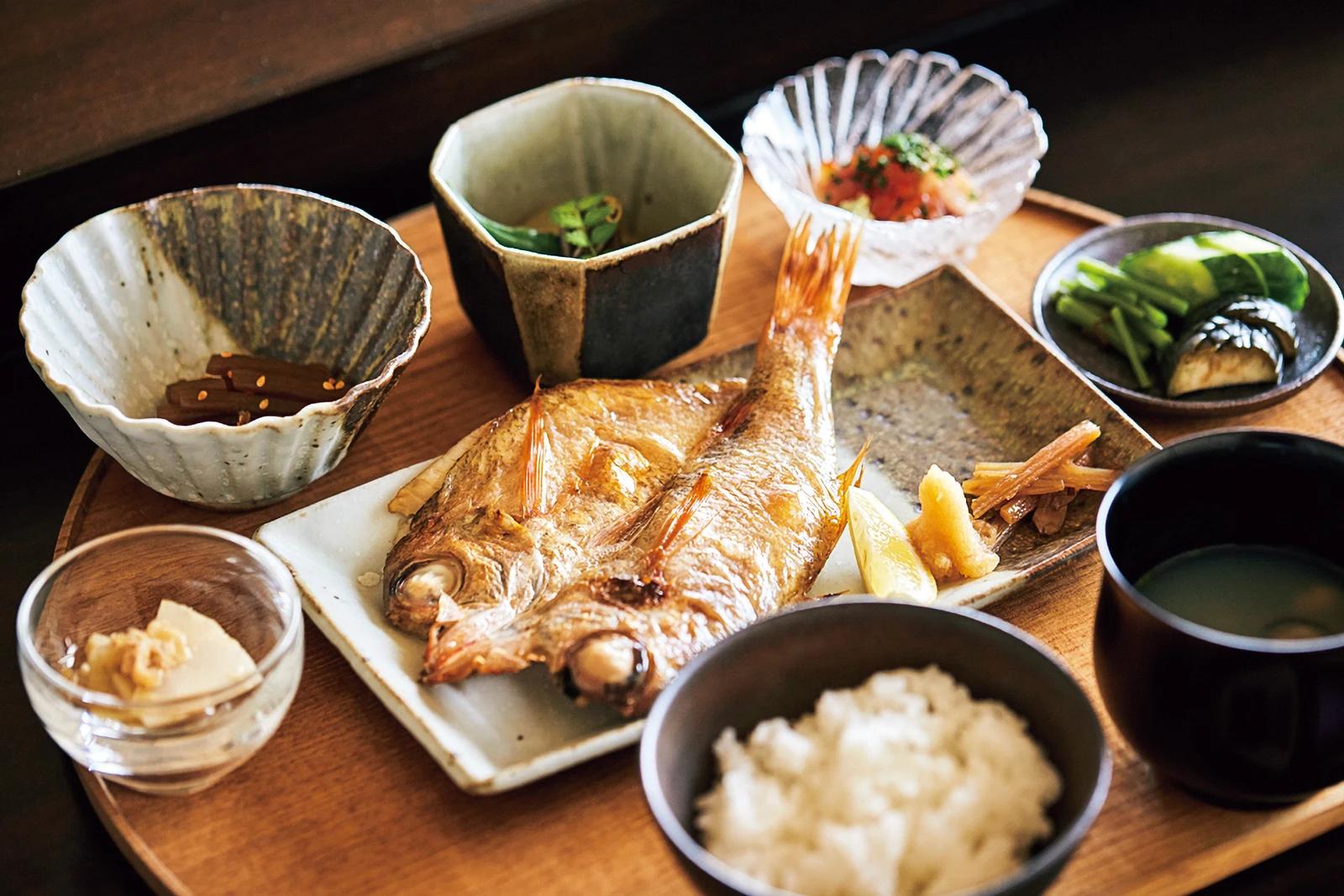
One tray, cooked to order. More adaptable than a buffet — a kitchen can leave things off a tray — but less inspectable: you cannot see what went into the simmered dish, or into the tamagoyaki (dashimaki egg commonly contains dashi made with soy sauce). Verification is the advance conversation, not your eyes. Choose the plainest set (grilled fish and rice) and confirm the soy-sauce-based items — simmered dishes, pickle marinades, the fish’s tare — with staff.
Ryokan breakfast — part of a kaiseki stay
Many small dishes, heavily seasoned: simmered vegetables, pickles, miso soup, grilled fish, rice. Two-sided: ryokan are the properties most used to advance dietary requests — ask at booking, typically 2–3 or more days ahead, in writing where possible — and the cuisine is the most soy-sauce- and dashi-saturated of any format. A confirmed low-allergen menu (the Kyoritsu Resort model below) is the strongest arrangement available in Japanese accommodation. If a property cannot do it, there is no buffet to fall back on: bring backup food and agree in advance where you may eat it.
Continental — bread-centred (some Toyoko Inn properties, café partners)
The whole offer is bread and coffee. For a coeliac traveller this format is simply a non-breakfast: take the coffee or juice, eat your own food, and do not count the “included breakfast” as value when you compare prices.
Onigiri style — Toyoko Inn onigiri properties
Rice balls look promising, but each filling is a recipe: kombu is typically simmered in soy sauce, and tuna-mayo depends on its seasoning. Individually wrapped onigiri with ingredient labels are verifiable; unwrapped, venue-made ones need a staff question. The accompanying miso soup is the same roulette as the buffet’s.
What the big chains actually say
Recorded as the chains publish it, checked 2026-11-13. No entry here declares a hotel or a dish safe — it records what each chain states, so you can see in advance who can tell you anything at all.
Chain
Published position
Route Inn
The most explicit budget-chain policy (official allergy page, in Japanese and English). (1) The hotel does not provide allergen labelling on its food and drink. (2) All cooking happens in a single kitchen, so allergens may be mixed in during preparation and serving. (3) A low-allergen retort curry — made without the 9 specified items, wheat among them — is available on request; ask staff. The chain notes other allergens are not removed and that absence of a reaction cannot be guaranteed. (4) Guests with food allergies may eat food they prepared themselves inside the hotel restaurant — an official, chain-wide permission; just tell staff.
Dormy Inn
Every property’s breakfast page carries the same chain notice: at Dormy Inn, breakfast is cooked using the same utensils and oil as dishes containing the 9 allergen items, including wheat. No per-dish allergen menu for the buffet is published. The free evening yonaki soba (ramen) is stated to use noodles made with wheat flour and egg — relevant because you meet it the night before, in the same kitchen.
Kyoritsu Resort (Dormy Inn’s parent — the ryokan side)
The clearest “ask in advance” model (official allergy information page). For set-meal properties, the only accommodation offered is a low-allergen menu with the 29 items (9 mandatory + 20 recommended) removed — apply by email or phone at least 2 days before the stay; later requests are refused. Regular menus carry no ingredient labelling and allow no substitutions or cooking changes, explicitly because the property cannot ensure safety otherwise. A sample low-allergen breakfast menu is published — grilled fish, white rice, miso soup specified as rice miso (米味噌), pickles, fruit compote — a useful picture of what a Japanese allergy breakfast looks like when a property organises it. At buffet venues there is no low-allergen menu, only display of the 8 specified items. (That 8-item display predates cashew's addition to the mandatory list — Chapter 2 explains the current framework of 9 mandatory items, 29 in total.)
APA Hotel
Chain-wide restaurant terms: at buffets, dishes carry a reference display of 13 items — the specified allergens including wheat, plus beef, pork, chicken, alcohol and soy — and, in APA’s own words, no individual allergy accommodation is made at buffets (食物アレルギーの個別の対応は行っておりません). Everything is cooked in one kitchen with shared utensils; allergens in dashi, extracts, binders and seasonings cannot be fully captured or removed, and complete removal is not guaranteed. Per-property FAQs consistently add: contact the restaurant directly, in advance — “we will accommodate as far as possible.” Two exceptions on official property pages: APA Hotel Ueno Hirokoji houses Gluten Free T’s Kitchen, whose breakfast is three gluten-free-based set menus (American breakfast / vegan pho set / salad bowl set) — their own caveat is that food is cooked in a limited space with no guarantee covering all allergies, so ask before ordering. APA Hotel Hiroshima Ekimae Stadium-guchi states that a grilled onigiri (焼きおにぎり) is available for wheat-allergy guests in place of the burger-bun breakfast.
JR West Hotels (Granvia, Viscount and others)
Official allergy guidance: for restaurants, make allergy requests at least 2 days before the visit; depending on the restaurant, menus addressing the 8 specified ingredients can be offered, and where the kitchen format makes changes impossible you may be told so. Buffets are different by design: tell staff on the day, and they will tell you which dishes use the 8 specified ingredients so you choose yourself — no advance arrangement replaces this. The page explicitly warns that buffet tongs and tableware are shared across dishes and that cross-contact occurs, including from other guests using one tong for several dishes. Allergy menus do not guarantee complete removal; if that is unacceptable, the hotel may decline to serve you — in that case, bringing your own food is accepted, with advance notice. Budget sibling Via Inn (same group) is the opposite default: its official breakfast pages publish no allergen information, and venue rules prohibit bringing outside food into the breakfast room — the front desk, not the venue, is your route there, and your room is where you would eat.
Toyoko Inn
Breakfast is free for all staying guests at every property, in a format fixed per property — buffet style, “具おにぎり” onigiri style, sandwich style, or continental bread-and-coffee. No chain-level breakfast allergen policy or allergen menu was found on Toyoko Inn’s official site (checked 2026-11-13); its FAQ does not publish allergen answers publicly, so anything specific means phoning the individual property. Practical notes: at most properties, food taken at the venue may be carried back to your room to eat (not outside the hotel), which also makes a room breakfast with your own items unremarkable; menus rotate daily, and some properties serve soba or mixed-grain rice at breakfast — both traps from the risk map above. Treat this blank as information, not as reassurance: re-check before relying on it.
Super Hotel
Breakfast is a free buffet built around organic vegetables, baked breads and a soup bar; the official breakfast page gives allergen notes for individual items where relevant (its European BIO roll, for example, is noted as “the allergen is wheat only”). A press release dated 2026-02-20 announced that a 100% rice-flour naan (これ米粉ナン!?), free of 28 allergen items and made in collaboration with the gluten-free bakery BIOSSA, began rolling out at Premier-series properties from 2026-02-21, served at breakfast. Recorded as the chain states it: the naan is served within a normal buffet environment and the release does not describe separate serving arrangements, so the usual buffet cross-contact caveats apply — and which properties serve it on a given date needs a per-property check. (Count note: “28 allergen items” follows the framework in force when that release was published; the current framework totals 29 items — see Chapter 2.)
Richmond Hotels
Breakfast is often a tenant restaurant (Royal Host, Sizzler) or a choice of set menus. The per-property FAQ answer recurs across the chain: “We cannot make menu changes. An allergen list (アレルゲン一覧表) is available — please ask staff.” The chart exists; removal and substitution do not. Worth knowing before you pay for a breakfast you will not eat: some properties (Sapporo Ekimae, Miyazaki Ekimae) let guests exchange an unused breakfast voucher for souvenirs or a partner-café voucher.
Hotel Monterey (extra example)
A detailed published policy at an upper-mid chain: guests with severe food allergies are asked, in principle, to refrain from the breakfast buffet for their own safety; buffet dishes carry pictogram allergen labels for 9 items on part of the menu; shared tongs and self-service cross-contact are explicitly flagged; allergy requests must be made at reservation time, and no fully allergen-free dedicated menu is offered.
Traveller reports — community sources, labelled as such, not policies: at the ANA Crowne Plaza Okayama (review of a June 2025 stay), a coeliac guest found no allergen information on any buffet item; one English-speaking staff member arranged a gluten-free pancake once, but on other mornings staff could not communicate enough to give her confidence in the buffet — even an international brand in a regional city can mean no labels and ad-hoc help. At the other end of the range, the Sheraton Grande Tokyo Bay’s breakfast buffet has been reported well labelled for common allergens, with gluten-free bread available — labelling exists, at resort and full-service level. And small set-meal properties can sometimes adapt a whole tray when asked ahead, as one Takayama ryokan reportedly did.
The five traps — plus the invisible one
The shared toaster. One toaster serves every guest at the bread corner; crumbs are everywhere. Bread, pastries, pancakes and French toast are wheat-based by default anyway.
The miso roulette. Miso soup is at every Japanese breakfast, and its base varies: rice miso (米味噌), soybean miso (豆味噌), barley miso (麦味噌) — standard in parts of Kyushu and Shikoku and in many blended misos — and some products use wheat. The kitchen may simply buy “miso” without the type registering as an allergen question, and because barley sits outside the allergen system, nothing in the hotel’s paperwork flags it. The only resolution is to ask which miso is used — Kyoritsu Resort’s model menu specifies rice miso in writing, which shows properties can know when they organise it.
Soy sauce and dashi inside “plain” dishes. Tamagoyaki, simmered dishes, dressed salads — and the trap inside the trap: packaged natto is fine, but its accompanying tare sauce packet typically contains soy sauce. Skip the packet.
The noodle corner and its shared water. Udon, ramen, yakisoba, pasta salads — and soba that is usually a wheat blend even before the shared cooking water.
Shared tongs. Flagged in writing by JR West Hotels and Hotel Monterey: tongs are shared between dishes, and other guests move them around. Arriving early in the service means fewer guests have cycled the tongs, and staff have more time to answer questions — traveller practice, not a hotel policy.
The invisible one: mugicha (麦茶). Roasted barley tea is the default cold tea in many hotel restaurants and in-room jugs. Japanese wheat-allergy guidance treats the extracted protein as negligible — but barley is a gluten grain under coeliac standards, mugicha is not tested to any gluten-free threshold, and coeliac guidance is to avoid it. Water, green tea, black tea and coffee are the simple swaps. Chapter 3 shows the same invisibility on the konbini shelf.
Building a plate you can verify
Sealed, factory-packaged items — yoghurt cups, packaged cheese, packaged natto (skip the tare packet), single-serve jams, packaged juices and milk. Packaged food in Japan carries legal allergen labelling for wheat, so the label is real information — the Chapter 2 skill applies at the buffet exactly as at the konbini.
Plain white rice from the rice cooker — after one question: some hotels serve barley-blend rice (麦ごはん) or mixed-grain rice instead.
Whole fruit (bananas, oranges), and eggs still in the shell. Onsen tamago and boiled eggs are usually served pre-shelled, in liquid — treat those as unverified; a shell-on boiled egg is the clean version.
Plain grilled fish at a live station, cooked to order without sauce — verifiable only by asking at the station.
Everything else — every sauce, simmered dish and soup — is unverified by default until a person or a label tells you otherwise.
Ask before you arrive
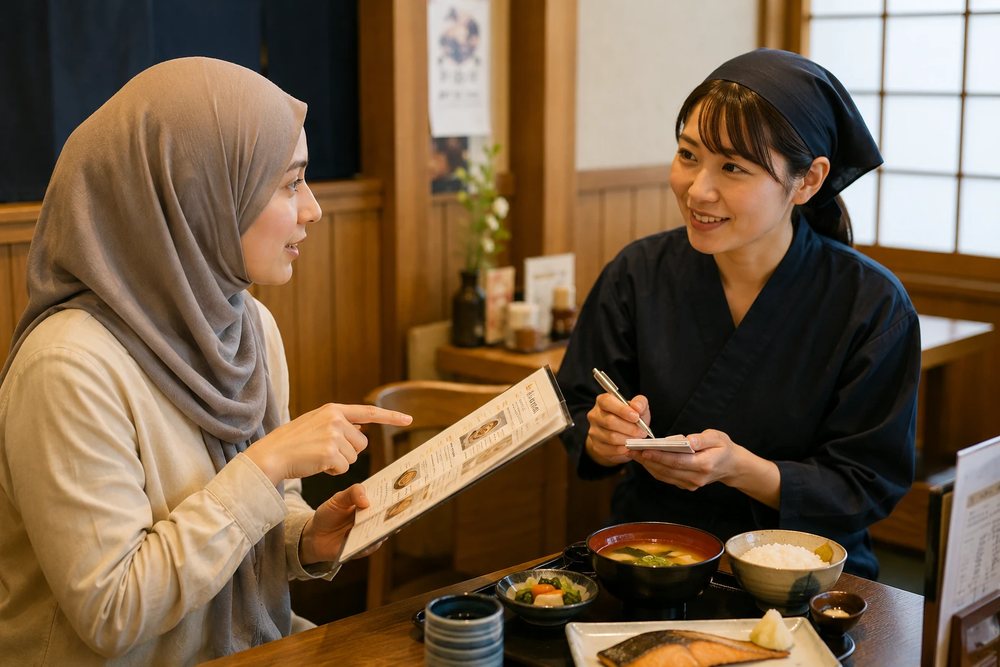
Email the property directly, at least 3 days ahead: the official windows found are 2 days minimum at JR West Hotels and Kyoritsu Resort, and 3 days in the ryokan industry guidance. Do not rely only on the booking site’s message box — travel-advice sources warn it often never reaches the kitchen. Ask for a reply in writing: it doubles as something to show restaurant staff on the day. Then show the chef card twice — at check-in, so the note reaches the kitchen before morning, and again at the breakfast venue entrance. At chains with an allergen chart (Richmond, APA buffets), ask for the chart itself, not a verbal summary. And use the wording kitchens act on: 食べられません — “I cannot eat it” — not 苦手です (“I’m not keen on it”), which staff hear as a preference. Pair it with the disease name: セリアック病.
Ready-to-send email — English (send it to the property, not just the booking site):
I have a reservation under the name [NAME] from [DATE] for [N] nights (booking reference: [XXX]).
I have coeliac disease, a medical condition, and I cannot eat gluten. That means no wheat, barley or rye — including regular soy sauce, which is brewed with wheat, and barley tea (mugicha).
Could you please tell me:
Is allergen or ingredient information available for the breakfast dishes? Could you share it with me in advance?
Could any part of breakfast be prepared for me without wheat/gluten? If that is not possible, I completely understand — knowing in advance already helps me.
If I bring my own food, may I eat it in the breakfast room, or should I eat in my room?
I understand you may not be able to guarantee zero cross-contact. Ingredient information alone is a great help.
On the day — one question at a time, with the chef card in hand:
English
Japanese
Do you have an allergen list for the breakfast dishes?
朝食のアレルゲン一覧表はありますか。
Which kind of miso is used in the miso soup — rice miso, soybean miso, or barley miso?
味噌汁のお味噌は、米味噌・豆味噌・麦味噌のどれですか。
Is the rice plain white rice only, with no barley mixed in?
ご飯は白米だけですか。麦は混ざっていませんか。
Does this dish contain soy sauce or wheat?
この料理に、醤油や小麦は使われていますか。
I cannot eat wheat, barley or rye, including soy sauce and barley tea.
私は小麦・大麦・ライ麦を食べられません。醤油と麦茶もダメです。
May I eat food I brought myself here (or in my room)?
持参した食事を、ここ(または客室)で食べてもいいですか。
Could the grilled fish be prepared plain, without sauce?
焼き魚は、たれなしの塩焼きにできますか。
Plan B is a feature, not a failure
Know your own-food position per chain before you need it: Route Inn officially welcomes your own food in the restaurant; JR West Hotels accept it when they decline to serve you; Via Inn’s breakfast venue prohibits outside food, so eat in your room; Toyoko Inn lets you carry venue food back to your room, which makes a room breakfast unremarkable.
Carry a backup breakfast kit — your own gluten-free bread, cereal bars (Chapter 3’s SOYJOY and inゼリー travel well), instant rice meals — so a failed buffet costs you nothing but the walk back to the room. On multi-night stays, pick one nearby gluten-free breakfast option from the Places tab as the standing Plan B.
Do the breakfast maths consciously. At bundled chains, skipping breakfast loses you nothing extra — do not let “it’s paid for” pressure you into an unverifiable plate. Where breakfast is a paid add-on or a voucher, ask at booking whether an unused voucher can be swapped, or simply book room-only (素泊まり).
Reading a “no”. Japanese properties decline in specific, polite formulas — 対応致しかねます (“we are unable to accommodate”), 保証できません (“we cannot guarantee it”) — that mean we can’t verify, not we won’t try. A property that says no clearly is giving you useful information: thank them, and go to Plan B with a clear head. And if breakfast does go wrong despite everything, the emergency screen is one tap away.
Staying at a ryokan with dinner included? This breakfast is the smaller half of that negotiation — the kaiseki dinner is settled by the same kitchen, even earlier, and it is arranged in the same advance message. Chapter 5 covers the dinner course by course, with copy-paste messages to send before you arrive.
5
Ryokan kaiseki — the dinner you arrange before you arrive
›
A ryokan dinner — kaiseki, a set sequence of eight to twelve courses — is the meal many travellers look forward to most in Japan, and the hardest to make gluten-free. There is no menu to order from and nothing to point at: the courses are fixed by the inn, around the season and the plan you booked. What replaces the menu is a negotiation, held in writing, before you arrive. This chapter teaches that negotiation. It records what inns publish about their own allergy handling, checked 2026-11-13 — it does not declare any inn, menu or dish safe, and a kitchen's final word always outranks anything written here.
Dinner and the next morning's breakfast come from the same kitchen and are settled in the same conversation — one advance message covers both. Chapter 4 covers the morning half of that stay.
Why this meal is different — it is cooked before you arrive
A kaiseki menu is planned days ahead: ingredients are ordered in advance, and simmered dishes and stocks are prepared before check-in. By the time you reach the front desk, that night's dinner largely exists. This is why the deadlines inns publish for allergy requests — 2, 3, 5 and 7 days before the stay, depending on the property — are not bureaucracy: they are the kitchen protecting its production schedule. The same request that is reasonable one week out is physically impossible at the front desk.
The wheat map, course by course
Where wheat hides in a kaiseki meal is a property of the course, not of an ingredient list you will ever be shown. Underneath all of it sit three carriers that touch almost every course: soy sauce (brewed with wheat — the single biggest structural issue), dashi (the stock that carries soy sauce into soups, simmered dishes and egg dishes), and miso (rice or soybean miso versus barley miso — and barley, as Chapter 4 explains, is invisible in Japan's allergen system). A request that only says “no wheat flour” will be served a meal seasoned exactly as usual: the request has to name the carriers. The templates below do.
Course
Where the wheat is
The realistic ask
Sakizuke先付 — the opening appetiser
The dressing: soy-based dressings over vegetables or tofu
Plainly dressed, or substituted — a small course, an easy swap
Wanmono椀物 — the soup course
Clear soup is seasoned with light soy sauce; miso soup carries the miso-type question — barley miso is gluten, invisible in the allergen system
Ask which miso; ask whether the soup can be salt-seasoned
Otsukuriお造り — sashimi
The fish is not the problem; the soy-sauce dip is, plus occasional soy-marinated items on the plate
Tamari for the dip if the kitchen has it, or salt and lemon — the most naturally adaptable course
Yakimono焼き物 — grilled fish or meat
Glazes and marinades: tare, teriyaki-style, yūan-yaki citrus-soy
The classic ask: 塩焼き — plain salt-grilled, no tare
Nimono煮物 — simmered dish
Simmered in dashi, soy sauce and mirin — the wheat is in the liquid, so it cannot be picked off. Prepped ahead, so the least changeable course on the day
Advance-only: simmered in salt-and-kombu seasoning, or replaced
Mushimono蒸し物 — steamed dish, often chawanmushi
Chawanmushi is dashi and light soy sauce set with egg
Substitution, or leave the course out
Agemono揚げ物 — the fried course
Wheat batter, and a fryer shared with everything else the kitchen fries
Do not ask for gluten-free tempura in a general kitchen — ask for the course to be swapped for a grilled or steamed item
Sunomono酢の物 — vinegared dish
The vinegar is rarely the issue; the dressing is — sanbaizu and most seasoned vinegars contain soy sauce
Plain vinegar dressing, or substitution
Nabemono鍋物 — hotpot, on some plans
Sukiyaki's warishita broth is soy-based; shabu-shabu's ponzu usually contains soy sauce
Ask about a salt-and-kombu broth, or flag the course for substitution
Shokuji食事 — the closing set: rice, soup, pickles
Seasoned mixed rice is cooked with soy sauce; barley rice exists; a noodle finish may replace the rice; pickles split into salt pickles and soy-sauce pickles. Miso soup again
Plain white rice — and rice instead of noodles
Mizumono水物 — dessert
Fruit is fruit. Wagashi vary — many are rice- or starch-based, some use wheat — and Western-style desserts are wheat-based by default
Fruit, if the planned dessert is a baked item
Ryokan breakfast is the same kitchen the next morning, on one tray — grilled fish (watch the tare), dashimaki egg (dashi and soy sauce), a simmered dish, miso soup (the same question), seasoned nori (often soy-seasoned), pickles, rice or rice porridge. Everything said about dinner applies; there is no separate negotiation on the morning itself, which is why breakfast goes into the same advance message.
How to negotiate — ask for courses, not chemistry
The unit of negotiation is one course. Inns that accommodate describe their response as substituting or removing individual courses, where possible — not rebuilding the menu. Ask for the thing inns actually offer: swap this course, leave that one out, salt-grill the fish, plain white rice.
What inns say they cannot do is the opposite: re-engineering the seasoning system of the whole menu, or running a separated kitchen line. Wheat and soy live inside seasonings, and the ryokan-hotel industry association's model wording warns that allergens carried inside seasonings may be impossible to fully accommodate. One Kanazawa ryokan's FAQ (Ryotei Kaiseki Notoya) makes the same split in writing: a dish inside the course can be changed if you contact them a week ahead, while allergies to components such as wheat flour are stated to be difficult, with no separated utensils or cooking areas. You are asking for the hardest category of change in this cuisine — which is exactly why early, specific, written requests succeed more often than vague ones.
Name the disease, not a preference. Several inns state in writing that they handle allergies, not dislikes (苦手). セリアック病 — coeliac disease — plus 食べると体調を崩します, “it makes me ill”, is what moves a request out of the preference pile.
Name the carriers, not just “gluten”.グルテン is not a working kitchen word in most ryokan. 小麦, 醤油, だし, 麦味噌 and 麦茶 are.
Accept the no-guarantee clause gracefully — and decide with it. Every serious policy contains one, and the final decision about eating stays with the guest. If you need a certainty the kitchen cannot give, take the own-food or room-only branch below — by arrangement, not by surprise.
Three good outcomes
A “no” to the regular menu is not the end of the negotiation. Inns' published policies describe three workable landing points — and all three are arranged the same way: early, in writing, specifically.
An adjusted menu. Course substitution or removal “where possible” is how Nishimuraya Hotel Shogetsutei's official allergy page defines its response — requested by 2 days before the stay on that page, while its plan pages say 3 days, so write earlier than either. Notoya's single-dish swaps inside a course belong to the same family.
A standing low-allergen set menu. Kyoritsu Resort's model (from Chapter 4): for set-meal properties, a menu with the 29 allergen items removed, applied for by email or phone at least 2 days before — and nothing else offered: no labelling of the regular menu, no cooking changes, explicitly because the property cannot ensure safety otherwise. Hoshino Resorts' KAI onsen-ryokan brand goes a step further: allergy requests are taken at booking time, with a deadline of 5 days before the stay (by 16:00), and KAI serves a vegetarian kaiseki built to exclude the 8 major allergens, wheat among them — as a whole-menu swap; its courses cannot be mixed and matched with the regular menu, and the operative deadline for a specific inn sits on that property's own page.
Your own food, or room-only — by agreement. Hoshino Resorts, Nishimuraya and Kyoritsu Resort all publish the same pattern: if a guest needs a guarantee the kitchen cannot give, the property may decline to serve them — and explicitly accepts the guest's own food instead, with advance notice. Some inns state the limit plainly from the start: Jinya Group's Midoriya (Bessho Onsen) publishes that it cannot provide allergy accommodation, offers to remove items as far as possible, and asks guests to declare allergens and severity 7 days ahead. A clear no a week ahead is worth more than a vague yes — it hands your choices back while you still have them: switch to a room-only 素泊まり plan, eat out near the inn, or choose a different property.
Reading an inn's own pages before you book: look for three lines — the deadline (対応の期限), whether component allergens are handled at all (成分対応の可否), and the own-food rule (持ち込みの可否). An inn that publishes an allergy page has already done the thinking. Deadlines move, so take the date from the property's own page rather than memorising a number.
The practicalities — channels and timing
At booking is best. State it in the booking itself — the remarks field, your plan choice, or a message sent the same day. Hoshino Resorts' group policy is, in effect, “tell us at booking”. Booking early also keeps the exit open: if the answer is no, you can still change property or plan inside the free-cancellation window.
One week to three days before is the working window. Send the full message (templates below) in this window and it sits inside every published deadline found: 7 days, 5 days, 3 days and 2 days.
Two days to the day before: a short confirmation — “I wrote on [date] about…” — is still useful. A first request now is a gamble, not a plan.
On arrival is too late for that night's dinner. The ingredients are bought, the simmered dishes are simmered, the dashi is made. What check-in is for: confirming what was arranged, handing over the chef card so the note physically reaches the kitchen, and settling the next morning's breakfast.
Multi-night stays: the first night is the test case. A short thank-you after a meal that worked — the phrase is in the table below — is how nights two and three stay consistent when serving staff rotate.
Channels, in order of trust. Direct email, or the inn's own contact form, is strongest: it creates the written record the kitchen plans from, and some inns reply with their conditions in writing — the closest thing to confirmation this system produces. Phone is best used to confirm an email was received and understood, not as the only record. Booking-site remarks fields are the opener, not the arrangement: Rakuten Travel states that it relays requests to the property but cannot guarantee they will be obeyed, and it routes questions about whether an allergy can be accommodated to the property directly. One warning earns its own line:
Rakuten's remarks field cannot be edited after the booking is completed. A forgotten or vague note cannot be fixed inside the booking — if the remarks were incomplete, contact the property directly by email or phone, and write the note completely the first time: the compact template below is built for exactly that field. (Two more reading habits: on Jalan, properties publish allergy answers in the per-property Q&A — the inn's own words, worth reading before you book; on Ikkyu, allergy-friendly inn features collect each inn's stated deadline, but the request itself still goes through the booking.)
If a message goes unanswered for a few days, escalate to direct email or phone. Silence is not consent, and an unanswered request should be treated as not arranged. Carry the inn's written reply — printed or screenshotted — and show it at check-in: it bridges the front-desk-to-kitchen hand-off, the weakest link in small properties.
Copy-paste — the advance message
Send the Japanese version — it is the operative one — one week to three days before your stay, earlier if the inn's page states a longer deadline. The English version carries the same content: for inns with English-language contact pages, or as the second half of a bilingual message.
Subject: Request about meals during my stay (coeliac disease) — reservation [NAME], [DATE]
Dear [Ryokan name] team,
I have a reservation under the name [NAME] from [DATE] for [N] night(s) (booking reference: [XXX]). I am writing about the kaiseki dinner and breakfast.
I have coeliac disease (a wheat allergy). My doctor has told me I must not eat gluten, including wheat. This is a medical condition, not a preference — eating it makes me ill.
If it is possible, within what you can reasonably do, please could my meals be prepared without the following?
Wheat and wheat flour (including tempura/fried coatings and noodles)
Soy sauce (regular soy sauce is brewed with wheat; it is also in dashi, simmered dishes and sauces)
Barley and rye (including barley miso, barley rice and barley tea / mugicha)
There is no need for separate cooking facilities or complete removal. If a course is difficult, replacing it with something else — or simply leaving that one course out — is already a great help. For grilled fish, plain salt-grilled with no sauce would be ideal.
If this is not possible, I completely understand — being told in advance already helps me. In that case, may I ask about changing to a room-only plan, or bringing my own food?
Thank you very much for your time.
Short on space? For a booking-site remarks field, this compact version carries the essentials — the disease, the carriers, and the follow-up email you will send anyway:
Thank you for arranging that — I could eat without worrying. Could I ask the same for tomorrow?
If a tray arrives that does not match what was arranged, ask rather than assume: between courses, the front desk can still call the kitchen. And if the answer all along was no, you already hold the exits — a room-only plan, your own food by agreement, or dinner out near the inn. Either way, you decided while you still had choices.
6
The danger map — dish by dish
›
A whole shelf of soy sauce — and almost every bottle on it is brewed with wheat. This is the trap this chapter maps, dish by dish.
⚠ The soba trap
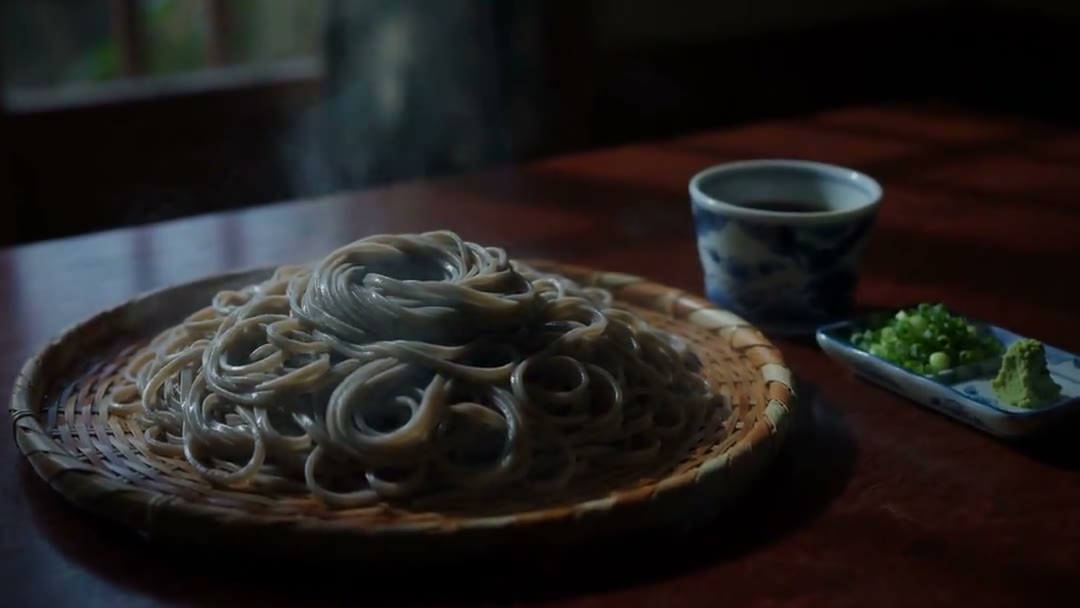
Soba looks like the safe choice — buckwheat itself contains no gluten. But most soba served in Japan is a blend: Nihachi (二八) is 20% wheat, and many noodles carry wheat flour even when they are sold as healthy or handmade. Only Jūwari (十割) is 100% buckwheat — and even then, the dipping sauce is soy-based, and the noodles may have been boiled in water shared with wheat noodles. “100% buckwheat” never means “wheat-free” until you have checked the water and the dip. Ask for jūwari, and check both.
Dish
Verdict
Why
Avoid
Tempura
Avoid
Wheat batter + shared oil + soy-based tentsuyu. Only at dedicated GF kitchens (see Places).
Ramen
Avoid
Wheat noodles, wheat in the broth base.
Udon / sōmen
Avoid
Pure wheat noodles.
Gyoza, karaage, tonkatsu
Avoid
Wheat wrappers, wheat breading, shared fryers.
Curry rice
Avoid
Japanese curry roux is thickened with wheat flour.
Check
Soba
Ask
Jūwari (十割) = 100% buckwheat, safe if the water and dipping sauce are handled — the mentsuyu dip is soy-based. Nihachi (二八) = 80/20 buckwheat/wheat. Avoid.
Miso soup
Check
Most miso is rice- or soy-based and safe; barley miso (麦味噌) exists — one question settles it.
Adapt
Sushi / sashimi
Adapt
Ask for no soy sauce and use your own tamari. Watch vinegared rice blends and glazed toppings (うなぎ sauce is soy-based).
Yakitori
Adapt
Order shio (salt-grilled), never tare (soy glaze).
Safe
Natto, tofu, plain rice bowls
Safe
Skip the included sauce sachets — they’re soy sauce.
Drinks cheat sheet
Drink
Verdict
Why
Sake (日本酒)
Safe
Brewed from rice; distillation and polishing leave no gluten. A celiac staple in Japan.
Shōchū (焼酎)
Safe
Distilled from sweet potato, rice or barley — distillation removes gluten proteins even from barley shōchū.
Beer (ビール)
Avoid
Brewed from barley malt. “Happoshu” and “third beer” are also malt drinks. A few domestic GF beers exist — check for グルテンフリー on the can.
Mugicha (麦茶)
Avoid
Barley tea — the free tea at many restaurants. Ask for water or green tea instead.
Green tea, black tea, coffee
Safe
Naturally gluten-free.
Whisky
Safe
Distilled; generally considered safe for celiacs.
7
City notes
›
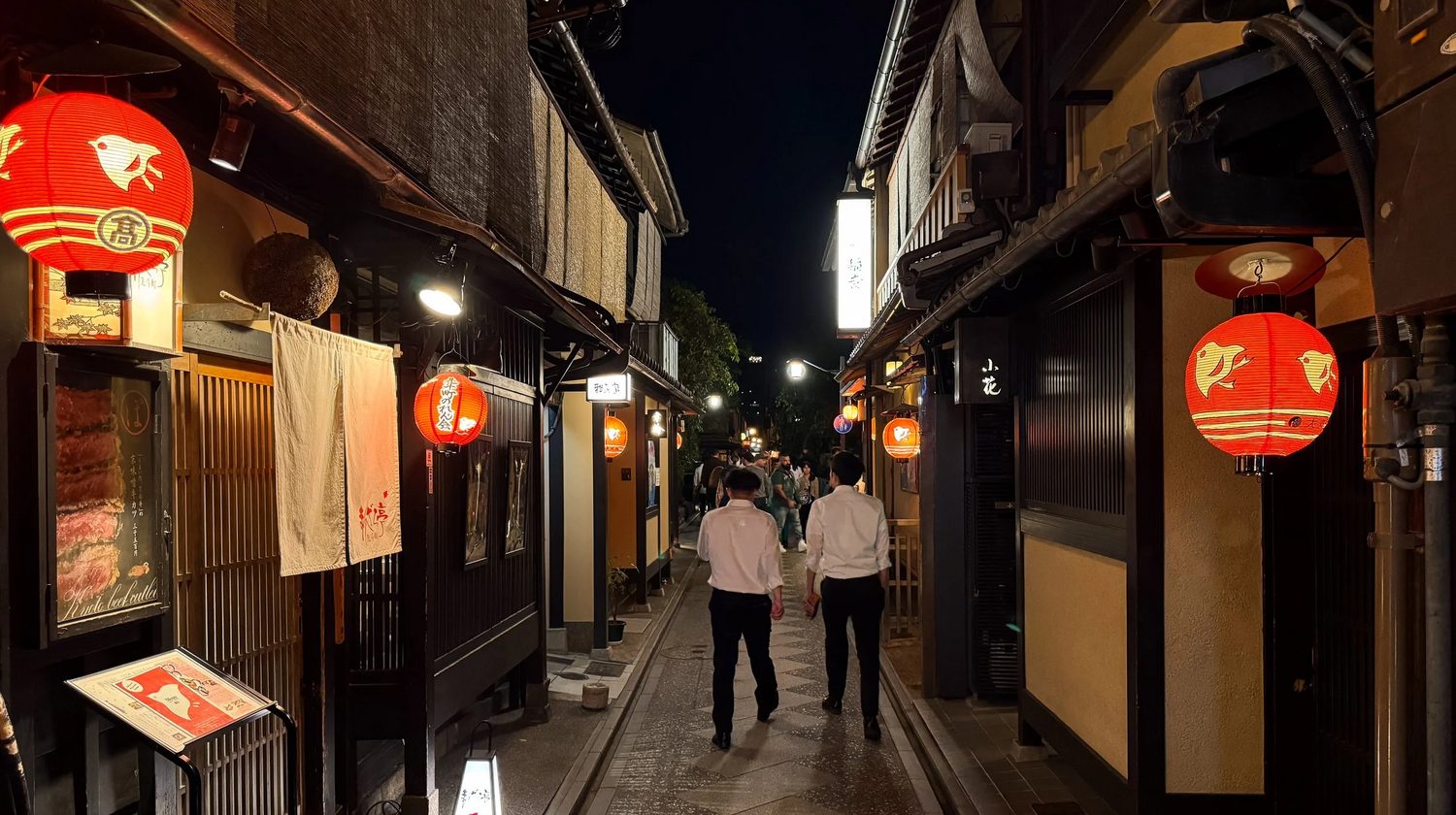
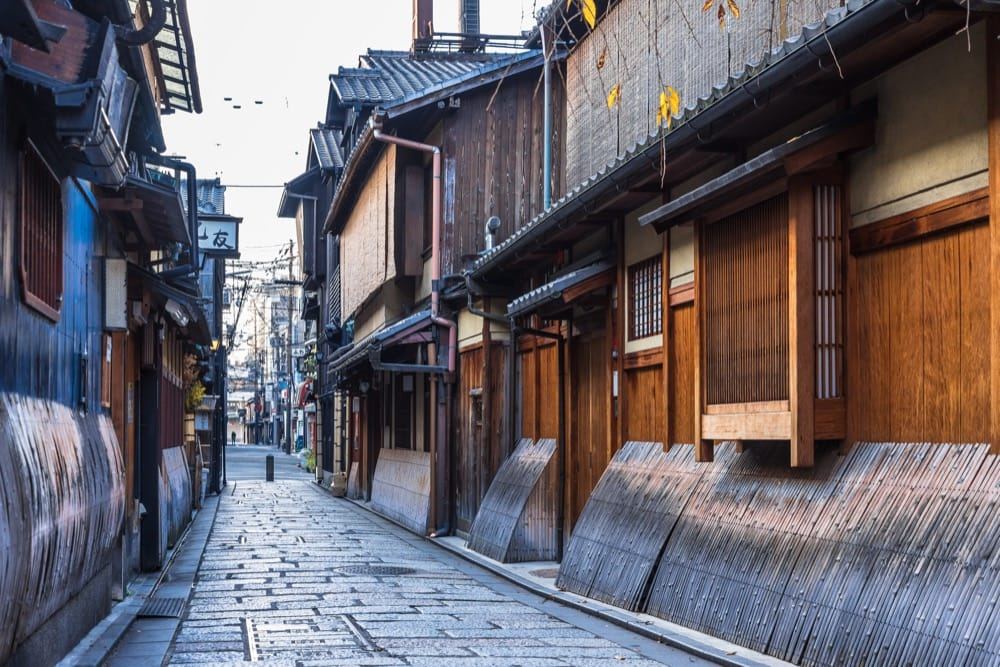
Kyoto's old streets: beautiful, and thin on dedicated kitchens — plan around the chef card.
Tokyo is the one city with a real dedicated scene — entire kitchens that use no wheat at all, from tempura counters to a gluten-free izakaya. The Places tab lists the ones worth crossing town for.
Kyoto & Osaka have thinner dedicated coverage; your strategy there is the chef card plus naturally-safe formats: sashimi, shio yakitori, shabu-shabu with your own tamari, and department-store food halls (depachika) where packaged items carry full allergen labels.
Beyond the big three is where this guide earns its keep. In regional cities and rural areas: supermarkets beat restaurants (full labels, plain rice, grilled fish counters), roadside stations (michi-no-eki) sell local rice and produce, and farmhouse stays will often cook plainly and kindly if the chef card explains things the night before. No dedicated kitchen is not the same as no safe food — it just means the label, not the menu, is your menu. Our first regional listing shows the pattern: Organic Café Agio in Fukuyama, Hiroshima — a mixed kitchen with a genuinely advertised gluten-free menu, listed in Places under its own amber label rather than alongside Tokyo’s dedicated rooms.
8
The chef card
›
Hand the card over, bow, and let them read — written Japanese works where spoken phrases fail.
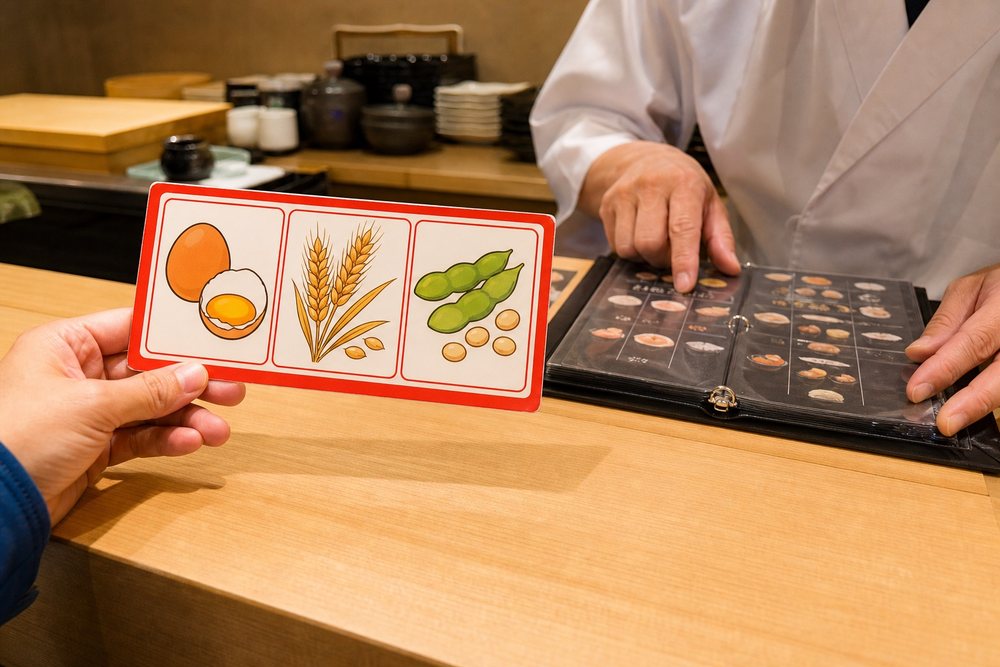
Japanese kitchens respond far better to a polite written explanation than to a spoken negotiation. The Tell tab shows a full-screen card in Japanese that explains celiac disease, lists what must be avoided — wheat, soy sauce, barley, malt, shared fryers — and suggests what you can eat.
How to use it: hand over your phone with the card open, or print it before your trip. Bow, wait, and let them read. Most kitchens will either adapt a dish honestly or tell you clearly that they can’t — both are good outcomes.
9
Eating in Japan: Culture & Manners
›
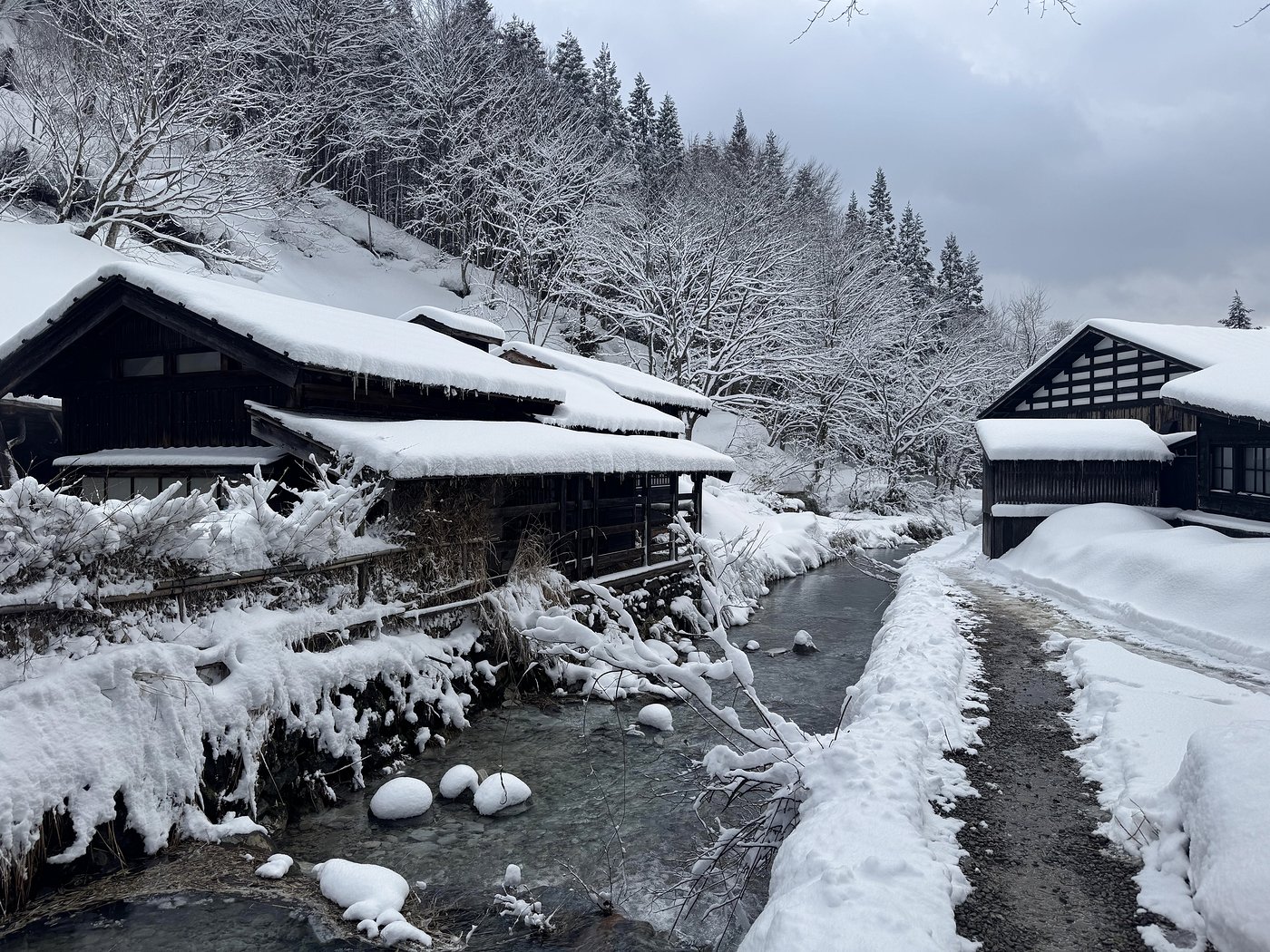
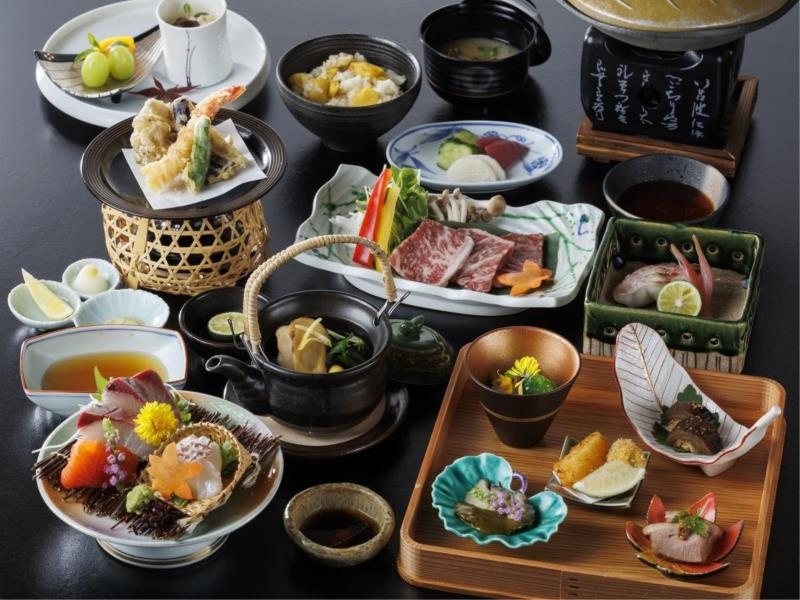
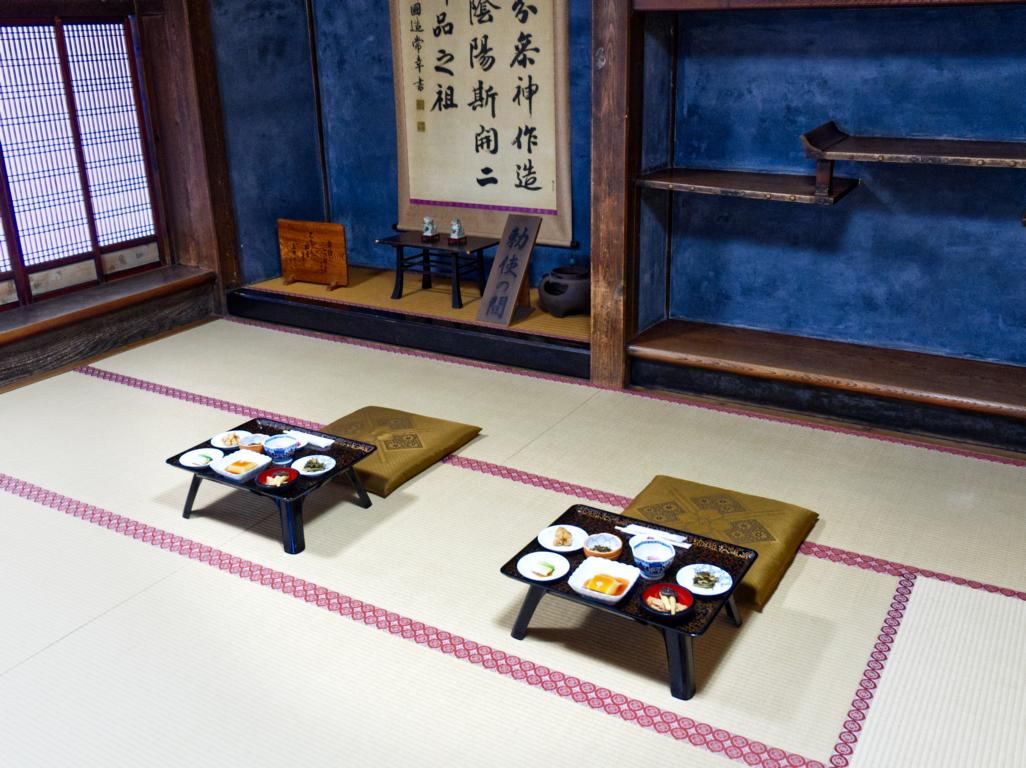
A tatami room set for dinner — the rituals are small, kind, and easier than they look.
Japanese restaurants run on small, kind rituals. None of them are tests — locals do not expect visitors to get everything right — but knowing a few of them makes a meal calmer, warmer, and much less confusing, especially the first time.
Before and after: itadakimasu & gochisōsama
Before eating, most people put their palms together in front of their chest, give a tiny bow, and say いただきます (itadakimasu). It is not a prayer in the religious sense and it is not said to the chef — it is a short word of gratitude: to the people who cooked and served, and to the ingredients themselves. When you finish, the matching phrase is ごちそうさまでした (gochisōsama deshita) — “thank you for the feast.” Saying it to staff as you leave, quietly and with a smile, is one of the easiest ways to be remembered fondly. Children learn both phrases at home and at school; you will hear whole tables say them together.
Chopsticks: three things not to do
Chopstick taboos in Japan are mostly about one thing: they resemble funeral rituals, so they feel unsettling at a happy table. You only need to avoid a few:
Don’t stand chopsticks upright in rice (tatebashi). A bowl of rice with vertical chopsticks is an offering for the dead — set your chopsticks down on the rest (hashioki) or across the bowl instead.
Don’t pass food from chopsticks to chopsticks (hashiwatashi). Handing a morsel directly from one person’s chopsticks to another’s echoes how cremated bones are handled at funerals. Put the food on a small plate instead.
Don’t stab or spear food (sashibashi), and try not to point with chopsticks, hover indecisively over shared dishes, or pull a dish toward you with them. If something is slippery, ask for a fork — nobody minds.
Resting chopsticks on the table, laying them across your bowl when you pause, and using the opposite end to take from a shared plate when eating with close friends are all perfectly normal.
The small dish you didn’t order: otōshi
At many izakaya and evening restaurants, a tiny dish — pickles, a small salad, a simmered bite — arrives soon after you sit down, even though you never ordered it. This is お通し (otōshi), and it comes with a small charge, usually a few hundred yen, that works as the table or seating charge. It is not a scam and not a mistake: it is the standard system in much of Japan, a bit like a cover charge that you get to eat. If you have allergies or are gluten-free, you do not have to eat it — politely leave it, or show the chef card and ask what is in it. In the daytime, in cafés, ramen shops and fast-food places, there is usually no otōshi at all.
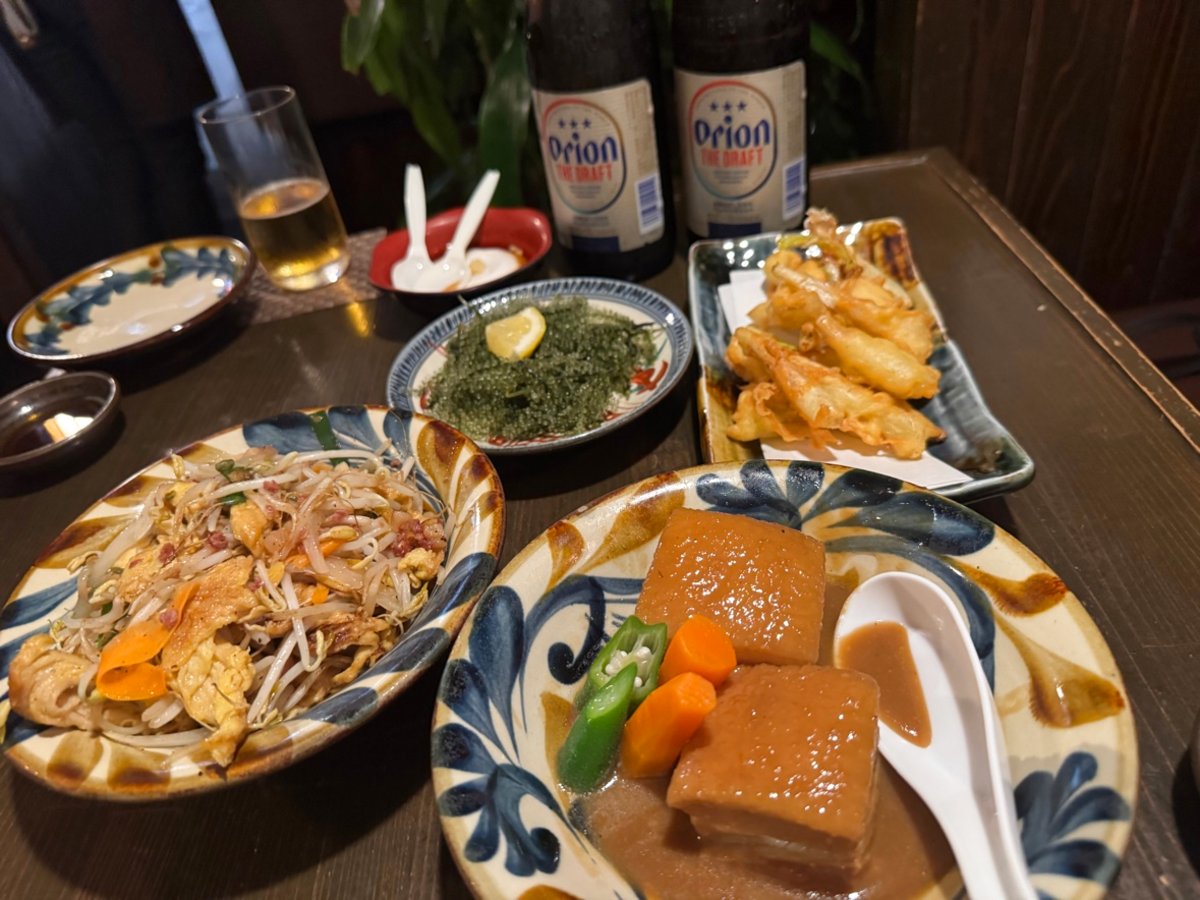
An izakaya table in Okinawa: the small plates keep coming — ask about each one, or show the chef card, before you dig in.
Ticket machines: pay first, eat after
Ramen shops, beef-bowl chains and many casual lunch spots use a 券売機 (kenbaiki) — a vending machine for meal tickets, usually just inside the door. The flow is always the same:
1. Insert money first — cash, or tap your IC card (Suica, Pasmo and other transit cards) if the machine shows the IC mark. On newer machines you pay after choosing, but putting money in first never hurts on the classic type.
2. Press the button for your dish. Buttons light up once money is in. Photos and English help on larger machines; at small ones, the top-left button is often the house recommendation.
3. Take your ticket and any change, sit down, and hand the ticket to the staff. They may ask a quick follow-up — firmness of noodles, size, with or without toppings — then cook to order.
If you are gluten-free, treat the ticket machine as a warning sign as much as a tool: these kitchens are fast and fixed-menu. Check the dish against Chapter 6 first, and don’t feel you must order just because you are standing at the machine — it is fine to step aside, or step out.
Paying: no tipping, usually at the register
There is no tipping in Japan — not in restaurants, taxis or hotels. Leaving cash on the table can cause confusion, and staff may chase after you to return “forgotten” money. Service is included in the price, and good service is simply the standard. When it is time to pay, in most restaurants you take your bill — often left face-down at your table, or handed to you on a small clipboard — to the register by the door (お会計, okaikei). Paying at the table happens mainly in higher-end or Western-style places; if nobody comes, the register is the answer. Card and IC payment are now common in cities, but small countryside places may still be cash-only.
Noises and bowls: slurping is fine
You may slurp your noodles. With ramen, soba and udon, a gentle slurp is natural — it cools the noodles, carries the aroma, and quietly signals you are enjoying them. Silence is fine too; loud performance is not required. And do lift your bowls: holding your rice bowl or miso-soup bowl in one hand while you eat is correct form in Japan, not bad manners. Small side dishes are lifted too. Only large plates and Western dishes stay flat on the table.
Shoes off: tatami, slippers and the toilet pair
Some restaurants — traditional places, tatami-mat rooms, some noodle shops — ask you to remove your shoes at the entrance or at the edge of the raised floor. Step out of them, turn them to face outward if you can, and step up in socks or bare feet, never stepping on the threshold cushion with your outdoor shoes. You may be given house slippers for hallways: shuffle gently so they don’t slip off. At the toilet door, you will often find a separate pair of toilet slippers — change into them inside, and change back when you come out. Forgetting and walking back to the table in toilet slippers is the classic visitor slip-up; if it happens, just swap back with a smile. On tatami itself, even house slippers come off.
The wet towel: oshibori
The warm (or in summer, cool) damp towel brought before your meal is the おしぼり (oshibori). It is for your hands only, before you eat. Wipe your hands, fold it loosely, and set it aside. Using it on your face or neck, however tempting after a hot day, is considered rough — in very casual local spots you may see regulars do it, but as a guest, hands are the safe rule.
Pouring for each other, and calling staff
At a shared table, drinks are poured for each other, not just for yourself. If someone’s glass is empty, offer to pour — with two hands for sake bottles and teapots if you can — and hold your glass with both hands when someone senior pours for you. It is a small, constant way of looking after the table. And when you need staff, don’t wave silently and hope: call out すみません (sumimasen — “excuse me”) at normal voice, with a raised hand. It is polite, expected, and far more effective than waiting to catch an eye — many restaurants have no assigned waiter per table, and some have a call button on the table for exactly this.
You do not need to get any of this perfect. A bowed head, a quiet itadakimasu, and a gochisōsama deshita on your way out already say what matters. Japanese hosts notice the intention far more than the technique — if your gratitude comes across, you will be welcomed warmly, mistakes and all.
10
Emergencies & packing
›
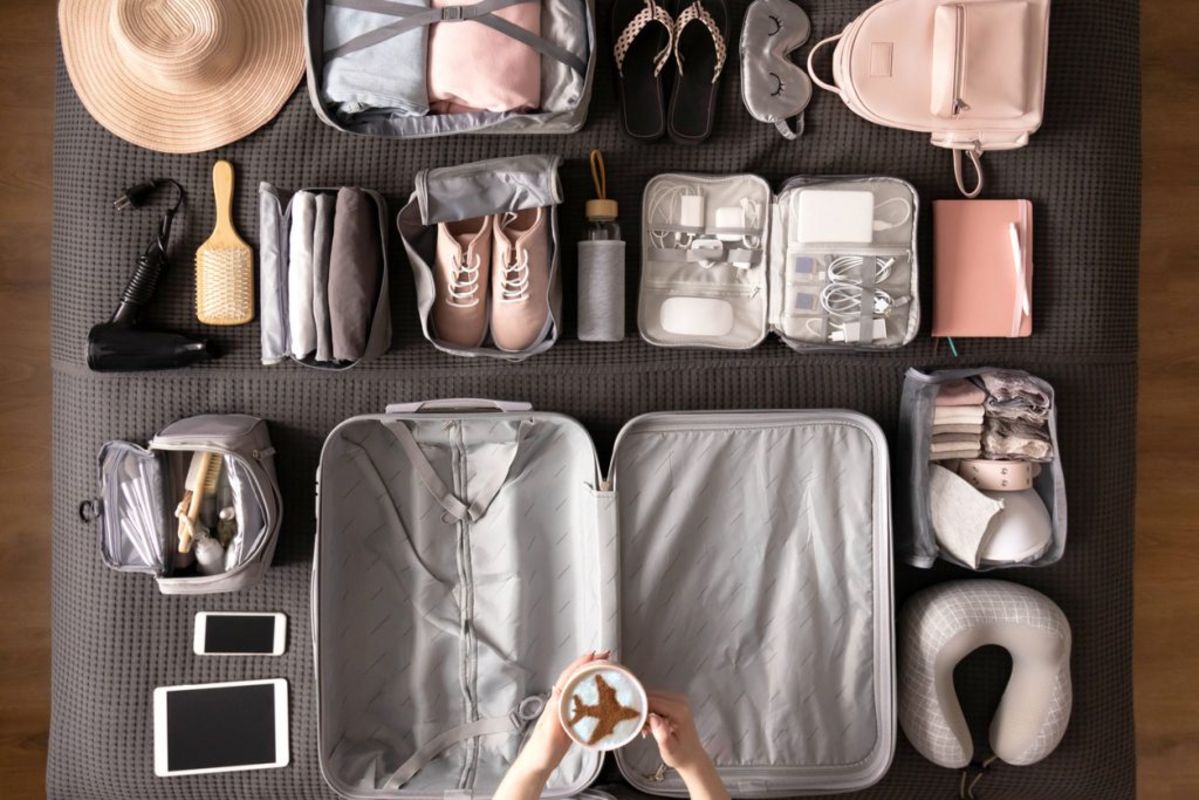
Pack like it matters: safe snacks, tamari packets and your chef card, ready before you leave.
If you get glutened: pharmacies (薬局) are everywhere. Ask for 胃腸薬 (stomach medicine) — and see the phrases in the Tell tab for “I have celiac disease” and “I need a doctor”. For anything serious, your hotel front desk will call a clinic; urban hospitals often have English support lines.
Pack:
Tap each item as you pack it — your ticks stay saved on this device.
11
Where to stay — the neighbourhoods with the most choice
›
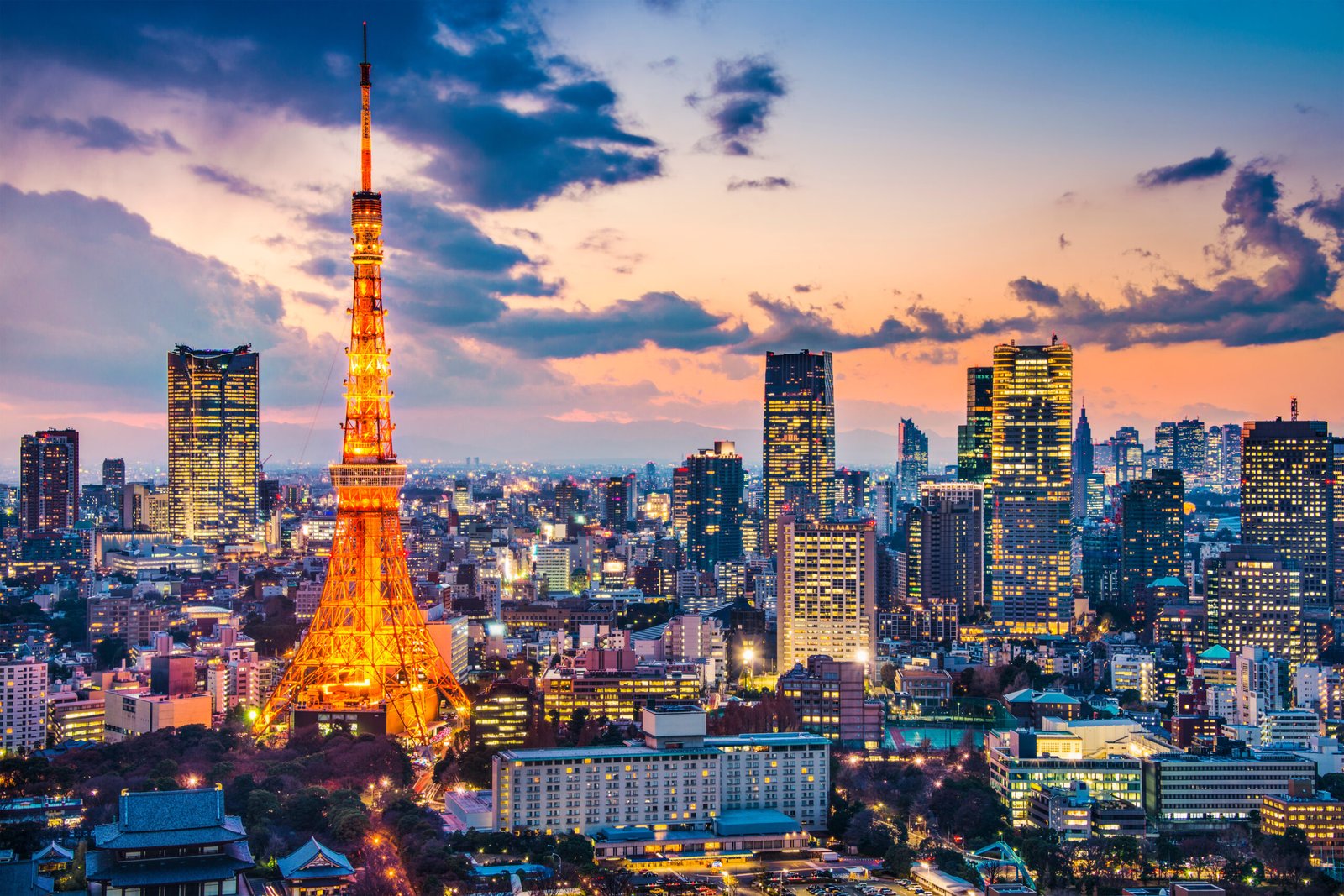
Tokyo Tower at dusk: picking a neighbourhood is also picking how easy dinner will be.
Where you sleep decides how easy eating is. This chapter counts this guide’s own listings — 231 places checked in November 2026 — and shows where they cluster in the three cities travellers most often base themselves in. A dense neighbourhood means shorter trips to dinner and a second choice when one kitchen is closed; it says nothing about safety. Every kitchen still stands or falls on its own badge in Places.
Tokyo — 28 listings in the wider Tokyo area, 27 of them in the city itself. The densest pockets are the old east side and Ginza: Asakusa has 3 listings (a tempura counter near Kaminarimon, a café in Nishi-Asakusa and a vegan dining room), and Ginza has 3 more. Kanda & Nishikanda, just north of Tokyo Station, have 2, and Yoyogi-Uehara in the west has 2. The other 17 sit one to a neighbourhood — Roppongi, Harajuku, Jingumae, Omotesando, Minami-Aoyama, Shibuya, Daikanyama, Hiroo, Tomigaya, Kuhonbutsu, Gakugei-daigaku, Jiyugaoka, Futako-Tamagawa, Kichijoji, Ningyocho, Togoshi Ginza and Tokyo Station — and one listing, Gluten Free T’s Kitchen, runs three kitchens in Roppongi, Ueno and Harajuku. (The 28th listing filed under Tokyo is in Hidaka, Saitama — a day-trip bakery-café, not a city base.) Staying in Asakusa, Ginza or Kanda puts the most listings within easy reach; the west side (Harajuku–Aoyama–Shibuya) is the second cluster.
Kyoto — 8 listings, all inside the city. The east side holds the pair most visitors want: Gion (dedicated gluten-free ramen) and neighbouring Miyagawa-chō (crêpes). The centre adds 3 — Nakagyō, Kiyamachi and Sanjo. Then one each at Kyoto Station (ramen inside the station building), Umekoji and Ichijōji in the north. A base in the centre or on the Gion side keeps 5 of the 8 listings in your own neighbourhood band; Kyoto’s listings are spread thinner than Tokyo’s, so the chef card still does heavy lifting here.
Osaka — 6 listings in the prefecture, 5 of them in the city. The city five are spread one to a neighbourhood — Umeda, Nakazakichō, Tenmabashi, Tanimachi and Kyobashi — so no single district dominates; the sixth listing is in Sakai, south of the city. Umeda is the practical base: it is Osaka’s main rail hub, one of the five is right there, and the other four sit in the central belt around it.
How to use these counts: they are a snapshot of this guide’s listings in November 2026, not a league table of cities and not a safety rating. Kitchens open, close and move — tap through to Places, check the listing’s own statement and checked date, and let the badge, not the cluster, make the final call.
12
Tokyo Station — eating between trains
›
Tokyo Station is where most itineraries change trains, and it is the one place travellers ask about with a clock running. This guide has no listing inside the station itself; what it has is a ring of listings in the neighbourhoods around it. They are grouped below the way you would use them — by how much of your layover you want to spend eating — using neighbourhoods only. Check each listing’s map link and hours in Places before you set out, and keep the chef card ready.
Short on time — the station’s own neighbourhoods
Kanda & Nishikanda, immediately north of the station, hold 2 of the Tokyo listings: Oh Nana! in Kanda — its listing notes it is one stop from Tokyo Station — and the Gluten-free Izakaya SHION in Nishikanda. South of the station, Ginza has 3 listings, among them the 6-seat counter Kushiage Su — small enough that a full house is a real possibility, so treat it as a bonus, not a plan.
Time to sit down — the north-east side
With a longer gap, look to the same north-east side of the city: Asakusa has 3 listings — Tempura Asakusa SAKURA near Kaminarimon, Shochikuen Cafe in Nishi-Asakusa and Marugoto Vegan Dining Asakusa — and Gluten Free T’s Kitchen has a kitchen in Ueno (Ueno-hirokoji), one of its three Tokyo locations. These are sit-down meals in sightseeing neighbourhoods, not station snacks: go when the layover is measured in hours, and check the return train before you order dessert.
Every name above is a listing in Places with its own statement and checked date — nothing here is a station advertisement, and no listing pays to appear. If your connection is tight, the konbini rules in Chapter 3 travel better than any restaurant plan.
Gluten-free kitchens across Japan — 231 listings in nine regions
These are not “places with a gluten-free option”. Each one below runs a kitchen built around no wheat — or, at Safety 1, serves clearly marked gluten-free dishes in a mixed kitchen, with the reason written on its badge. 231 listings across Hokkaido, Tohoku, Tokyo, Chubu, Kansai, Chugoku, Shikoku, Kyushu and Okinawa, researched online in November 2026. The nine regional counts add up to 229; the other 2 listings are nationwide chains, listed at the end. Menus and hours change — confirm on Google Maps before you cross town.
⚠️Safety notice — read this first
Safety notice — This guide is for reference only. It does not guarantee that any food or restaurant is safe for you. Menus, ingredients and kitchen practices can change. Always confirm directly with the restaurant before ordering — show the chef card and tell staff about your allergy. If you have coeliac disease or a severe wheat allergy, ask your doctor about eating out. If you feel unwell after eating, call 119 in an emergency.
Premium — tools for the trip, not locked listings
Every listing in this guide is free to read in full — each venue’s own statement, its full address and the date it was checked. Premium is not about the listings; it is a set of travel tools: the label scanner becomes unlimited (the first 5 scans are a free trial), and your trip pack holds as many places as you like (3 on the free plan). Per-dish ordering guides are now available for a first group of venues, with more being added over time. Premium unlocks with the license key issued with each purchase of the $10 guide — it arrives by email with your guide.
Premium unlocked on this device — unlimited scans, an unlimited trip pack and ordering guides
Your trip pack
Save the places you want to visit and keep them here — name, area, Safety level, address and the key point of each venue’s statement. The list is stored on this device, so it opens offline too. Free: up to 3 places. Premium: unlimited.
✓
Safety badges — read these first
Borrowed from the best idea in celiac apps like Atly and Find Me Gluten Free: don’t just say “gluten-free options” — grade how safe a kitchen actually is. Every listing in this guide carries one badge, with the reason written out. No badge is given for a vague menu claim.
🛡️
Safety 3 — Dedicated kitchenNo wheat is cooked in this kitchen at all. The dedicated-kitchen level — you can order across the menu.
🛡️
Safety 2 — GF menu, trained kitchenA full gluten-free menu with stated cross-contact care, but wheat is still cooked on site. Held by the two nationwide chain programmes at the end of the Places list.
⚠️
Safety 1 — GF dishes, mixed kitchenThe venue advertises gluten-free dishes, but wheat is cooked alongside them. Order only dishes marked GF, and show the chef card first.
Every listing shows its full details — the venue’s own statement, its address and the checked date — free for everyone. Nothing about a place is locked.
📍
Find places near you
You do not need to know the region or city names. Tap the button and the closest kitchens come to you — distances appear on every card and the map moves to where you are. Your location is used only on this device, only to measure distance.
Map unavailable on this device — the list has every place, with a Google Maps link on each card.
Safety 3 · dedicatedSafety 2 · GF menuSafety 1 · mixedYou are here
📍
Closest to you
01
Hokkaido
北海道12
Genmai Udon Esoragoto(玄米うどん絵空事 札幌店)
🛡️
Safety 3 — Dedicated kitchen
Odori, Sapporo, Hokkaido · 北海道札幌市中央区北1条西8丁目2-9
100% gluten-free kitchen
UdonTempuraBrown rice
Brown-rice udon specialist in Odori; udon, broth, tempura and seasonings are all made without wheat.
Venue's statementDedicated gluten-free · brown-rice udon, broth, tempura and seasonings all made without wheat
Per-dish ordering help for this venue — what to order, what to watch for, and a Japanese phrase to show the staff — is part of Premium. The listing itself stays free in full, like every listing here.
What to order
Start with the brown-rice udon — according to the shop’s official information, both the noodles and the tempura batter are made with brown rice flour and no wheat, and the shopfront sign reads “Everything Gluten Free”. The soy-milk tantan udon (¥1,650) is the shop’s featured bowl — soy-milk and sesame tantan soup over the brown-rice udon, hot or cold. Add tempura on the side — kakiage or seasonal vegetables such as lotus root, shishito pepper, pumpkin and eggplant; the shop states the batter is brown rice flour, fried in rice bran oil. Or choose a rice bowl from the shop’s printed gohan menu: ebi tendon (prawn tempura bowl, ¥1,200), tori tendon (chicken tempura bowl, ¥1,000), oyakodon (¥950), katsudon (¥1,000) or beef curry (¥950).
Watch out
The broth and sauces are the one thing the shop’s public posts do not describe in ingredient detail. If you are highly sensitive, confirm the soy sauce used in the dashi and in the bowl sauces before ordering (phrase below). Egg appears in several rice bowls (oyakodon, katsudon, tamago kake gohan) — relevant if you also avoid egg. Menus and prices change; the gohan menu above comes from a menu photo the shop itself posted on its official Instagram, so check the current menu there before you go.
Ask the staff — show this
「出汁やタレに使っている醤油は、小麦を使っていないグルテンフリーの醤油ですか?」
「天ぷらの衣はすべて玄米粉ですか?小麦粉は混ざっていませんか?」
「小麦アレルギーがあるので、調理器具や揚げ油は小麦のものと共用ですか?」
(Is the soy sauce used in the broth and sauces a wheat-free, gluten-free soy sauce? / Is all of the tempura batter made from brown rice flour, with no wheat flour mixed in? / I have a wheat allergy — are the cooking utensils and frying oil shared with wheat-containing items?)
Evening dining bar in Susukino serving GF ramen, tempura, fried chicken and sushi with GF soy sauce. Note: this listing rests on community reports (Find Me Gluten Free) — the bar's own official statement has not been confirmed, so it is listed at Safety 1, not as a dedicated kitchen.
Community reportsListed at Safety 1 — community reports (Find Me Gluten Free) describe a dedicated gluten-free dining bar with GF ramen, tempura and sushi with GF soy sauce, but the venue's own official statement could not be confirmed
Per-dish ordering help for this venue — what to order, what to watch for, and a Japanese phrase to show the staff — is part of Premium. The listing itself stays free in full, like every listing here.
What to order
Start with the Roll Cake (ロールケーキ, ¥580) — the shop’s own No. 1 seller on its delivery menu, and the simplest first pick. For a savoury lunch, the Four-Cheese and Biei Corn Pizza (4種のチーズと美瑛コーンのピザ, ¥980): according to the official shop, the pizza is one of the items the café itself serves, made under the shop’s no-wheat-flour policy. The heartiest café option is the Gratin with Recommended Bread Set (グラタン おすすめパン付きセット, ¥1,698). To take home, the Vanilla Pound Cake (バニラのパウンドケーキ) — the online shop publishes the full ingredient list, so you can check it before buying. Prices above are from the shop’s own delivery menu; delivery prices may differ from in-store prices.
Watch out
The official claim is ingredient-based: the official shop states that all products use Hokkaido rice flour and that no wheat flour is used, but on the pages checked it does not publish a statement about a dedicated kitchen or cross-contact controls — if cross-contact matters to you, ask staff (phrase below) rather than assuming. Egg and dairy are used widely: the published ingredient lists for the pound cakes include egg, butter and milk, and the pizzas and gratin contain cheese, so gluten-free here does not mean egg- or dairy-free. Several online-shop items were marked sold out when checked; the café’s fresh cakes are the reliable option on the day.
Ask the staff — show this
「私は小麦アレルギー/グルテン不耐症です。こちらの商品は全て小麦粉不使用ですか?」
「調理や製造の際に、小麦を使う場所と器具は分かれていますか?」
「このケーキに卵・乳は入っていますか?原材料表示を見せてもらえますか?」
「グルテンフリーのバースデーケーキを注文したいのですが、何日前までに予約が必要ですか?」
(I have a wheat allergy / gluten intolerance. Are all of your products made without wheat flour? / When you prepare the food, are the workspace and utensils kept separate from wheat? / Does this cake contain egg or dairy? Could you show me the ingredient list? / I would like to order a gluten-free birthday cake. How many days in advance do I need to reserve?)
Per-dish ordering help for this venue — what to order, what to watch for, and a Japanese phrase to show the staff — is part of Premium. The listing itself stays free in full, like every listing here.
What to order
Start with the Rice Udon (米うどん, kake or mori) — the core item: noodles milled and made in the operator’s own wheat-free factory, served hot in broth or cold with dipping sauce. The Chicken Nabeyaki (鍋焼き(かしわ)うどん&そば) is the hot-pot pick — the official page specifically states the noodle soup is gluten-free, and halal-certified chicken is used. From the direct-sales corner, take away the Rice-Flour Shokupan (米粉の食パン), which the operator describes as gluten-, milk- and egg-free, and the “Maiko” dim sum (まい娘), a small fried rice-flour treat made without egg. The official menu pages checked do not show prices; confirm prices at the shop.
Watch out
Lunch is reservation-only and only on certain days: according to the official site, café-restaurant lunch runs Friday–Sunday and public holidays, 12:00–15:00, and requires a reservation — on other days only the direct-sales corner is open. The “soba” is not buckwheat: the operator states its soba-style noodles are made from germinated brown-rice flour, so if you specifically want buckwheat soba, this is a different product. Dairy-free is the house policy, but for items beyond the noodles (cakes, castella), confirm the day’s ingredients with staff if you avoid other allergens.
Ask the staff — show this
「私は小麦アレルギー/グルテン不耐症です。ランチを予約したいのですが、空きはありますか?」
「麺つゆはグルテンフリーのものですか?醤油に小麦は入っていますか?」
「この「そば」は玄米粉で作られているのですか?そば粉は使っていませんか?」
「米粉の食パンは、小麦・卵・乳を使っていませんか?」
(I have a wheat allergy / gluten intolerance. I would like to reserve lunch — do you have availability? / Is the noodle soup gluten-free? Does the soy sauce contain wheat? / Is this “soba” made from brown-rice flour? Is any buckwheat flour used? / Is the rice-flour bread made without wheat, egg and milk?)
Rice-flour bakery in Obihiro. The shop states that no wheat is used in any product, and its official profile describes it as an all-gluten-free bakery.
Venue's statementDedicated gluten-free · the bakery states that no wheat is used in any of its products
Community café in Obihiro whose venue-supplied menu lists a handmade gluten-free muffin. Order the marked GF items only, and confirm at the counter.
Venue's statementGF items in a mixed kitchen — a handmade gluten-free muffin is listed on the venue-supplied menu; the rest of the menu is regular café fare
Per-dish ordering help for this venue — what to order, what to watch for, and a Japanese phrase to show the staff — is part of Premium. The listing itself stays free in full, like every listing here.
What to order
Start with the Matcha Galette (抹茶のガレット, coffee set ¥1,650 / single ¥1,320) — the signature plate: a buckwheat galette (buckwheat, not wheat) with tandoori chicken and grilled vegetables, per the official menu. The Venetian Sandwich (ヴェネチアサンドイッチ, coffee set ¥1,650 / single ¥1,320) is the filling lunch option, wrapped in the café’s thin gluten-free bread with homemade ham and hummus. The Komaya Salad Plate (高麗屋サラダプレート, coffee set ¥1,450 / single ¥1,100, plus bread) is the lightest option — remember the bread is priced separately. For dessert or takeout, the Matcha Roll (抹茶ロール, ¥509): the chef’s rice-flour sponge with matcha cream and anko.
Watch out
Bread costs extra on the plates — the official menu states that the plate prices do not include bread; you add a bread of your choice at its own price. Allergen detail is by asking, not by label: the official menu itself directs customers to ask staff about allergen information, and egg, dairy (fresh cream, cheese) and soy appear across the menu — the gluten-free policy does not cover them. The galette is buckwheat: it is wheat-free, but if you also avoid buckwheat (そば), choose the sandwich or salad plate instead and tell staff.
Ask the staff — show this
「私は小麦アレルギー/グルテン不耐症です。小麦粉を使っていないメニューを教えてください。」
「この料理に含まれるアレルゲンを教えてください。」
「サラダプレートに付けるパンは、グルテンフリーのパンをお願いします。」
「ガレットはそば粉ですか?そばアレルギーもあるので確認させてください。」
(I have a wheat allergy / gluten intolerance. Please show me the menu items made without wheat flour. / Please tell me which allergens this dish contains. / For the bread with the salad plate, please give me a gluten-free bread. / Is the galette made with buckwheat flour? I also have a buckwheat allergy, so please let me check.)
Gluten-free sweets shop from a Sakata rice merchant; baumkuchen, roll cakes and castella from 100% Shonai Haenuki rice flour; no wheat used anywhere in the workshop.
Venue's statementDedicated gluten-free · no wheat used anywhere in the workshop · baumkuchen and castella from 100% Shonai Haenuki rice flour
Per-dish ordering help for this venue — what to order, what to watch for, and a Japanese phrase to show the staff — is part of Premium. The listing itself stays free in full, like every listing here.
What to order
Start in the eat-in space with a Cut Baumkuchen (お米のカットバウム(プレーン), ¥190) — the low-commitment first taste before buying a whole ring. The signature souvenir is the Rice Baumkuchen (Small) (お米のバウム(小), ¥1,630): 100% Shonai Haenuki rice flour, baked in a workshop that, per the official site, uses no wheat at all. For the local-specialty flavour, the Shonai La France Pear Baumkuchen (お米のバウム(庄内産ラ・フランス), ¥1,730), and for a lighter, longer-keeping gift, the Baumkuchen Rusk (お米のバウム窯ラスク(北前塩), 2 bags ¥1,120).
Watch out
Egg and dairy are core ingredients: the baumkuchen is made with eggs and Hokkaido butter, and a small amount of uncoloured Western liquor is used as a hidden flavour — gluten-free does not mean egg-, dairy- or alcohol-free, so check each product page’s ingredient list. The shop is closed Mondays and Tuesdays (10:00–18:00 on other days), per the official shop information. Seasonal flavours rotate — melon, pear and other local-fruit versions are seasonal, so if you are travelling for a specific flavour, check the official shop before you go.
(I have a wheat allergy / gluten intolerance. I heard no wheat is used anywhere in your workshop — please let me confirm. / Could you show me the ingredient list for this product? Does it contain egg or dairy? / Which products can I eat in the shop? / How long does the rice baumkuchen keep? I would like to buy it as a souvenir.)
Venue's statementBasically all menus are gluten-free EXCEPT the dango-jiru, whose seasoning uses wheat — avoid that dish and confirm seasonings at ordering
Bakery whose signature additive-free rice-flour soufflé is wheat-free. Note: no dedicated gluten-free shop was found in Aomori Prefecture.
Venue's statementThis is a conventional wheat bakery — only the labelled rice-flour soufflé is gluten-free and cross-contact risk is high; choose packaged labelled items only. No dedicated gluten-free shop was found in Aomori Prefecture
Café and sweets shop in Hachinohe specialising in gluten-free, fermented dishes and raw sweets. The gluten-free claim is clearest for the sweets; the lunch menu was not confirmed — ask on the day.
Venue's statementDedicated gluten-free · a specialist shop for gluten-free food, fermented dishes and raw sweets
Café and sweets shop in Shizukuishi making vegan, gluten-free sweets with no wheat. Opening is limited and event-based — check its shop page before travelling.
Venue's statementDedicated gluten-free · vegan and gluten-free sweets made with no wheat at all, per the shop
Sendai café (Michiru) describing its menu as fully additive-free and gluten-free — with soy sauce the stated exception. Ask for dishes without soy sauce, and show the chef card.
Venue's statementGF items in a mixed kitchen — the venue describes its food as fully additive-free and gluten-free, with soy sauce the stated exception
Kushiage — skewers crumbed and deep-fried — rebuilt with the chef’s own rice-flour panko and a zero-wheat kitchen. Omakase only, and rated a perfect 5.0 across 200+ reviews.
Per-dish ordering help for this venue — what to order, what to watch for, and a Japanese phrase to show the staff — is part of Premium. The listing itself stays free in full, like every listing here.
What to order
There is nothing to choose dish by dish — book the course. The グルテンフリー串揚げ11串コース (11 skewers with appetisers, soup and dessert, ¥13,800) is the full experience; the weekend-only lunch course (7 skewers, ¥6,000) is the lighter way in. According to the shop’s own booking page, everything is built on gluten-free ingredients and seasonings only — kushiage is normally a wheat-panko food, so this is the rare version made for gluten-free diners from the ground up, served as a seasonal omakase at a 6-seat Ginza counter.
Watch out
Fully reservation-only, and dinner starts for everyone at the same time (19:00) — the shop asks for bookings by 18:00 the day before. It is a splurge (drinks are extra on top of the course price), seating is just 6 counter seats, and the entrance is discreet (2F of a small building; press intercom 201). Closed Mondays, with irregular extra closures — confirm on the booking page.
(I have a wheat allergy / coeliac disease. I forgot to mention it when booking — can you confirm the whole course is made only with gluten-free ingredients and seasonings?)
Tempura, the most forbidden dish of all, back on the table: 100% rice-flour batter, dedicated procedures to reduce cross-contact and a dedicated vegetable fryer, and wheat-free tentsuyu dipping sauce. Also halal certified.
Per-dish ordering help for this venue — what to order, what to watch for, and a Japanese phrase to show the staff — is part of Premium. The listing itself stays free in full, like every listing here.
What to order
Start with the Seafood Tempura Bowl (海鮮天丼, ¥3,800) or, for the full counter experience, SAKURA’s OMAKASE Tempura Course (¥7,800) — 14 dishes ending with dashi chazuke. According to the restaurant’s official site, all food items are gluten-free: the batter is rice flour (not the usual wheat), the soy sauce is gluten-free, and the kitchen uses dedicated procedures to reduce cross-contact, plus a dedicated vegetable fryer and vegetable-based dipping sauce for vegetarian guests. All meals are also stated to be Halal certified.
Watch out
Tempura elsewhere in Japan is a double risk — wheat batter and wheat-brewed soy sauce in the tentsuyu dipping sauce — which is exactly what this shop says it redesigned, so don’t assume the same protection at other tempura shops. The official “all gluten-free” claim covers food items; the shop serves local beer and sake (regular beer contains barley), so drinks are not part of the gluten-free promise. Courses run under an hour and seating is a 10-seat counter — booking ahead is sensible.
The most recognised dedicated GF name in Tokyo — the first restaurant in Asia certified by the Gluten Intolerance Group (GIG). Japanese comfort food done safely: the Roppongi flagship alone has 900+ reviews. The branch network makes it the easy default anywhere in central Tokyo. The restaurant’s own notes add that some ingredients are produced in facilities that also handle wheat and some foods are prepared using the same frying oil and pans, and that it cannot guarantee every meal for every allergy — tell staff about any allergy beyond gluten.
Venue's statementGIG-certified · first dedicated GF restaurant group in Asia · some ingredients from facilities that also handle wheat · some foods share frying oil and pans
Per-dish ordering help for this venue — what to order, what to watch for, and a Japanese phrase to show the staff — is part of Premium. The listing itself stays free in full, like every listing here.
What to order
Order freely from the Japanese comfort-food classics that are normally off-limits: the Chicken Dumplings (米粉のチキン餃子, made with rice flour), Miso Butter Corn Ramen, Chicken Ramen (醤油ラーメン), Okonomiyaki, Chicken Yakisoba, Cajun Fried Chicken, and the Gluten-free Vegan Pancakes for dessert. According to the restaurant’s official site, every dish and drink is made without wheat, barley or rye, and the restaurant states it was the first in Asia to receive gluten-free certification from the Gluten Intolerance Group.
Watch out
The restaurant’s own notes add two cautions: some ingredients are produced in facilities that also handle wheat, and some foods are prepared using the same frying oil and pans. Menus differ by branch (Roppongi / Harajuku / Ueno-Hirokoji), so check the menu for the branch you visit. If you have allergies beyond gluten, tell staff — the restaurant states it cannot guarantee every meal for every allergy because the kitchen space is limited.
(I have a wheat allergy / coeliac disease. Your menu says some ingredients are made in facilities that also handle wheat — could you tell me about this dish?)
A dedicated gluten-free café-restaurant opened by an owner with celiac disease. The whole menu is built wheat-free, and at 4.9 stars across 100+ reviews it may be the most loved GF room in the city. Near Tokyo Station.
Venue's statementOwner has celiac disease · whole menu built wheat-free
Per-dish ordering help for this venue — what to order, what to watch for, and a Japanese phrase to show the staff — is part of Premium. The listing itself stays free in full, like every listing here.
What to order
Order the everyday Japanese dishes that are usually off-limits: the Salted Chicken Karaage (鶏の塩唐揚げ), the Oh Nana! Vegetable Curry (野菜たっぷりOh Nana!カレー), Teriyaki Fried Tofu and Fried Eggplant in Dashi. According to the restaurant’s official site, every ingredient and seasoning it uses is gluten-free and everything is cooked in a strictly gluten-free kitchen, and the owner has celiac disease herself. Travelling on? The official site takes orders for a custom gluten-free bento (from ¥2,000 per box), made around your allergies and requests — handy before a train journey.
Watch out
The day is split into lunch (11:30–16:00), café and dinner (16:00–22:00, last order 21:00) sittings, and the menu emphasis changes between them; the bento and whole cakes need advance orders (cakes and special menus: about two weeks ahead, per the official site). Because the whole menu here is gluten-free, the usual sauce traps (teriyaki glaze, dashi) are already handled — don’t assume the same at ordinary restaurants.
An izakaya — small plates, drinks, noise — where everything is gluten-free. The format celiacs almost never get to join in Japan, done as a fully dedicated kitchen.
Venue's statementEntire izakaya menu gluten-free · drinks format included
Per-dish ordering help for this venue — what to order, what to watch for, and a Japanese phrase to show the staff — is part of Premium. The listing itself stays free in full, like every listing here.
What to order
You don’t order dishes — you book the course and let the owner cook. Per her own statements, every dish is gluten-free from the start, and the menu is created for you after you tell her your allergies and what you would love to eat; expect traditional izakaya cooking — small plates with drinks — in a tiny Nishikanda room. If you drink, her registered allergy page highlights the shōchū selection (sweet potato, rice and brown-sugar shōchū from Kagoshima) alongside sake and wine.
Watch out
Reservations are essential and the window is narrow — she runs the izakaya alongside other work and opens only a few evenings a week (recent listings show Monday and Saturday evenings; always confirm). Book by email (glutenfreeizakaya.shion@gmail.com, subject “Reservation”) and state your allergies and requests at that point — the custom menu depends on it. Courses run ¥10,000–20,000 per person, so confirm the price when you book. Note on drinks: her food is all gluten-free, but if beer is offered, regular beer contains barley — ask what is in your glass.
Per-dish ordering help for this venue — what to order, what to watch for, and a Japanese phrase to show the staff — is part of Premium. The listing itself stays free in full, like every listing here.
What to order
Take the Cube Shokupan (キューブ型食パン, ¥700) back to your hotel, the Soft Baguette (¥600), and a Baked Curry Bread (焼きカレーパン, ¥360) to eat on the spot — curry bread is a convenience-store staple that is normally wheat through and through. According to the official site, everything is baked with rice flour and natural yeast (白神こだま酵母) in a dedicated gluten-free bakery, a short walk from Takeshita Street.
Watch out
Closed Tuesdays and Wednesdays, and hours are short (roughly 11:00–17:00, Mondays until 15:00) with popular items selling out — go early. In summer the range narrows to baguettes, muffins, pizza and hot dogs only (the shop’s own notice), so the shokupan may not be there. Rice-flour bread stales faster than wheat bread; it is best eaten the same day or toasted.
A calm Aoyama dining room whose own English page states that everything on its menu is made without wheat flour. A lunch and all-day café option on the Harajuku–Omotesandō side of town; it closes early in the evening.
Venue's statementVenue’s own English menu: “Everything on our menu is made without wheat flour”
Per-dish ordering help for this venue — what to order, what to watch for, and a Japanese phrase to show the staff — is part of Premium. The listing itself stays free in full, like every listing here.
Read this first — the restaurant’s own warning, in its own words: “No wheat is handled in our kitchen. However, we cannot rule out trace contamination that comes from the raw materials themselves — for example, when an ingredient is grown or processed near wheat. Some items contain nuts such as walnuts and almonds.” The restaurant’s own guide article adds that it uses only ingredients meeting the 20ppm gluten-free standard, and that no wheat is handled in the kitchen at all, including seasonings — the soy sauce is wheat-free tamari, and both miso types are made without wheat or barley.
What to order
According to the restaurant’s own English menu, everything on the menu is made without wheat flour, and all baked goods are vegan. Start with the L for You Gozen, described by the restaurant as its signature Japanese-style set meal (lunch, 11:00–15:00, meat/fish or vegan). The Gluten-Free Rice-Flour Sandwich is named as gluten-free on the menu itself and is served on rice-flour bread. For something lighter, order the Burdock & Mushroom Soy-Milk Soup Set or the Vegan Taco Rice. For sweets, the Guilt-Free Plate is the restaurant’s plate of seasonal sweets — the menu states all café sweets are gluten-free and most are vegan, with no refined white sugar. Takeout bento is listed at ¥1,290.
Watch out
See the restaurant’s own notice at the top of this guide: it cannot rule out trace contamination from the raw materials themselves, and some items contain nuts such as walnuts and almonds. The restaurant also states it uses only ingredients meeting the 20ppm gluten-free standard and wheat-free seasonings throughout, including tamari soy sauce — but it asks customers to make their own final judgement and to tell staff about any allergy before ordering. Pancakes, avocado toast and the onigiri set are weekends/holidays mornings only (9:30–11:00). Halal-friendly meals are possible on request but the restaurant is not halal-certified.
Per-dish ordering help for this venue — what to order, what to watch for, and a Japanese phrase to show the staff — is part of Premium. The listing itself stays free in full, like every listing here.
What to order
Order the Rainbow Cake (夢幻レインボーケーキ, ¥850 before tax) — the shop’s signature, coloured layer by layer with vegetables rather than colourings — and the Vegan Tiramisu (from ¥580; four flavours, and the matcha-azuki is the most Japanese). If you want something savoury, the rice-flour pizza by the slice (Margherita ¥350) is the café’s own recipe. According to the café’s official FAQ, the whole menu is vegan and gluten-free and the kitchen itself is completely gluten-free — a rare fully-aligned café, ten minutes from Sensō-ji.
Watch out
Menu prices are listed before tax. The café is small and keeps café hours (weekdays 9:30–16:30, weekends to 17:00), so it is a morning or early-afternoon stop, not a dinner plan. Everything is also oriental-vegan (no garlic, onion, leeks etc.), which shapes the savoury flavours — expect gentle seasoning. Some items use nuts (the FAQ says some do) — ask if nuts are also your issue.
A 100% gluten-free patisserie. Its pistachio cream puffs are called the best gluten-free sweet in Tokyo by the local celiac community — go before they sell out.
Per-dish ordering help for this venue — what to order, what to watch for, and a Japanese phrase to show the staff — is part of Premium. The listing itself stays free in full, like every listing here.
What to order
In the café, aim for the cream puffs — the shop’s own blog calls its 裏青山シュー a signature carried over from its popular earlier location — and the cheesecake made only with Hokkaido ingredients. For gifts, the たべくらべBOX assortment (¥2,500) or the salt-caramel cookies (No. 1 in the shop’s own ranking) travel well. According to the official site, nothing here uses wheat flour or white sugar: rice flour is the main flour, sweetness comes from beet sugar, and the eggs and cream are from Hokkaido.
Watch out
The “sells out” tag on this listing is real — this is a small atelier-café (8:00–17:00, closed Mondays) and popular items go early, so visit in the morning. The online shop’s ranking items are mostly baked goods and frozen cheesecake for delivery; the fresh cakes and cream puffs are the in-store draw, and the range on the day varies. The sweets are rice-flour based but not vegan (egg and dairy are used) unless marked.
A back-street vegan restaurant near Gakugei-daigaku station, run by the team behind VEGAN MANIA — 18-spice curry, its famous carrot cake and slow-brewed MOON CHAI. The operator’s own restaurant listing presents it as 100% vegan and 100% gluten-free.
Venue's statementOperator’s own listing (VEGAN MANIA): shown as 100% vegan / 100% gluten-free
Per-dish ordering help for this venue — what to order, what to watch for, and a Japanese phrase to show the staff — is part of Premium. The listing itself stays free in full, like every listing here.
What to order
According to the operator’s own listing for this restaurant, it is 100% vegan and 100% gluten-free. The dish the restaurant itself promotes most is the “phantom” carrot cake (幻のキャロットケーキ) — its official product page states it is made without meat, fish, eggs, dairy, white sugar, honey or wheat flour, using Japanese rice flour. The 18-spice curry is one of the three signature items named on the restaurant’s official site, alongside the carrot cake and MOON CHAI, the craft chai the restaurant says is simmered for over 12 hours with plant milk and a blend of more than six spices, and whose official product page also states no wheat flour is used. No in-store prices are listed in this guide because the restaurant’s official in-store menu is published as images only and no in-store prices could be verified in text from official sources.
Watch out
The restaurant’s official product pages carry only this allergy note: “If you have any allergies, please contact us in advance to confirm.” No cross-contamination statement could be found on the restaurant’s official site, so ask in person before ordering if that matters to you. The carrot cake is normally reservation-only / limited in number, with a small amount available in store while it lasts, according to the restaurant’s own announcements — reserve ahead if it is the reason for your visit. Closed Tuesdays; lunch 11:00–15:00, dinner 18:00–21:00.
The Ginza restaurant of FANCL, in the basement of FANCL Ginza Square, serving “brown-rice Italian”. Its official page states the menu uses no wheat flour at all — entirely gluten-free.
Venue's statementOfficial site: the “brown-rice Italian” menu uses no wheat flour at all — entirely gluten-free
Per-dish ordering help for this venue — what to order, what to watch for, and a Japanese phrase to show the staff — is part of Premium. The listing itself stays free in full, like every listing here.
What to order
Order the fresh brown-rice pasta — according to FANCL’s official site it is handmade in the restaurant every day from brown-rice flour, in a kitchen concept that uses no wheat flour at all. The weekday lunch set (¥2,000; fresh pasta or brown-rice risotto) is the easy first visit; for dinner, the Dinner Party Course (¥6,800) strings the whole idea together — brown-rice bread, appetisers, fish carpaccio, kale salad, mussel escabèche, lamb spiedini, brown-rice risotto and a gluten-free dolce misto. Take a loaf of the Genmai Bread (100% brown-rice bread) home — the restaurant sells it to take away.
Watch out
Lunch and dinner menus differ, and weekday vs weekend lunch menus differ too; the restaurant’s own notice says vegetarian/vegan handling is not offered at weekend and holiday lunch, and children’s plates are weekday-only. Courses ask for advance reservation. This is a wellness-brand restaurant inside FANCL Ginza Square (B1F) — popular at lunch, so book ahead.
The gluten-free bakery of Comme’N in Kuhonbutsu, Setagaya. The shop states that everything it uses is gluten-free — from the ingredients to the sauces.
Venue's statementOfficial site: “everything we use is gluten-free” · made gluten-free from the ingredients to the sauces
Per-dish ordering help for this venue — what to order, what to watch for, and a Japanese phrase to show the staff — is part of Premium. The listing itself stays free in full, like every listing here.
What to order
This is a dedicated gluten-free bakery, and its official menu says the standard bakery line-up is made completely gluten-free. Reliable year-round picks are the Milk France (¥380) — a renewed hard rice-flour loaf with milk cream — and the Jaga Mentaiko France (¥550), which the maker states is made without any of the 8 major allergens, including wheat, egg and dairy. For something more filling, choose the Croque Monsieur: the official online shop specifically notes that even its white sauce is made with rice flour. Baguette, pain de mie, melon pan, anpan and the daily cream pan are also listed on the official menu.
Watch out
First, the address check: the wheat bakery Comme’N TOKYO stands on the same street in Kuhonbutsu — make sure the sign says GLUTEN FREE before you buy. The official menu warns that the line-up changes with the season, so a specific item you saw online may not be there that day. The official online shop also states that the gluten-free Stollen uses oats, so if you avoid oats, ask before buying seasonal gift items. For anything beyond wheat (egg, dairy, nuts), check the item’s allergen information — the shop invites allergy questions by email and at the counter.
The gluten-free shop of the I’m donut? brand on Aoyama-dori, Shibuya. The operator states the products use no wheat and are made in a dedicated production environment separate from the regular shops — and states itself that completely excluding trace contamination is difficult.
Venue's statementOperator’s statement: no wheat is used, and the products are made in a dedicated environment separate from the regular shops — but the operator itself notes that completely excluding trace contamination is difficult
Per-dish ordering help for this venue — what to order, what to watch for, and a Japanese phrase to show the staff — is part of Premium. The listing itself stays free in full, like every listing here.
Read this first — the operator’s own warning, in its own words: 「「I’m donut?グルテンフリー」の商品は、小麦を使用しておりません。また通常店舗とは独立した専用の製造環境でお作りしておりますが、コンタミネーション(微量混入)を完全に排除することは難しいため、アレルギーをお持ちの方などは、ご購入をお控えください。」 In short: the products use no wheat and are made in a dedicated production environment separate from the regular shops, but the operator itself states that completely excluding trace contamination is difficult and asks people with allergies to refrain from purchasing. Anyone who needs strict avoidance should follow the operator’s own advice and skip this shop; the guide below is for readers who, knowing that, still choose to go.
What to order
Start with the I’m free?オリジナル (¥280) — the plain kibi-sugar doughnut that shows off the rice-flour dough itself — then the 抹茶ホワイトチョコブリュレ (¥442) or the cream-filled ピスタチオクリーム (¥496). Per the operator’s release, the dough is rice-flour based with pumpkin and banana kneaded in, fried hot and fast for a soft, light bite, and the range runs to about 30 kinds including savoury ones. If you also avoid egg and dairy, the sister “Gluten Free & Vegan” shop nearby is the one built for that.
Watch out
Read the operator’s warning at the top of this guide first — it is unusually frank, and it is the operator’s own position. Practical points: queues are normal at this brand and the shop closes when sold out (10:00–20:00); allergens are printed per item in the operator’s release (banana, egg, milk and soy on most items), so check your own allergens item by item. Don’t confuse the two Aoyama-dōri shops — the vegan one is a separate brand with a separate line-up.
The gluten-free & vegan shop of the I’m donut? brand in Jingumae. The operator’s statement is the same as for its sister shop: no wheat, a dedicated production environment separate from the regular shops — and the operator’s own note that trace contamination cannot be completely excluded.
Venue's statementOperator’s statement: no wheat is used, and the products are made in a dedicated environment separate from the regular shops — but the operator itself notes that completely excluding trace contamination is difficult
Kichijoji, Tokyo · 東京都武蔵野市吉祥寺本町2-24-9 SUNO Ecru 103
100% gluten-free kitchen
BakeryCaféVegan
A gluten-free specialist bakery in Kichijoji (in its own words), with a small eat-in corner for bread and drinks. Most items are vegan, but vegan status is now per product — check each item.
Venue's statementOfficial site: “a gluten-free specialist bakery in Kichijoji” · eat-in corner for bread and drinks (until 17:00)
Per-dish ordering help for this venue — what to order, what to watch for, and a Japanese phrase to show the staff — is part of Premium. The listing itself stays free in full, like every listing here.
What to order
According to its official About page, Where is a dog? is a specialist gluten-free bakery in Kichijoji, centred on everyday breads — loaf bread, bagels, baguettes and focaccia. In the official online shop, the Pain de Mie loaf and the mini baguette and ficelle are each described as vegan and made without artificial additives, from rice flour, quinoa and sorghum flours. For sweets, the products actually named “GF/VEGAN” in the shop are the GF/VEGAN Cookies (lemon, chocolate or plain, ¥550) and the GF/VEGAN Cupcakes (¥500). Bread and drinks can be eaten in the small eat-in corner, which the official page says is available until 17:00.
Watch out
No cross-contamination statement could be found on the bakery’s official site, so ask in the shop if you need one. Do not assume everything is vegan: the official shop states that one of its newer assorted bagel sets is gluten-free but “may include items made with dairy or chicken.” Check each product’s ingredient list — several items are marked as containing soy, cashew nuts or banana. Online prices often include shipping and outlet discounts, so in-store prices may differ. Closed Tuesdays; open 11:00–18:00.
A fully vegan dining room in Asakusa. The restaurant states that all of its dishes are made without gluten — with one exception it names itself: beer (and non-alcoholic beer) contains wheat. It does not describe a dedicated kitchen.
Venue's statementOfficial site: “all of our dishes are gluten-free (wheat-free)” — beer and non-alcoholic beer are the stated exception, as they contain wheat
Per-dish ordering help for this venue — what to order, what to watch for, and a Japanese phrase to show the staff — is part of Premium. The listing itself stays free in full, like every listing here.
Read this first — the restaurant’s own warnings, in its own words. From its official FAQ: 「はい!すべてのお料理とデザートが、グルテン不使用です。ですが、重度のアレルギーのお客様は以下をご確認いただきまして、お客様ご自身でご利用の判断をお願いいたします。・ビールのみグルテンを使用しております。・既製品の調味料や食材について、製造時工場でのコンタミネーションの有無については、確認していないものもございます。」 The FAQ also states: 「まるごとVeganでは、グルテンを含む食材は使用しておらず、グルテンフリーのお食事をご提供しております。ただし、原材料の一部において製造過程でグルテンを含む食品と同じ製造ライン(工場)で作られている場合があり、コンタミネーション(微量混入)の可能性がございます。この点をご確認いただき、問題がなければご利用いただけます。なお、ドリンクメニューの「ビール」のみグルテンを含みますのでご了承ください。」 And its English lunch menu adds: “All dishes are gluten-free (wheat-free)* — *Beer and non-alcoholic beer contain wheat.”
What to order
According to the restaurant’s own website, all dishes and desserts are gluten-free (wheat-free), 100% vegan, and made without the five pungent vegetables, alcohol in cooking, refined sugar or artificial additives. Named items on its official menu and allergy chart include the Lunch Plate Set, Curry with Rice (its signature curry, also as a Curry Rice + Drink Set), topping curries (karaage, tempeh, tempura or avocado), Tendon (tempura rice bowl), vegetable tempura, the Waffle Set and Waffle Salad Lunch, Salad Plate and Mixed Greens. At breakfast (Wed & Sat, 9:00–11:30), the Waffle Plate Set — gluten-free waffles with salad, soy yogurt, maple syrup and a drink — and the Curry Set are the official headline sets.
Watch out
Beer is the exception: the restaurant states that only beer contains gluten, and its lunch page adds that non-alcoholic beer also contains wheat — do not order either. The restaurant itself warns that some ready-made seasonings and ingredients have not been checked for factory contamination, and that some ingredients are made on shared factory production lines with gluten-containing foods, so trace contamination is possible. It asks guests with a severe allergy to check this and decide for themselves. The waffle batter contains almond powder, curries contain coconut milk and tomato, and frying oil is coconut oil (all per the official FAQ/allergy chart).
A pancake café in the Ura-Omotesando Garden complex. Its pancakes are made with 100% domestic rice flour, and items on its menu carry a “Gluten Free” mark.
Venue's statementOfficial site: pancakes made with 100% domestic rice flour, gluten-free · items on the menu are marked “Gluten Free”
Per-dish ordering help for this venue — what to order, what to watch for, and a Japanese phrase to show the staff — is part of Premium. The listing itself stays free in full, like every listing here.
What to order
Order the Gluten Free Fruits Pancake (¥2,800, drink included) for the classic version — per the official menu, a plain rice-flour pancake with Hokkaido fresh cream and organic amber maple syrup — or the Gluten Free Matcha & Strawberry Pancake (¥3,300) for the full Tokyo version with organic Uji matcha and matcha ice cream. Lighter appetite: the gluten-free crepes (from ¥1,500 with a drink), including a savoury Ham & Cheese Crepe (¥2,500).
Watch out
Everything is baked to order and takes about 20 minutes or more when busy (the café’s own notice), and it often sells out by around 16:00 — opening is 12:00 and the kitchen closes early (last order 16:30); closed Mondays and Tuesdays, so check the official calendar before crossing town. The café is one tenant inside a shared old-house complex (Ura-Omotesandō Garden), so treat it as a gluten-free menu in a shared space, and tell staff about your allergy when ordering.
A gluten-free café in Futako-Tamagawa built around its baumkuchen, baked with 100% JAS-certified domestic organic brown-rice flour and — in the shop’s words — no wheat flour, baking powder, shortening or other additives.
Venue's statementOfficial site (on its baumkuchen): no wheat flour — and no baking powder, shortening or other additives · 100% JAS-certified domestic organic brown-rice flour
Per-dish ordering help for this venue — what to order, what to watch for, and a Japanese phrase to show the staff — is part of Premium. The listing itself stays free in full, like every listing here.
What to order
According to the shop’s own online store, its signature Tamakuchen baumkuchen is made with 100% JAS-certified domestic organic whole-grain brown rice flour, with no wheat flour, baking powder, shortening or other additives (¥600 eat-in; also sold by weight to take away, 30 g minimum). The shop’s Nikopan gluten-free premium loaf is described by the shop as free from wheat, dairy and egg, and all toast on the eat-in menu uses this bread — e.g. Toast with Jam & Butter (¥600) and Toast with Lemon & Cinnamon + Bacon (¥700). Takeaway pound-shaped gluten-free loaves come in plain (¥350), cheese (¥450), raisin (¥480), chocolate (¥450) and orange peel (¥450).
Watch out
The shop publishes no contamination warning on the official pages checked, and it does not state that its kitchen is exclusively gluten-free — ask in store if that matters to you. Gluten-free does not mean allergen-free here: the official ingredient list for the A Tamakuchen includes egg, fresh cream, butter, honey, almond and alcohol, so it is not vegan and not suitable for egg, dairy or nut allergies. Check the ingredient list for each flavour before ordering.
Ask the staff — show this
「このバームクーヘンは小麦粉を使わず、玄米粉だけで作られていますか?」
(Is this baumkuchen made only with brown rice flour, without any wheat flour?)
Tokyo Station, Tokyo · 東京都千代田区丸の内1-9-1 東京駅一番街 B1F(東京ラーメンストリート)
GF menu items · mixed kitchen
RamenTokyo StationGF ramen
A ramen shop on Tokyo Ramen Street, inside Tokyo Station. It states it was among the first in Japan to put a gluten-free ramen for wheat-allergy customers on its grand menu — regular wheat ramen is served from the same kitchen, so order the GF ramen specifically.
Venue's statementOfficial site: a gluten-free ramen for wheat-allergy customers has been on the grand menu since early on · regular wheat ramen is also served
Per-dish ordering help for this venue — what to order, what to watch for, and a Japanese phrase to show the staff — is part of Premium. The listing itself stays free in full, like every listing here.
Read this first — the shop’s own note, in its own words: 「※コンタミネーションの可能性はございます。ご理解の上、お召し上がり下さい。」 The shop itself states that contamination is possible and asks guests to eat with that understanding — it serves regular wheat ramen from the same kitchen (hence Safety 1). What it does offer, by its own published procedure: when you order the gluten-free ramen, staff will ask whether you have a wheat allergy, and for allergic guests the noodles are boiled in a separate pot (茹で釜を別にて対応). Decide with both halves of that information.
What to order
Order the グルテンフリー塩ラーメン (Gluten-Free Shio Ramen, ¥1,700) — by its full name. Per the shop’s official page, it is a salt ramen with wheat removed from all ingredients, built on the same Amakusa Daio chicken soup as the house signature, created for wheat-allergy customers (the brand says it was the first in Japan to put a gluten-free ramen on a grand menu). Add the ヴィーガン水餃子 if you like — the skins use rice flour and the shop says a gluten-free preparation is possible if you ask.
Watch out
This is Tokyo Ramen Street inside Tokyo Station — a mixed kitchen serving wheat ramen all day, and the shop’s own contamination note (top of this guide) applies. The protections are procedural: say you have a wheat allergy when ordering (staff are supposed to ask; tell them anyway) so the separate boiling pot is used. You buy a ticket from the machine before sitting down, and queues at peak times are normal; the GF shio ramen is ¥1,700, noticeably more than the regular bowls. Do not order the vegan tantanmen assuming “vegan = gluten-free” — it is not listed as gluten-free.
A plant-based restaurant in Jiyugaoka preparing creative dishes with gluten-free, oriental-vegan, Muslim-friendly and allergy-aware options, so that everyone can eat at one table. Order the dishes marked gluten-free.
Venue's statementOfficial site: gluten-free dishes are prepared alongside oriental-vegan, Muslim-friendly and allergy-aware options, so that everyone can enjoy eating at one table
The Ginza flagship of the vegan restaurant & patisserie AIN SOPH., one minute from Higashi-Ginza Station. Its menu marks many dishes 【GF】; the brand’s own pages also note that unintended allergen cross-contact is possible in its factory and stores — ask when ordering.
Venue's statementOfficial site: a 100% vegan restaurant & patisserie with many gluten-free dishes, marked 【GF】 on the menu · the brand also notes that unintended allergen cross-contact is possible in its factory and stores
Per-dish ordering help for this venue — what to order, what to watch for, and a Japanese phrase to show the staff — is part of Premium. The listing itself stays free in full, like every listing here.
What to order
Look for the [GF] mark on the menu — that is the restaurant’s own gluten-free label. Reliable picks, all marked [GF] on the official Ginza page: the signature Heavenly Vegan Pancakes (made, the restaurant says, with Kyushu rice flour and coconut oil, fermented overnight), the Ginza-only Fukurokuju BENTO (¥3,900), the Spinach Green Curry, and the Teriyaki Deep-Fried Soy Chicken on Rice. For a takeaway, the 1st-floor patisserie sells a Gluten-Free Vegan Raisin Sandwich made with rice flour and almond flour.
Watch out
This is not a gluten-free kitchen — only [GF]-marked dishes are gluten-free. Unmarked items include the Veggie Cutlet Plate and the Hummus with Baguette, so never assume a dish is gluten-free because the restaurant is vegan. The restaurant’s own FAQ states that its kitchen and factory also handle other allergens and asks guests with allergies to ask staff — cross-contact is possible, so state your needs before ordering, especially for sauces and teriyaki-style glazes on unmarked dishes.
A Daikanyama Italian restaurant whose official Instagram account names it “Gluten-Free Italian EN Daikanyama” and states its food is gluten-free, with no white sugar and no food additives. Kitchen details are not stated — confirm when booking.
Venue's statementOfficial Instagram: the account is named “Gluten-Free Italian EN Daikanyama” · its profile states gluten-free, no white sugar and no food additives
A small obanzai (Kyoto-style home dishes) lunch spot in Nishihara, Yoyogi-Uehara — the shop’s own official Instagram account is itself named “Gluten-Free Obanzai LL”. Its profile lists 16 kinds of obanzai at lunch, Thursday to Sunday; it says nothing about the kitchen, so ask on the day.
Venue's statementOfficial Instagram: the account itself is named “Gluten-Free Obanzai LL” · its profile lists 16 kinds of obanzai at lunch, Thu–Sun · no kitchen details are stated
A rice-flour bakery on the Togoshi Ginza shopping street. The shop calls itself one of Tokyo’s few gluten-free bakeries — and states itself that wheat-containing products are also made in the same workshop, so check each item’s labelling.
Venue's statementOfficial Instagram: “one of Tokyo’s few gluten-free bakeries” — and, in the shop’s own words, wheat-containing products are also made in the same workshop
A rice-flour bread and sweets maker in Nihonbashi Ningyocho, selling at its own shop on limited days and through its own online shop. Its official Instagram profile presents it as a maker of gluten-free rice-flour bread and sweets.
Venue's statementOfficial Instagram profile: a maker of gluten-free rice-flour bread and sweets · sold at its Ningyocho shop and through its own online shop
A café in Uehara, Yoyogi-Uehara, whose official Instagram profile declares it an “ALL GLUTEN FREE CAFE”. The profile does not say whether the kitchen is dedicated, so confirm when you visit.
Venue's statementOfficial Instagram profile: “ALL GLUTEN FREE CAFE” · whether the kitchen is dedicated is not stated
Nagoya Station, Nagoya, Aichi · 愛知県名古屋市中村区椿町8-7 2F
100% gluten-free kitchen
Set mealsNagoya StationOwner allergy
Dedicated GF Japanese set-meal restaurant near Nagoya Station; Nagoya dishes (miso katsu, ebi fry, tebasaki) fully GF. The owner has a severe wheat allergy; no wheat or barley is brought into the kitchen, including seasonings.
Venue's statementDedicated gluten-free · no wheat or barley is brought into the kitchen, seasonings included · the owner has a severe wheat allergy
Per-dish ordering help for this venue — what to order, what to watch for, and a Japanese phrase to show the staff — is part of Premium. The listing itself stays free in full, like every listing here.
What to order
For the full Nagoya experience, order the Loin Katsu Gozen (ロースカツ御膳) — the venue’s own menu describes it as Nagoya’s miso katsu, made gluten-free — or the signature Oebi Fry Gozen (大海老フライ御膳, large prawn fry set). Add Nagoya no Tebasaki (名古屋の手羽先, chicken wings) as a side, and finish with Hojicha Pudding (ほうじ茶プリン). If you drink, the menu lists ORYVIA, a rice beer labelled gluten-free on the venue’s own menu.
Watch out
According to the venue’s own menu page, every dish — down to the seasonings — is made without wheat or any barley-family grain, and its story page says it also excludes rye and oats (“Beyond Gluten Free”). The usual Nagoya traps (miso katsu sauce, soy sauce, breadcrumbs, wing glazes) are therefore covered by the venue’s own stated policy, not by per-dish negotiation. Still tell staff about your allergy on arrival (the menu itself asks guests with allergies to inform staff), and re-check any limited-time seasonal gozen, since the menu notes dishes may change with supply.
Ask the staff — show this
「小麦アレルギーがあります。今日のメニューも、調味料まで含めてすべて麦類不使用ですか?」
(I have a wheat allergy. Is everything on today’s menu, seasonings included, free of all barley-family grains?)
Rice-flour specialist café/bakery; the manufacturing facility completely excludes wheat — all products are made wheat-free, and the bread and bagels use 100% domestic rice flour.
Venue's statementDedicated gluten-free · the manufacturing facility completely excludes wheat · all products made wheat-free · bread and bagels use 100% domestic rice flour
Per-dish ordering help for this venue — what to order, what to watch for, and a Japanese phrase to show the staff — is part of Premium. The listing itself stays free in full, like every listing here.
What to order
According to the shop’s official online store, all products are made without wheat. Named items include the Gluten-Free Rice-Flour Loaf (Plain) (¥1,000), the Manager’s Choice Bagel Sets (3 pieces ¥1,350 / 5 pieces ¥2,250 / 10 pieces ¥4,500), handmade Gluten-Free Rice-Flour Gyoza (5 pieces ¥800, larger packs available), and handmade Gluten-Free Rice-Flour Shumai (5 pieces ¥500). The shop states its bread and bagels use 100% domestic rice flour (“Mizuhotchikara”). Online prices are shown; in-store lunch prices were not listed on the official site, so check the menu in store. The shop’s own statement: “We manufacture in a rice-flour bakery factory that uses no wheat at all. Bringing wheat into the manufacturing facility is completely prohibited; we use only equipment and utensils dedicated to rice-flour bread, and the contamination risk is zero.” (shop’s official website, translated)
Watch out
Opening days are irregular — the shop itself asks visitors to phone ahead to confirm. Morning is 9:00–10:30 and lunch is 11:00–15:00 according to the official store information. Some online items were marked sold out when checked, so availability varies.
Ask the staff — show this
「小麦アレルギーがあります。今日食べられる米粉のメニューを教えてください。」
(I have a wheat allergy. Please tell me which rice-flour items on today’s menu I can eat.)
Per-dish ordering help for this venue — what to order, what to watch for, and a Japanese phrase to show the staff — is part of Premium. The listing itself stays free in full, like every listing here.
What to order
Start with the Juwari Soba — according to the restaurant’s own blog, it is made only from buckwheat flour and water, milled in-house every day from Hokkaido contract-farm buckwheat. For a warm dish, order Kamo Nanban (duck and leek soba) or the signature Kamo Tetsu (duck grilled on an iron plate) with your soba. Add the tempura — the venue states its tempura, like its noodles and dipping sauce, is made completely gluten-free, with a buckwheat-flour batter (buckwheat flour, not rice flour).
Watch out
At ordinary soba shops the risks are wheat as a binder in the noodles, wheat in the soy sauce in the tsuyu, and wheat-flour tempura batter. Sobahan states it avoids all three — tamari soy sauce and rare sugar in its kaeshi (sauce base) instead of regular soy sauce. Because buckwheat is milled and noodles are made in-house, still confirm on the day that nothing on the seasonal menu has changed, and do not assume the soba-yu (noodle cooking water) or garnishes at any other soba shop follow the same rules.
Ask the staff — show this
「十割蕎麦と天ぷらとつゆは、今日もすべて小麦不使用で間違いないですか?」
「天ぷらの衣はそば粉だけですか?」
(Are the Juwari Soba, the tempura and the dipping sauce all completely wheat-free today as well? / Is the tempura batter made with buckwheat flour only?)
Shichikencho, Shizuoka City, Shizuoka · 静岡県静岡市葵区七間町5-6 1F
100% gluten-free kitchen
VeganCaféShizuoka
Family-run vegan and GF café; its official Instagram (@cafeenough__) describes it as a café that uses no wheat flour, dairy or white sugar, and its posts state that everything is made completely vegan and gluten-free.
Venue's statementDedicated gluten-free · official Instagram (@cafeenough__): “小麦粉、乳製品、白砂糖不使用のカフェ” — a café using no wheat flour, dairy or white sugar · its posts state everything is made completely vegan & gluten-free
Per-dish ordering help for this venue — what to order, what to watch for, and a Japanese phrase to show the staff — is part of Premium. The listing itself stays free in full, like every listing here.
What to order
There is no à la carte menu to choose from. According to the restaurant’s official site, the only named offering is the Chef’s Omakase Course (dinner, from 18:00), described by the restaurant as gluten-free and using no wheat flour at all, priced from ¥16,000 (¥17,600 including tax), plus a 10% service charge; drinks are not included. At lunch (12:00–14:30) the same course is served, for parties of two or more, by reservation at least two business days ahead. The restaurant says it builds the menu for each guest, so state what you cannot eat when you book. An adjoining shop sells the chef’s baked sweets and bread according to the official homepage, but no individual product names or prices were listed in the official online shop when checked. Please note the restaurant’s own terms: reservations are accepted up to one month ahead; a same-day cancellation is charged at 100% of the tax-included course price; and the restaurant asks guests not to bring small children (except for private hire).
Watch out
Course contents change with the season and the guests, so no specific dish can be promised in advance. This is a six-seat counter only, closing days are irregular (check the calendar linked from the official site), and course guests are given priority for reservations.
Ask the staff — show this
「小麦が食べられません。予約の際に、アレルギーとしてお伝えしたいです。」
(I cannot eat wheat. I would like to tell you this as an allergy when I make my reservation.)
Restaurant in Kanazawa whose official site lists gluten-free among the dietary preferences it can accommodate, alongside vegan, vegetarian, soy-free and other options.
Venue's statementOfficial site: accommodates gluten-free among other dietary preferences (vegan, vegetarian, soy-free, onion-free, garlic-free and more)
Rice-flour bakery near Kanazawa Station; it uses rice flour that is 100% Koshihikari, and its products are made without nine specified allergenic ingredients, including wheat, egg and milk.
Venue's statementDedicated gluten-free · uses 100% Koshihikari rice flour · made without nine specified allergenic ingredients (per-product labelling)
Per-dish ordering help for this venue — what to order, what to watch for, and a Japanese phrase to show the staff — is part of Premium. The listing itself stays free in full, like every listing here.
Read this first — the bakery’s own notice, in its own words: 「※原材料の中にはアレルギー表示義務品目と同じ生産ラインで製造されているもの、当店でトッピングとして使用しているものがございます。専門医の指示に従ってお召し上がりください。又、誠に恐れ入りますが、アナフィラキシー症状のある方は、召しあがるのをお控えください。」 In short: some ingredients are made on the same production line as allergenic items, or are used as toppings in this shop; the bakery asks customers to follow their doctor’s advice before eating, and asks customers with anaphylaxis to refrain from eating these products.
What to order
According to the bakery’s own online shop, its rice-flour breads are made without wheat, wheat gluten or additives, and without nine specified allergenic ingredients (wheat, egg, milk, buckwheat, shrimp, crab, peanut, walnut, cashew). Start with the Salt Bread (ソルト塩パン, ¥215), Herb Mix (¥230), Black Sesame (¥235) or Sweet Red Bean / Tsubu-an (¥330) rolls, the Raisin Bread (4 pieces, ¥1,040, contains apple yeast — apple is the labelled allergen), or a loaf of the Rice-Flour Shokupan (3-loaf set, ¥3,850 online). For cake, the shop lists a Soy-Milk Rice-Flour Chiffon Cake, Plain (¥2,600) and a gluten-free Gateau Chocolat, size 5 (¥4,250). Online prices are shown; in-store prices may differ.
Watch out
The bakery itself warns that some ingredients come from shared production lines (see its notice at the top of this guide) and asks people with anaphylaxis not to eat its products. “Rice flour” here means the rice flour used is 100% Koshihikari — individual products can also contain other flours, for example white sorghum flour in the raisin bread, so check each product’s ingredient list.
Ask the staff — show this
「この商品の原材料と、アレルギー表示をもう一度確認させてください。」
(Could you please let me check this product’s ingredients and allergen labelling once more?)
Hand-rolled sushi restaurant with a clearly marked GF set menu. Note: in its own FAQ, the venue asks guests who require strict gluten control not to dine there — its GF menu (rice-flour tempura in dedicated frying oil, wheat-free soy sauce) is offered on that understanding.
Venue's statementMixed kitchen — stick to the GF set and GF soy sauce, and tell them about coeliac disease at reservation
Per-dish ordering help for this venue — what to order, what to watch for, and a Japanese phrase to show the staff — is part of Premium. The listing itself stays free in full, like every listing here.
Read this first — the venue’s own warning: Coil’s FAQ states that wheat is used in the same kitchen, that complete allergen removal and prevention of cross-contact cannot be guaranteed, and that guests with celiac disease or severe allergies who require strict control of the cooking environment are asked to refrain from dining there. This guide therefore does not recommend Coil for strict gluten control.
What to order
If — and only if — the warning above does not apply to you, book the Coil Okamochi Set and ask for the gluten-free arrangement: according to the venue’s own FAQ, it can guide you to wheat-free sushi toppings, provide soy sauce made without wheat, and serve tempura made with rice flour and cooked in dedicated frying oil, alongside the hands-on hosomaki (thin roll) and matcha experience.
Watch out
The dedicated tempura oil and wheat-free soy sauce reduce ingredient-level risk only; shared surfaces, utensils and preparation areas remain, and you roll the sushi yourself from shared-style toppings, so confirm every topping individually. The venue invites detailed enquiries in advance (email / WhatsApp) — ask before you book, not at the table.
Ask the staff — show this
「グルテンフリー対応でお願いできますか?天ぷらは米粉で、専用の油で揚げていただけますか?」
「小麦不使用の醤油とネタでお願いします。」
(Could I have the gluten-free arrangement? Can the tempura be made with rice flour and fried in the dedicated oil? / Please give me the wheat-free soy sauce and toppings.)
Per-dish ordering help for this venue — what to order, what to watch for, and a Japanese phrase to show the staff — is part of Premium. The listing itself stays free in full, like every listing here.
What to order
According to the shop’s own website, everything is made in a kitchen that never brings in wheat, and its baked goods and rice-flour breads use no wheat, egg or dairy. The café was opened to serve brown-rice udon (玄米うどん) — the shop does not publish individual udon dish names or prices online, so choose from the menu in store. From its official online shop, named items include the Raw Tiramisu Set (ローティラミスセット, ¥1,600 — labelled allergens: cashew, soy from miso, banana) and the Granola (からだにやさしいグラノーラ, ¥1,000, contains nuts and organic oatmeal). Please read first — the shop’s own notice: the shop asks customers who react to even trace amounts through cross-contact to check with them before ordering, and says allergy consultations are welcome before you order (from its official shop and website).
Watch out
Sweets are not nut-free by default: the tiramisu contains cashew and the granola contains almond, cashew and pecan, and the shop itself raises cross-contact for trace-sensitive customers (see the notice in “What to order” above). The granola uses oatmeal, and the shop does not state online that the oats are certified gluten-free — ask if that matters to you.
Ask the staff — show this
「小麦を一切使っていないか、今日の玄米うどんとスイーツの原材料を確認させてください。」
(Could you please confirm that no wheat is used at all, and let me check today’s brown-rice udon and sweets ingredients?)
Plant-based & GF café in Obama; all menus use no wheat, dairy or egg — rice-based GF waffles, muffins, cakes and pasta. Note: the shop sits inside a shared station building; the shop's own menu is all-GF.
Venue's statementDedicated gluten-free · all menus use no wheat, dairy or egg — note: the shop sits inside a shared station building, but its own menu is all-GF
Long-established soba restaurant near Matsumoto Castle.
Venue's statementThe regular soba is 20% wheat — you must explicitly ask for the gluten-free version (100% buckwheat soba, GF dipping sauce, rice-flour tempura) when ordering
Tiny reservation-only restaurant in Takayama, famous with coeliac travellers; GF soy sauce provided. Note: recent operating status is uncertain — check before visiting.
Venue's statementMixed kitchen — request GF versions at reservation. Note: recent operating status is uncertain — check before visiting
Small Kofu bakery making rice-flour bread with no wheat, egg or dairy. It opens only a few days a week and sells out early — reserve ahead via its rebake page.
Venue's statementDedicated gluten-free · rice-flour bread made without wheat, egg or dairy
Gluten-free workshop in Oku-Hida, about an hour from central Takayama; the seven major allergens are never brought into the workshop. Mainly workshop sales and mail order.
Venue's statementDedicated gluten-free · the seven major allergens are never brought into the workshop
Italian restaurant in Yokkaichi where, by the venue's own statement, everything served is gluten-free. The venue asks guests with severe allergies to phone ahead.
Venue's statementDedicated gluten-free · the restaurant states that everything served in-house is gluten-free
Per-dish ordering help for this venue — what to order, what to watch for, and a Japanese phrase to show the staff — is part of Premium. The listing itself stays free in full, like every listing here.
Read this first — the restaurant’s own notice, in its own words: 「メニューは一例でございます。日替わり、季節替わりとなりますので詳細はお問合せください。お値段は入荷状況、世界情勢により変動致します。記載の値段はあくまで目安としてご覧下さい。重篤なアレルギーをお持ちのお客様はご来店前にお電話にてご確認ください。」 In short: the menu is an example only and changes daily and seasonally; prices are a guide and may change; and customers with a severe allergy are asked to call before visiting to confirm.
What to order
According to the restaurant’s own official information, it relaunched in March 2024 as a gluten-free Italian restaurant and states that everything served in-house is gluten-free and that all menus use no wheat. Dishes named on its official menu include Hand-Cut Minced-Meat Bolognese on Brown-Rice Fettuccine (手切りミンチのボロネーゼ玄米フェットチーネ, ¥1,550), Carbonara with House-Made Bacon (¥1,400), Porcini and Daikoku Shimeji Cream Sauce on Brown-Rice Fettuccine (¥1,600), and Cacio e Pepe (¥1,000). Pizzas such as Margherita (¥1,600) and Quattro Formaggi with Honey (¥1,700) use, in the restaurant’s words, the gluten-free pizza dough of PIZZERIA ICARO in Nara. At lunch, the Sanlucio Set (¥2,600 and up) and the reservation-only Lunch Course (¥3,500, book by the day before) both include the house rice-flour bread, which can also be added for ¥100.
Watch out
The menu rotates daily, so a named dish may not be available on your day, and the restaurant treats its listed prices as a guide only. Its official lunch page lists ordinary bottled beers alongside the food — if you avoid gluten in drinks too, confirm each drink with staff rather than assuming the “everything is gluten-free” statement covers the drinks list. Dry rice-flour noodles take longer to cook and can break up short, per the restaurant’s own note.
Soup-and-lunch café in Akiha, Niigata City. In an interview the owner states that no wheat is used in any cooking, seasonings included — listed at Safety 1 until the venue publishes that itself. Confirm when you order.
Venue's statementListed at Safety 1 — the owner states no wheat is used in any cooking, seasonings included, but that rests on an interview rather than the venue's own published statement
Sweets café in Kanazawa that opened in October 2026; owner interviews describe every product as free of wheat flour, egg and dairy. It has no official website yet, so it is listed at Safety 1 — confirm in store.
Venue's statementListed at Safety 1 — all products are reported wheat-flour, egg and dairy free in owner interviews; no official site statement yet
Kanazawa crêperie whose batters use no wheat flour at all. Local reporting notes the shop's own signage that it is not 100% gluten-free — check each filling before ordering.
Venue's statementGF items in a mixed kitchen — the batters are stated to use no wheat flour at all, but fillings are not all gluten-free
Rice-flour sweets café in Echizen; the city page calls it gluten-free. Listed at Safety 1 until the shop's own statement is re-confirmed — ask in store.
Venue's statementListed at Safety 1 — a rice-flour sweets specialist described as gluten-free by the city, not yet re-confirmed on the shop's own page
Rice-flour taiyaki chain — the company states the taiyaki are made with rice flour only and are gluten-free, with branches in Fukui City, Hida-Takayama and Takamatsu (the Himeji branch is listed separately in Kansai). Brand note: some products contain wheat, so check fillings at each branch.
Venue's statementGF items in a mixed kitchen — the company states its taiyaki use rice flour only, but some products contain wheat; check fillings per branch
Long-running Ise sweets shop known for rice-flour sanpō-yaki; listings state it has recently become fully gluten-free. Listed at Safety 1 with a November 2026 check — confirm the current recipe in store.
Venue's statementListed at Safety 1 — listings state its rice-flour sanpō-yaki is now wheat-free and gluten-free; recently converted, so confirm in store
Rice-bread shop in Fukui City. Gluten-free rice breads are made, and a fully gluten-free line is available by reservation — but some regular breads contain added gluten, so never assume a loaf is GF: ask, and reserve.
Venue's statementGF items in a mixed kitchen — gluten-free rice breads exist and a fully GF line is reservation-only, but some breads contain added gluten
Rice-flour bakery café in Toki. The shop itself notes its breads come in gluten-added and gluten-free lines: the gluten-free line is reservation-only, and walk-in bread is not gluten-free.
Venue's statementGF items in a mixed kitchen — the shop states its breads come in gluten-added and gluten-free lines; the GF line is reservation-only and walk-in bread is NOT gluten-free
Karuizawa restaurant offering a named gluten-free lunch set. The same menu carries a seitan (wheat gluten) cutlet, so order only the GF set and show the chef card.
Venue's statementGF items in a mixed kitchen — a named gluten-free lunch set is offered; note a wheat-gluten (seitan) cutlet is also on the menu
Vegan café in Matsumoto serving gluten-free rice-flour pancakes and gluten-free sweets. Its sandwiches are made with wheat bread — stick to the marked GF items.
Venue's statementGF items in a mixed kitchen — gluten-free rice-flour pancakes and GF sweets in a vegan café; its sandwiches use wheat bread
A cooking shop in Kanie, Aichi. Its official Instagram account is named “Gluten-Free Specialist Cellule” — note that the claim rests on the account name itself; the profile text carries no separate gluten-free statement.
Venue's statementOfficial Instagram: the account is named “Gluten-Free Specialist Cellule” · the profile text itself carries no separate gluten-free statement — the claim rests on the account name
A shop in Nomi, Ishikawa, whose official Instagram calls it a “gluten-free specialist shop (no wheat used)”. The statement gives no kitchen details, so it is listed at Safety 1.
Venue's statementOfficial Instagram: “gluten-free specialist shop (no wheat used)” · kitchen details are not stated
A fully gluten-free and vegan bakery café whose kitchen has never handled wheat at all — 100% gluten-free, with dedicated tools and work surfaces. Cakes, curry and afternoon tea, all safe to order across the menu.
Venue's statement100% gluten-free kitchen that has never handled wheat · dedicated tools and work surfaces
Per-dish ordering help for this venue — what to order, what to watch for, and a Japanese phrase to show the staff — is part of Premium. The listing itself stays free in full, like every listing here.
What to order
For lunch, order the Vegan Curry with Kyoto Dainagon Azuki Enzyme Brown Rice and Tango Black Garlic — the shop’s official news page says this curry is served at the Ichijoji café lunch and is made 100% plant-based, gluten-free and without chemical seasonings. For sweets, book the Hanakofure Japanese Afternoon Tea (reservation required): the shop states that every sweet in the set is gluten-free and vegan, with seasonal mini cakes, fruit and chocolate tarts, and Japanese-style items such as warabi-mochi-style desserts, shiratama and monaka. The Kyoto Shojin Hanakofure box of 15 petits fours is the signature take-home choice.
Watch out
According to the shop’s official FAQ, no gluten, dairy or egg is brought into the kitchen at all — but other allergens differ from item to item, and the shop itself asks you to check the ingredient and allergen list on each product page before ordering. Afternoon-tea and petit-four contents change with the season, so the exact items on the day may differ from photos. Whole cakes are reservation-only; the small cakes and baked goods at the counter change daily in type and quantity.
Ask the staff — show this
「小麦アレルギーがあります。この商品の原材料とアレルゲン表示を見せていただけますか?」
(I have a wheat allergy. Could you show me the ingredient and allergen list for this item?)
A gluten-free café and bar on the third floor of RAKUAS Kiyamachi, run by an owner who has a wheat allergy herself. The official site states there are no wheat or gluten products in the kitchen, that gluten-free soy sauce is used, and that rice flour replaces wheat flour — karaage, tempura and curry included. One caution, in the owner’s own guidance: beer and whisky are served here, and she advises people with severe allergies to take care.
Venue's statementNo wheat or gluten products in the kitchen · GF soy sauce · rice flour instead of wheat flour — caution: beer and whisky are served, and the owner advises people with severe allergies to take care
Per-dish ordering help for this venue — what to order, what to watch for, and a Japanese phrase to show the staff — is part of Premium. The listing itself stays free in full, like every listing here.
Read this first — the owner’s own warning, from the official site: the owner states that although the kitchen handles no wheat products at all, it cannot be said with absolute certainty that the ingredients used contain no trace amounts from the manufacturing stage, and asks people with a severe allergy to refrain. The official site also states that beer and whisky are served on the premises, and asks guests to be aware of this — the drink menu lists a regular Beer (¥900) separately from the Gluten free Beer (¥1,500), so do not assume every drink is gluten-free.
What to order
Order the Pork Filet Cutlet (豚ひれかつ, ¥2,400) — according to the official menu, made with rice flour and served with the venue’s special gluten-free tonkatsu sauce — or the salt-koji dishes: the Japanese fried chicken prepared with salty koji (塩こうじ唐揚げ, ¥1,400) and the Homemade-Style Hamburg Steak (おうちハンバーグ, ¥1,800), seasoned with salt-koji and served with soy-milk mayonnaise. For a fuller meal, the Spice Curry with Grilled Seasonal Vegetables (¥1,500), the White Stew & Curry Plate (¥1,600) and the Fermented Brown Rice Plate (¥1,600) each have a vegan version on request. Finish with the Canelé and Soy Ice Cream (¥1,200) — the official menu describes the canelé itself as gluten-free and low-sugar — and if you drink, order the Gluten free Beer (¥1,500) by its full name: it is a different menu item from the regular beer (see Watch out).
Watch out
Heed the owner’s warning at the top of this guide first — this guide does not override it. Regular beer and whisky are served here, and the owner explicitly names whisky in the warning: always order the gluten-free beer by name, check the glass or bottle you are served, and do not assume any other bar drink is gluten-free. Allergens other than wheat are present — the official menu lists them per dish (eggs, soybeans and sesame in the pork cutlet; beef, pork and eggs in the hamburg steak; walnuts, sesame and orange in the fermented brown rice plate) — so check the allergen line for each dish if you have other allergies. Vegan is an option, not the default: the regular versions of the spice curry, the white stew & curry plate and the fermented brown rice plate contain chicken or beef, so state clearly that you want the vegan version. Two timing notes from the official menu: the grilled vegetables with the spice curry are not served after midnight, and the canelé and the warabi mochi each take 15–20 minutes — order desserts with your main dishes, not at the end.
Ask the staff — show this
「私は小麦アレルギー/グルテン不耐症です。この料理は小麦・グルテンを含みますか?」
「ビールは、通常のビールではなく、グルテンフリービールの方をお願いします。」
「ウイスキーなど、グルテンを含むお酒があれば教えてください。」
「この料理に含まれるアレルゲンを教えてください。」
「スパイスカレー/ホワイトシチュー&カレープレートを、ヴィーガンメニューでお願いできますか?」
「重度のアレルギーがあるのですが、公式サイトの注意書きについて、注文前に確認させてください。」
(I have a wheat allergy / gluten intolerance. Does this dish contain wheat or gluten? / Please give me the gluten-free beer, not the regular beer. / Please tell me if any of the drinks, such as whisky, contain gluten. / Please tell me which allergens this dish contains. / Can I have the spice curry / white stew & curry plate as the vegan version, please? / I have a severe allergy. Please let me check the caution note on your official website with you before I order.)
A fully gluten-free bakery and pancake café — anko sweets and soufflé pancakes with nothing to interrogate. One exception, stated by the shop: the monaka alone may have contact on the production line, so coeliacs should skip the monaka and enjoy everything else.
Venue's statementFully gluten-free bakery — caution: the monaka alone may have production-line contact; coeliacs should avoid it
Per-dish ordering help for this venue — what to order, what to watch for, and a Japanese phrase to show the staff — is part of Premium. The listing itself stays free in full, like every listing here.
Read this first — the one exception here is the monaka. This listing notes that the monaka alone may have contact on its production line, and that the shop advises people with coeliac disease to avoid the monaka; the seller’s allergen disclosure states the same in its own words: 「※最中種の製造工場では、卵、小麦、そば、乳、落花生を使用した製品を製造しております」 — the factory that makes the monaka wafers also manufactures products using egg, wheat, buckwheat, milk and peanuts. The shop’s own ingredient list for the monaka’s gyuhi also includes maltose (麦芽糖) without stating what the maltose is made from. Skip the monaka; the guide below covers everything else.
What to order
At the café, order the Rice-Flour Soufflé Pancake (plain) — the café’s signature item, listed first on the shop’s own menu; order before the 16:30 pancake last order. Also on the shop’s official café menu: the Tanba Dainagon Zenzai or the Anko Tasting Set, both served with Marukyu Koyamaen hojicha — a good way to taste the anko this bean-paste maker, founded in 1950, is known for. To take home: the AN DE CHEESE CAKE (¥1,998 tax incl.) — the shop states it is made with no wheat flour at all, on a base of raw anko (生あん) and cream cheese — or the AN DE COOKIE (¥594 tax incl.), which the shop states is made without wheat flour, with raw anko kneaded into a rice-flour dough; matcha is listed as a year-round flavour.
Watch out
Avoid the monaka (MIYAKO MONAKA) if you have coeliac disease — see the warning at the top of this guide. Note the shop’s own framing: Toshoan is an anko (sweet bean paste) maker founded in 1950, and its official wording is that it takes care to make its products without wheat flour (「小麦粉不使用にもこだわった」) — it does not, on the pages checked, promise a completely gluten-free facility, so if cross-contact matters to you, confirm with staff before ordering (phrase below). Pancakes stop earlier than the rest of the café menu (last order 16:30; everything else 17:00), and the main store closes on the first Wednesday of the month (sometimes the second, per the official page).
Ask the staff — show this
「最中以外の商品も含めて、小麦粉を使っていないものを教えてください。」
「最中の求肥に入っている麦芽糖は、大麦由来ですか?」
「米粉のスフレパンケーキは、小麦粉を使う調理器具と共用ですか?」
「セリアック病のため、小麦が少しでも触れたものは食べられません。この商品は大丈夫ですか?」
(Please show me the items that are made without wheat flour, other than the monaka. / Is the maltose in the monaka’s gyuhi derived from barley? / Are the rice-flour soufflé pancakes prepared with utensils that are also used for wheat-flour products? / I have celiac disease and cannot eat anything that has come into contact with wheat at all. Is this item all right for me?)
Dedicated-kitchen gluten-free ramen in Gion, and vegan as well — coeliac guides describe it as Japan’s only dedicated gluten-free ramen shop. Ramen is normally the most forbidden dish of all; here the whole kitchen is built around making it safe.
Venue's statementDedicated gluten-free kitchen · listed in coeliac guides as Japan’s only dedicated GF ramen shop
Per-dish ordering help for this venue — what to order, what to watch for, and a Japanese phrase to show the staff — is part of Premium. The listing itself stays free in full, like every listing here.
What to order
Start with the signature Soy Milk Ramen — according to the shop’s official site, it is built on rich soy milk made from the shop’s own “Koujun” soybeans, with rice noodles made in the shop’s own dedicated gluten-free noodle factory. For a spicier bowl, order the Dandan Noodle “TSUKI”: the official menu describes a gluten-free-soy-sauce-based soup with deep-roasted sesame and chili oil, made without MSG. If you still have soup left, add the Sprouted Fermented Brown Rice with Soy Milk Cheese and eat it risotto-style, as the shop itself suggests.
Watch out
According to the shop’s official information, the whole kitchen is gluten-free — no gluten-containing ingredients are brought in, and the broth’s soy sauce is a gluten-free one, which removes the two biggest risks of ordinary ramen (wheat noodles and regular soy sauce). Still confirm on the day: menus and optional toppings can change, so if you add the optional extra chili oil or table spices, check they are the shop’s own. If you need the Buddhist-vegan (no five pungent roots) version, say so when ordering — the shop lists it as a separate option, not the default.
Ask the staff — show this
「小麦アレルギーがあります。今日のメニューは、すべて小麦不使用で間違いありませんか?」
(I have a wheat allergy. Is everything on today’s menu completely wheat-free?)
The newest branch of the Gion soy-milk ramen brand, inside the UNO RETREAT Vegan & Gluten-free Hotel at Umekoji. The brand states that every dish is plant-based and gluten-free, cooked in a dedicated gluten-free kitchen, with rice-flour noodles from its own noodle factory.
Venue's statementAll dishes plant-based and gluten-free · dedicated gluten-free kitchen — no gluten-containing ingredients brought in · rice-flour noodles from the brand’s own noodle factory
The Sanjo branch of the dedicated gluten-free soy-milk ramen brand, in a converted Kyoto townhouse — ramen plus sushi and small izakaya dishes, all under the brand’s all-gluten-free, all-vegan rule.
Venue's statementBrand statement: every dish is gluten-free and vegan · dedicated gluten-free kitchen · rice-flour noodles from the brand’s own gluten-free noodle factory
The brand’s station branch, inside Kyoto Ramen Koji on the 10th floor of the Kyoto Station Building — dedicated gluten-free, vegan soy-milk ramen you can eat between trains.
Venue's statementBrand statement: every dish is gluten-free and vegan · dedicated gluten-free kitchen · rice-flour noodles from the brand’s own gluten-free noodle factory
A rice-flour sweets specialist at Tenmabashi — the official site calls it a gluten-free sweets shop, making its cakes, baked goods and breads with domestic rice flour. It also runs rice-flour baking classes.
Venue's statementOfficial site: a gluten-free sweets specialist · sweets and bread made with domestic rice flour
Per-dish ordering help for this venue — what to order, what to watch for, and a Japanese phrase to show the staff — is part of Premium. The listing itself stays free in full, like every listing here.
What to order
If you booked ahead, the Gluten-Free Afternoon Tea Set (¥2,980 tax incl.) is the full experience — according to the shop, a set of its signature desserts plus an egg sandwich and scones, with free-refill coffee, tea or juice, in a 90-minute seating. For lunch (11:00–15:00), choose the Egg Sandwich Lunch Plate (¥1,210 tax incl.) or the Croque-Monsieur Lunch Plate (¥1,258 tax incl.), both on rice-flour bread with rice-flour scones, homemade deli items and salad — both are also sold as takeaway boxes. For a light afternoon visit (15:00–17:30), there are the rice-flour Pizza Toast, the An-Butter Toast and the Honey Butter Toast (¥768 tax incl. each, eat-in only). For dessert, the five-dessert rice-flour plate (¥1,790 tax incl.) lets you taste five of the shop’s cakes at once; single cakes verified on the official menu include the rice-flour chou à la crème (¥484), the New York cheesecake (¥583 — the shop notes it contains no egg), the carrot cake (¥605, dairy-free per the shop) and the gâteau chocolat (¥583, also dairy-free per the shop).
Watch out
The afternoon tea set is reservation-only, by phone (06-4301-4600, the number listed on the official page), and the shop states that cancellations the day before or on the day are charged in full. The café is open only Wednesday to Saturday, and timing decides which menu you can order from: lunch plates stop at 15:00, while the toasts run 15:00–17:30. The five-dessert plate’s contents change with the season, per the shop — check what is on it that day. The whole silk roll cake is currently made for reservations only, per the official page, and whole cakes need ordering about a week ahead.
Ask the staff — show this
「このケーキは小麦粉を使わず、米粉だけで作られていますか?」
「デザート5種盛りプレートは、今日はどのケーキが入っていますか?」
「アフタヌーンティーセットを予約したいのですが、空いている日を教えてください。」
「この商品に卵・乳製品は入っていますか?」
(Is this cake made only with rice flour, without any wheat flour? / Which cakes are on today’s five-dessert plate? / I would like to reserve the afternoon tea set — please tell me which days are available. / Does this item contain egg or dairy?)
A dedicated crêpe shop in Miyagawa-chō, near Kiyomizu-Gojō, making its crêpes with 100% rice flour — gluten-free and vegan. Sweet and savoury crêpes you can carry up the lane toward Kiyomizu-dera.
Venue's statementDedicated kitchen · crêpes made with 100% rice flour
A fully gluten-free café and shisha bar in Nakazakichō — karaage, cheesecake and waffles from a kitchen that uses no wheat at all. An English menu and allergen labelling make ordering straightforward.
Venue's statementFully gluten-free kitchen · English menu and allergen labelling
Per-dish ordering help for this venue — what to order, what to watch for, and a Japanese phrase to show the staff — is part of Premium. The listing itself stays free in full, like every listing here.
What to order
Order the onion-koji fried chicken plate (玉ねぎ麹のからあげプレート, ¥1,700) — the shop labels it its No. 1 plate and marks it wheat-, dairy- and egg-free on its own menu. For a rice dish, the bone-broth & koji hayashi rice (¥1,700) is, according to the shop, built on koji and bone broth without a wheat-based roux, and the rice-flour demi-glace hamburger steak (¥1,700) uses rice flour as the binder instead of wheat flour, per the shop’s menu. The lunch plates are all kept under 500 kcal, per the shop. For dessert, the shop’s own posts label a cheesecake and waffles (matcha, banana, strawberry), plus chocolate gateau and cocoa chiffon cake — pick whichever is on the day’s board.
Watch out
Lunch plates are the sub-500-kcal, wheat-free core of the menu; desserts are a separate board — a cheesecake or waffle may still contain egg or dairy, so check the allergen information for the specific cake before ordering (phrase below). This is also a shisha bar: if smoke bothers you, ask for a café seat away from the shisha area when you arrive. Opening days and hours vary, and the shop announces short-notice closures on its official Instagram — check @anosakikonosaki before you go.
Ask the staff — show this
「アレルゲン表示を見せてもらえますか?このケーキに小麦・卵・乳は入っていますか?」
「からあげの衣と下味には、小麦や醤油を使っていますか?」
「シーシャの煙が届かない席はありますか?」
(Could you show me the allergen information? Does this cake contain wheat, egg or dairy? / Do the fried chicken’s coating and marinade use wheat or soy sauce? / Is there a seat where the shisha smoke doesn’t reach?)
A vegan and gluten-free restaurant in the basement of Osaka Ekimae Building No. 4, right by Umeda station. No statement of a dedicated gluten-free kitchen could be found, so it is listed at Safety 1: confirm carefully when you order — show the chef card and ask before choosing dishes.
Venue's statementNo statement of a dedicated kitchen found — confirm when you order
A spice-curry shop in Shirasagi, Sakai, that advertises its curries as made without wheat flour. Listed at Safety 1 because the risk sits in the seasonings: confirm the soy sauce and other seasonings when you order, and show the chef card.
Venue's statementAdvertises no wheat flour — confirm soy sauce and seasonings when you order
Beefun specialist Chinese restaurant run by Kenmin Foods in Kobe; all dishes made without wheat or barley, nothing wheat-based brought in; rice soy sauce used.
Venue's statementDedicated gluten-free · all dishes made without wheat or barley, nothing wheat-based brought in · rice soy sauce used
Per-dish ordering help for this venue — what to order, what to watch for, and a Japanese phrase to show the staff — is part of Premium. The listing itself stays free in full, like every listing here.
What to order
Order the Lunch Set built around Kenmin-style Yaki Beefun (健民式焼ビーフン) — the house fried rice noodles — or choose the Kobe Pork Subuta (神戸ポークの酢豚, sweet-and-sour Kobe pork) or Large Prawn in Chilli Sauce (大海老のチリソース) as your main. The takeout GF Kenmin Bento combines the subuta (or prawn chilli), yaki beefun, steamed chicken with leek sauce, rice and pickles in one box. If the GF Shoyu Ramen is on that day’s menu, it is the venue’s gluten-free noodle-and-soup ramen.
Watch out
Chinese cooking normally hides wheat in soy sauce, oyster and thick sauces, wheat noodles, and flour coatings. According to Kenmin Foods’ own releases, this restaurant was rebuilt in December 2025 around rice soy sauce, rice flour, rice oil and rice-flour Chinese noodles, with no wheat-based ingredients used in its gluten-free menu. Because it is a beefun specialist, the noodles themselves are rice-based — but confirm limited-time fair dishes and any DELI / vending-machine items separately, as menus rotate, and note the restaurant is closed Wednesdays and Thursdays.
Ask the staff — show this
「この料理も、醤油などの調味料まで含めて小麦不使用ですか?」
「今日のランチセットはすべてグルテンフリーですか?」
(Is this dish also made without wheat, including seasonings such as soy sauce? / Is everything in today’s lunch set gluten-free?)
Per-dish ordering help for this venue — what to order, what to watch for, and a Japanese phrase to show the staff — is part of Premium. The listing itself stays free in full, like every listing here.
What to order
Order a Rice Tart from the official assortment — raspberry, pistachio, Mont Blanc or chocolat: according to the shop, the tart case is organic rice flour and the filling is plant-based, and its products are made without wheat, dairy, egg or white sugar. The Rice Butter Sandwich (Rum Raisin) is the other signature — a “butter sandwich” that, according to the shop, contains no butter, egg, margarine, shortening, wheat or white sugar at all. For something cold, the Rice Gelato is, according to the shop, 100% plant-based and based on its own fermented Yamada Nishiki koji amazake. To take home, the Yamada Nishiki sablé, galette and “ball” cookies are officially labelled gluten-free & plant-based by the shop — small, gift-friendly baked goods.
Watch out
“Butter sandwich” and “cheesecake” are style names — according to the shop they are plant-based versions with no dairy or egg, but if you have a different allergy (nuts in the pistachio tart, alcohol in the rum-raisin sandwich, for example), check the individual product, as flavours differ. Prices for this shop’s products are published on its own online store; the Mikage store’s counter prices and daily cake line-up are not published officially, so expect the in-store selection to rotate, especially seasonal tarts. No official statement was found about a dedicated gluten-free kitchen or cross-contact controls — the shop’s official claim is ingredient-based (no wheat used), so if cross-contact matters to you, ask staff (phrase below) rather than assuming.
Ask the staff — show this
「全ての商品に小麦は使われていませんか?今日のおすすめを教えてください。」
「この商品に小麦・グルテンは含まれていませんか?原材料を見せてもらえますか?」
「小麦を使う商品と同じ場所で作っていますか?」
(Are all of your products made without wheat? What do you recommend today? / Does this product contain wheat or gluten? May I see the ingredient list? / Is this made in the same place as any products that use wheat?)
Taiyaki stand on the way to Himeji Castle made only with 100% domestic rice flour.
Venue's statementDedicated gluten-free · made only with 100% domestic rice flour — exception: the yomogi-mochi variant contains a small amount of wheat in the mochi; avoid that flavour and confirm fillings at ordering
Per-dish ordering help for this venue — what to order, what to watch for, and a Japanese phrase to show the staff — is part of Premium. The listing itself stays free in full, like every listing here.
Read this first — one flavour breaks this shop’s rice-flour rule. According to the chain’s official Rakuten shop, the yomogi-an-mochi (よもぎあんもち) taiyaki is NOT wheat-free: its filling’s ingredient list reads, in part, 「小豆(北海道十勝産)、よもぎ、もち米、小麦粉、砂糖、水飴、塩」 — wheat flour (小麦粉) is listed in the mochi, even though the taiyaki batter itself is rice flour. Never order that flavour, and confirm the filling of any taiyaki before ordering.
What to order
Order the Tokachi Tsubu-an Taiyaki — the classic: according to the shop’s official ingredient list, neither the red-bean filling nor the rice-flour batter contains wheat flour, and the shop describes the batter as crisp outside and chewy inside, with bean paste filled to the tail. The Custard Cream Taiyaki is the other verified pick — the shop’s official shop page states that no wheat flour is used in the custard cream either (「カスタードクリームにも小麦粉未使用」). Or keep it simplest with the Plain Taiyaki (batter only, no filling) — the batter is, according to the shop, made only with domestic rice flour.
Watch out
Never order the yomogi-an-mochi (yomogi mochi) flavour — see the warning at the top of this guide: according to the shop’s own official ingredient list, the mochi inside contains wheat flour. Seasonal and limited-edition flavours rotate and are not covered by the official ingredient lists checked for this guide, so treat any new flavour as unverified until staff confirm the filling. The standard batter itself contains soy milk, milk and egg (per the official ingredient lists), so this is a gluten-focused shop, not a dairy- or egg-free one. Fillings are made to a chain recipe, but this stand’s daily line-up can differ — confirm the exact filling at the counter, every time.
Ask the staff — show this
「よもぎあんもち以外で、小麦粉が入っていないたい焼きはどれですか?」
「この餡(クリーム)の中に、小麦粉は入っていますか?」
「生地は米粉100%ですか?小麦粉は混ざっていませんか?」
(Apart from the yomogi-an-mochi, which taiyaki contain no wheat flour? / Does this bean paste / cream filling contain any wheat flour? / Is the batter 100% rice flour, with no wheat flour mixed in?)
Old-house café near JR Nara Station; the entire facility and kitchen are dedicated gluten-free — no wheat, barley or rye brought in or used, fryer used only for GF food; all meals vegan and GF.
Venue's statementDedicated gluten-free · the entire facility and kitchen are dedicated — no wheat, barley or rye brought in or used · fryer used only for GF food · all meals vegan and GF
Small restaurant in Naramachi; official site states all menu is 100% vegan, gluten-free and nut-free, with cross-contamination prevention as policy.
Venue's statementDedicated gluten-free · official site states all menu is 100% vegan, gluten-free and nut-free, with cross-contamination prevention as policy
Neapolitan pizzeria in Nara; every pizza and pasta can be ordered gluten-free.
Venue's statementMixed kitchen with regular wheat pizza/pasta also served — strong precautions reported (separate GF room and equipment) but flour is on the premises; confirm at ordering
Venue's statementWheat is in principle not used EXCEPT its long-aged soy sauce, whose ingredients include wheat — ask for dishes without that soy sauce; do not treat the soy sauce as gluten-free
Wakayama City, Wakayama · 和歌山県和歌山市古屋95-3 メインストリート豊和105
100% gluten-free kitchen
SconesDoughnutsWakayama City
GF rice-flour sweets specialist in Wakayama City (scones, fresh doughnuts); the owner is gluten-intolerant. Note: shares premises with a coffee shop — the scones and doughnuts are the GF specialist's products.
Venue's statementDedicated gluten-free · rice-flour scones and fresh doughnuts · the owner is gluten-intolerant — note: shares premises with a coffee shop; the scones and doughnuts are the GF specialist's products
Café in Kinokawa, Wakayama; the venue describes itself as a gluten-free, no-wheat shop, and MAFF's listing confirms the all-GF menu. Its site footer still shows an old Osaka address — confirm the Kinokawa location via its Instagram before travelling.
Venue's statementDedicated gluten-free · the venue states it is a gluten-free (no-wheat) shop, and MAFF confirms an all-gluten-free menu
Wakayama City patisserie whose own Threads profile — the shop's official statement — describes a gluten-free sweets shop that also bakes rice-flour bread. The statement presents GF sweets and bread, but does not say the whole kitchen is wheat-free, so the tier follows its content: Safety 1 — confirm in store.
Venue's statementListed at Safety 1 — the patisserie's own Threads profile (its official statement) calls it a gluten-free sweets shop with rice-flour bread; the tier follows the statement's content, which does not state that no wheat is used in the kitchen
Shirahama bakery known for a gluten-free rice-flour shokupan made with 100% domestic rice flour. Listed at Safety 1: the GF claim is for that loaf — check other items individually.
Venue's statementListed at Safety 1 — its gluten-free rice-flour shokupan uses 100% domestic rice flour; a product listing, not a whole-bakery statement
Gluten-free rice-flour bakery in Tanimachi, Osaka, opened 21 October 2026. The bakery's own Instagram is its official statement: it presents a gluten-free rice-flour bakery, but does not state in so many words that no wheat is used anywhere in the kitchen — so it is listed at Safety 1 for now. Hours are tiny, so check there before going.
Venue's statementListed at Safety 1 — the bakery's own Instagram (its official statement) presents a gluten-free rice-flour bakery opened in October 2026; the statement does not explicitly declare a wheat-free kitchen, so the tier follows its content
A café and bakery in Kyobashi, Osaka, selling 100% rice-flour bread and snacks. Its official Instagram profile describes it, in its own spelling, as a “Glueten free cafe, bread & sweets”.
Venue's statementOfficial Instagram: 100% rice-flour bread and snacks, with a café · its profile reads “Glueten free cafe, bread&sweets” (the shop’s own spelling)
Per-dish ordering help for this venue — what to order, what to watch for, and a Japanese phrase to show the staff — is part of Premium. The listing itself stays free in full, like every listing here.
What to order
Order the Yamato Nadeshiko (やまとなでしこ) — the signature box: germinated enzyme brown rice plus 15 or more side dishes, and the clearest expression of the shop’s all-gluten-free policy. If the special box has sold out, choose from the day’s bento and deli items (お惣菜) instead: per the official site, everything in the shop is 100% gluten-free, so the choice is about appetite, not about screening items. The official site does not publish a full priced menu, so no prices are listed here.
Watch out
It sells out, and it is closed on weekends: the official site lists closing days as Wednesday, Saturday, Sunday and public holidays, and the shop closes when sold out — reserve by DM or phone in advance rather than walking in late in the day. It is takeout only, with no eat-in space, so plan where you will eat (hotel, park, train) before you buy. The official site does not publish the day’s dishes or prices; if you need to know a specific day’s ingredients (for allergies beyond wheat), ask when you reserve.
(I have a wheat allergy / gluten intolerance. I heard all of your products are gluten-free — please let me confirm. / Could you hold one “Yamato Nadeshiko” bento for me today at [time]? / Do today’s bento side dishes contain egg, dairy or nuts? / I would like to reserve before you sell out — can I book by DM?)
Rice-noodle maker in Hiroshima City; the operator sells its 100% rice-flour udon noodles and a gluten-free dashi as retail products (online shop). Note: the operator presents undo factory mainly as a noodle factory and retail brand — and the sister restaurant’s own menu states that its gluten-free items are not allergy対応 dishes.
Venue's statementRice-noodle factory and retail brand · 100% rice-flour udon noodles and gluten-free dashi sold by the operator · the sister restaurant’s own menu states its gluten-free items are not allergy対応 items
Tiny okonomiyaki shop in Hiroshima famous for GF okonomiyaki; the owner-chef has a wheat allergy.
Venue's statementMixed kitchen (non-GF okonomiyaki also served) but a dedicated GF cooking area, separate pan and utensils are reported — reservation recommended; confirm at ordering
Katsudon specialist in central Hiroshima that also serves a gluten-free spice curry and rice-flour fried-prawn curry.
Venue's statementMixed kitchen — order only items explicitly sold as gluten-free; the signature katsudon uses wheat breadcrumbs and regular soy-sauce dashi; ask about the fryer
Café near Itsukushima Shrine; official menu states the whole menu is wheat-free with wheat-free soy sauce — rice-flour karaage, spice curry, donuts. The café’s own caution: guests with severe symptoms should decide for themselves under a specialist’s guidance, and its allergy information is confirmed for seven items only.
Venue's statementDedicated gluten-free · official menu states the whole menu is wheat-free with wheat-free soy sauce — the café’s own caution: guests with severe symptoms should use their own judgement under a specialist’s guidance; allergy information confirmed for seven items only
Per-dish ordering help for this venue — what to order, what to watch for, and a Japanese phrase to show the staff — is part of Premium. The listing itself stays free in full, like every listing here.
Read this first — the café’s own caution, in its own words: 「*重篤な症状の方は専門医の指示のもと、お客さまご自身でご判断ください」 — “Guests with severe symptoms should use their own judgement, under the guidance of a specialist physician.” The official FAQ also states that the shop’s published allergy information is confirmed only for seven items (小麦・乳・卵・そば・えび・かに・落花生 — wheat, milk, egg, buckwheat, shrimp, crab, peanut), that it has not verified other ingredients, and that it cannot answer questions about them. This guide does not override those statements.
What to order
Start with the Rice-Flour Karaage (米粉から揚げ) — the signature since opening: chicken marinated for a day in the shop’s special soy sauce (made with wheat-free soy sauce), then oven-baked rather than deep-fried, and made without wheat, egg or milk according to the official menu page. The other signature is the Special Beef Spice Curry (特製ビーフスパイスカレー), also made without wheat, egg or milk — pair it with the karaage for the full set. Add the Hiroshima Fresh Lemon Squash (広島生レモンスカッシュ), the shop’s own recommended pairing with the karaage, and take Rice-Flour Doughnuts (米粉ドーナツ) for the ferry ride back — everything can be taken out. The official site’s priced menu is published as images, so no prices are reproduced here.
Watch out
Heed the shop’s own caution first (top of this guide): guests with severe symptoms are asked to decide for themselves under a specialist’s guidance, and the confirmed allergy information covers only seven items. “Everything wheat-free” is the food menu — drinks and alcohol are separate sections of the menu, so do not assume every drink is wheat-free; check the allergy page or ask. There are no reservations and seating is first-come; 12:00–14:00 is usually full, so go early, late, or take out.
Ask the staff — show this
「私は小麦アレルギー/グルテン不耐症です。から揚げとカレーは小麦不使用で間違いないですか?」
「から揚げの醤油だれは、小麦の入っていない醤油ですか?」
「アレルギー情報の一覧を見せてもらえますか?」
「テイクアウトで、から揚げとドーナツをお願いします。」
(I have a wheat allergy / gluten intolerance. Is it correct that the karaage and the curry are made without wheat? / Is the soy sauce in the karaage marinade a wheat-free soy sauce? / Could you show me your allergy information list? / For takeout, please: the karaage and the doughnuts.)
Café and allergen-free sweets workshop in a renovated farmhouse in Okayama City; all food excludes the 8 major allergens plus nuts, made in a dedicated allergen-free workshop. The shop's own caveat: trace contamination cannot be reduced to absolute zero — people with severe allergy symptoms should contact the shop in advance.
Venue's statementDedicated allergen-free workshop · all food excludes the 8 major allergens plus nuts — the shop's own caveat: trace contamination cannot be reduced to absolute zero, so people with severe allergy symptoms should contact the shop in advance
Yakitori restaurant in the Bikan Quarter with a separate GF menu.
Venue's statementMixed kitchen — the GF menu is cooked with salt and pepper only; the standard tare sauce is regular-soy-sauce based and the grill is shared; stick to the GF menu and state the allergy when booking
Gluten-free specialist bakery in Shimonoseki; naturally leavened rice-flour shokupan, bagels and pizza made in a dedicated workshop into which wheat flour is never brought.
Venue's statementDedicated gluten-free · dedicated workshop into which wheat flour is never brought · naturally leavened rice-flour shokupan, bagels and pizza
Chiffon-cake specialist in Shimonoseki; all chiffons made with 100% domestic rice flour, no wheat or additives; the owner started the shop because of her own allergy. Note: check seasonal sandwich fillings at ordering.
Venue's statementDedicated gluten-free · all chiffons 100% domestic rice flour, no wheat or additives · owner started the shop because of her own allergy — note: check seasonal sandwich fillings at ordering
Gluten-free sweets shop in the Karato food hall, Shimonoseki; soy/okara pound cakes and cookies using neither wheat flour nor rice flour, and no white sugar. Note: it is a stall inside a mixed food hall — keep to the shop's own items and confirm handling at ordering.
Venue's statementDedicated gluten-free · soy/okara pound cakes and cookies using neither wheat flour nor rice flour, no white sugar — note: a stall inside a mixed food hall; keep to the shop's own items and confirm handling at ordering
Café in Yamaguchi City whose homemade sweets are made without wheat flour.
Venue's statementMixed kitchen — only the sweets are gluten-free; the food menu includes wheat items; order sweets described as wheat-free and confirm at ordering
Baked-goods shop in Tottori City with GF-recipe rice-flour cakes and cookies.
Venue's statementNOT a dedicated kitchen — the shop's own notice states wheat flour may be used at the manufacturing location; allergic customers must consult before ordering and check labels
Vegan brown-rice café in Yonago with some items marked GF.
Venue's statementGF marking has been found inconsistent and no dedicated-kitchen statement exists — confirm every item (breadcrumbs, fried items, sauces) dish by dish
Gluten-free specialist shop in Matsue (Fri–Sun); everything sold uses no wheat flour at all — rice-flour cakes on "cake days", 100% rice-flour bread on "bread days".
Venue's statementDedicated gluten-free · everything sold uses no wheat flour at all · rice-flour cakes on cake days, 100% rice-flour bread on bread days (Fri–Sun)
Patisserie-café near Matsue Station; the entire offer is free of egg, dairy and wheat — outside food containing them may not even be brought in, to prevent contamination.
Venue's statementDedicated gluten-free · the entire offer is free of egg, dairy and wheat · outside food containing them may not be brought in, to prevent contamination
Venue's statementMixed kitchen, no dedicated statement — a reviewer reported two curries and some desserts were GF; re-confirm the specific items on the day
Old-house café near Izumo Taisha; official tourism sources state the whole menu is unified as gluten-free — 100% buckwheat soba with no binder or dusting flour, plus sweets. Note: name the soy sauce when ordering if highly sensitive.
Venue's statementDedicated gluten-free · the whole menu is unified as gluten-free per official tourism sources — 100% buckwheat soba with no binder or dusting flour — note: name the soy sauce when ordering if highly sensitive
Fukuyama, Hiroshima · 2F of the Facior main store, facing Midorimachi (Rose) Park, Matsuhama
GF menu items · mixed kitchen
Organic caféRice-flour breadVegan optionsTakeawayAsk before ordering
Our verdict: list it — but not as a dedicated kitchen. Agio is the café inside Facior’s flagship beauty store in Fukuyama. Its own pages say gluten-free (wheat-free) and vegan dishes are plentiful, that the bread for its gluten-free menu is house-made rice-flour bread, and that it buys from makers holding gluten-free certification — a rare, genuinely useful stop on a Setouchi trip. The catch, from the same official pages: the kitchen also serves its regular multigrain wheat bread, and its dressings are built on regular organic soy sauce (which is wheat-brewed). So nothing here is safe by default. Order only dishes marked グルテンフリー, ask for no soy-sauce dressing, and show the chef card before you order. Checked November 2026 against the venue’s own site.
Venue's statementGF dishes are marked — but wheat bread and soy-sauce dressings are served from the same kitchen. Ask first, chef card essential
Baked-sweets specialist and café in Yamaguchi City — “ALL GLUTEN FREE”, made with no wheat flour at all. The venue's own note: trace contamination cannot be fully excluded, so highly sensitive diners should weigh that before ordering.
Venue's statementDedicated gluten-free · an all-gluten-free baked-sweets specialist using no wheat flour at all
A gluten-free bread specialist on Mukaijima island, Onomichi — breads and baked goods made with 100% domestic rice flour and no animal ingredients. The shop opens only a few days a month; mail order is the reliable route.
Venue's statementGluten-free bread specialist · 100% domestic rice flour, no animal ingredients · shop sales a few days a month, plus mail order
Seaside plant-based Sanuki udon restaurant in Takamatsu; house-developed rice-flour udon made in a dedicated facility with no wheat brought in, fully vegan wheat-free menu. Note: the official site qualifies that all primary ingredients are wheat-free — highly sensitive diners should confirm seasoning-level detail. The venue's own policy also notes that cross-contact via utensils and hands cannot be ruled out.
Venue's statementDedicated gluten-free · rice-flour udon made in a dedicated facility with no wheat brought in · fully vegan wheat-free menu — note: the official site qualifies that all primary ingredients are wheat-free, so highly sensitive diners should confirm seasoning-level detail
Per-dish ordering help for this venue — what to order, what to watch for, and a Japanese phrase to show the staff — is part of Premium. The listing itself stays free in full, like every listing here.
Read this first — the restaurant’s own allergy policy, in its own words: 「製造工場、店舗における調理の過程で器具・機材に付着したり、手を介して付着するなど、様々な混入が考えられます」 — the restaurant states that even allergens not used as ingredients may be introduced during preparation, via utensils and equipment or via hands, in the factory and in the shop’s cooking process, and asks guests who are concerned to consult their doctor and use their own judgement. Its concept page also qualifies the gluten-free claim: 「※一次原料については全て小麦不使用です」 — all primary ingredients are wheat-free — adding that many menu items also accommodate secondary ingredients. This guide does not override that policy.
What to order
Book the lunch or dinner course — that is the format here: one course, and you choose your rice-flour udon from the day’s several kinds when you sit down; course reservations must be made by the day before. If travelling with a child of 12 or under, ask for the children’s course (お子さまコース) at booking time. For a lighter visit, café time on Saturdays, Sundays and holidays offers items the official site names as plant-based and gluten-free, including a florentine made with a Sanuki-Fuji-shaped monaka and a house special gelato.
Watch out
Read the restaurant’s own allergy policy first (top of this guide): cross-contact via utensils, equipment and hands is possible, and the wheat-free claim is qualified to primary ingredients, with many — not all — items accommodating secondary ingredients; if you need secondary-ingredient-level care, say so when booking, as the restaurant explicitly invites this. Alcohol is served: wine and craft beer appear on the official reservation page, and regular craft beer contains gluten — do not assume a drink is gluten-free because the food is. The restaurant is remote and reservation-based (lunch 11:30–15:00; closed Tuesdays and Wednesdays), with no walk-in à-la-carte menu — book ahead and plan transport.
(I would like to tell you when booking: I have a wheat allergy / gluten intolerance. Can you accommodate me with no wheat, including in secondary ingredients? / Which kinds of udon can I choose from in today’s course? / Do the dashi or seasonings contain wheat? / Can we have the children’s course, please? / Instead of craft beer, do you have any gluten-free drinks?)
Rice-flour patisserie in Saijo run by a chef with a wheat allergy; the production premises have never brought in wheat products and the rice flour is certified non-gluten (<1 ppm).
Venue's statementDedicated gluten-free · the production premises have never brought in wheat products · rice flour certified non-gluten (<1 ppm) · chef has a wheat allergy
Creative restaurant in Kochi City built entirely around a gluten-free concept — no wheat flour used at all, rice flour and rice oil only, additive-free.
Venue's statementDedicated gluten-free · built entirely around a gluten-free concept — no wheat flour used at all, rice flour and rice oil only, additive-free
Venue's statementProducts are made without wheat flour, BUT production-line cross-contact is explicitly not addressed by the shop — ask about the production line before buying
Gluten-free 100% rice-flour churro specialist café near Tokushima Station. Note: check sundae/parfait toppings when ordering — toppings are not covered by the 100% churro claim.
Venue's statementDedicated gluten-free · 100% rice-flour churro specialist — note: check sundae/parfait toppings when ordering; toppings are not covered by the 100% churro claim
Allergy-conscious bakery in Haruno, Kochi City: every product is made without egg, dairy or wheat, and the bakery states its allergy range is made with cross-contact (contamination) in mind. Rice bread is baked on Tuesdays and Fridays only.
Venue's statementDedicated gluten-free · all products are egg, dairy and wheat free, with allergy-conscious production that also addresses cross-contact
Crêpe café in Kochi City making its crêpes from rice flour and soy milk, with no wheat, milk or egg, per the venue-submitted profile. Listed at Safety 1 — confirm at the counter.
Venue's statementListed at Safety 1 — crêpes made from rice flour and soy milk with no wheat, milk or egg, per the venue's own submitted profile
Rice-flour sweets shop in Kochi City, described on the MAFF map as serving gluten-free sweets and cakes. Listed at Safety 1 until re-confirmed directly — ask in store.
Venue's statementListed at Safety 1 — described as serving gluten-free sweets and cakes on the MAFF map; not yet re-confirmed in the shop's own words
Tokushima sweets shop branding itself gluten-free, baking with 100% Tokushima-grown rice flour. Open Fridays and Saturdays only; listed at Safety 1 because no verbatim official text was captured — confirm in store.
Venue's statementListed at Safety 1 — the shop brands itself gluten-free with 100% Tokushima rice flour, but no verbatim official statement was captured
Matsuyama sweets maker whose items are labelled free of wheat, egg and dairy, made with 100% rice flour. Kitchen car and online sales only — check where the car is, or order online.
Venue's statementDedicated gluten-free products · items are labelled wheat, egg and dairy free, made with 100% rice flour
Matsuyama bakery with specific items labelled gluten-free and rice-flour. The venue states production is in a shared factory and is not allergy-specific — choose only labelled items and confirm.
Venue's statementGF items in a mixed kitchen — specific items are labelled gluten-free / rice flour, and the venue states production is in a shared factory that is not allergy-specific
Farm café in Nankoku where most of the menu is gluten-free — but regular soy sauce, which contains wheat, is in use. Ask for dishes without soy sauce and show the chef card.
Venue's statementGF items in a mixed kitchen — most of the menu is gluten-free, but regular (wheat) soy sauce is used
Natural-food café in Tokushima City that prepares an allergen-free lunch to order — order two days ahead and state clearly that wheat, including soy sauce, must be excluded.
Venue's statementGF items in a mixed kitchen — an allergen-free lunch is made to order when ordered two days ahead; the site never uses the words gluten-free
Dedicated gluten-free donut and sweets shop; everything on the menu is gluten-free including the ice cream; rice-flour waffles, donuts, dorayaki and gelato; also vegan and dairy-free. Reported dedicated gluten-free on Find Me Gluten Free and voted Fukuoka's most celiac-friendly.
Venue's statementDedicated gluten-free shop · everything on the menu is gluten-free, ice cream included · also vegan and dairy-free
Per-dish ordering help for this venue — what to order, what to watch for, and a Japanese phrase to show the staff — is part of Premium. The listing itself stays free in full, like every listing here.
What to order
Order the Fresh-Baked Rice-Flour Waffle (plain ¥660; matcha, cocoa or black sesame ¥690 each) — baked to order; according to the shop, everything here is gluten-free and no wheat, dairy, egg or animal ingredients are brought into the kitchen at all. The Waffle Soft — the fresh waffle with the shop’s pure soy-milk soft serve (half ¥690 / full ¥900) — is the signature combination, per the official site. The Plain Baked Doughnuts (¥330 each; cranberry, black sesame, Yame matcha, kinako, Earl Grey, chocolat) are baked, not fried, and nut-free according to the shop’s official allergen listing. Also on the official menu: rice-flour dorayaki (¥460 each) and rice-flour gelato (¥490 each) — several gelato flavours are officially listed as using none of the 29 labelled allergen items, or as soy- or nut-free.
Watch out
Gluten is not the only allergen here: according to the shop’s own official statement, soy, almond, pistachio, cashew, macadamia, sesame, Japanese yam, apple and peach are handled in the same kitchen, and many items contain soy or nuts. If you have a nut or soy allergy, use the shop’s per-item allergen listing (it publishes all 29 labelled items) — the moist cake doughnuts and the caramel-nut waffle whip in particular contain tree nuts. Plain doughnuts are handed over flash-frozen — ask staff to warm one in-store if you want to eat it straight away. The kitchen statement is the shop’s own; the shop itself directs people who need to be careful about trace cross-contact to ask staff at the counter.
Ask the staff — show this
「全メニュー、グルテンフリーで間違いありませんか?小麦は厨房に持ち込んでいませんか?」
「この商品のアレルゲン(29品目)を教えてください。特にナッツと大豆が心配です。」
「ドーナツを店内で温めてもらえますか?」
(Is the whole menu gluten-free, without exception, and is wheat really never brought into the kitchen? / Please tell me this item’s allergens among the 29 labelled items — I’m especially concerned about nuts and soy. / Could you warm the doughnut up for me in the store?)
Galette and sweets cafe using certified non-gluten rice flour; Fukuoka City's official visitor guide states all menu ingredients are completely gluten-free.
Venue's statementGalettes and sweets made with certified non-gluten rice flour · Fukuoka City's official visitor guide states all menu ingredients are completely gluten-free
Tempura and noodles are all made with rice flour and a dedicated fryer is reported — but this is not a dedicated gluten-free shop: the sauces default to regular soy sauce, so ask for the fully gluten-free menu and gluten-free soy sauce when you order.
Venue's statementNOT a dedicated shop — tempura and noodles are all made with rice flour and a dedicated fryer is reported, but sauces default to regular soy sauce: ask for the fully gluten-free menu and gluten-free soy sauce when ordering
Gluten-free patisserie in Kokura, Kitakyushu; cakes and baked goods made with rice flour, beet sugar and maple syrup instead of wheat flour; eat-in cafe attached.
Venue's statementGluten-free patisserie · cakes and baked goods made with rice flour, beet sugar and maple syrup instead of wheat flour
Gluten-free specialist café near the Kumamoto prefectural office; the café’s own site states it uses no egg, milk or wheat — 50+ kinds of 100% rice-flour bread, rice-flour pasta, soy-meat curry and sweets.
Venue's statementGluten-free specialist café · the café’s own site states it uses no egg, milk or wheat · 50+ kinds of 100% rice-flour bread, rice-flour pasta and soy-meat curry
Per-dish ordering help for this venue — what to order, what to watch for, and a Japanese phrase to show the staff — is part of Premium. The listing itself stays free in full, like every listing here.
What to order
Start with the breads (米粉100%パン) — with more than 50 kinds of 100% rice-flour bread, this is what the café is built around; pick several for the table and for takeout. For lunch, the café’s official site names the Soy-Meat Curry (大豆ミートカレー) and the Rice-Flour Pasta (米粉パスタ) as its meal items, in a café that uses no egg, milk or wheat. Finish with the Shortcake in a Can (ショートケーキ缶), the portable signature sweet — also sold through the café’s online shop if you want more after the trip. The official site does not publish a full priced menu, so prices and the day’s lunch lineup are confirmed at the shop.
Watch out
The official claim is unusually broad — the café states it uses no egg, milk or wheat at all. If your allergy is to something else (soy is used, for example in the soy-meat curry), confirm the specific dish with staff. The day’s menu is at the shop: the official site names the staple items but does not publish a full priced menu, and lunch dishes rotate — check the counter menu on the day. Do not rely on third-party menu photos: prices and lunch names circulating on blogs are not the café’s official information; use the phrases below to confirm at the counter.
(I have a wheat allergy / gluten intolerance. I heard you use no egg, milk or wheat — please let me confirm. / Please tell me today’s lunch menu. / Do this bread or dish contain soy or nuts? / Can I also buy the shortcake cans online?)
Cafe reported to be completely gluten-free on Find Me Gluten Free; fried chicken, salads, rice bowls and soup; also a fermentation-themed cafe. Note: this listing rests on a small number of community reports, so confirm when you order.
Venue's statementReported completely gluten-free on Find Me Gluten Free — based on a small number of community reports
A spring-water cafe in Shimabara famous for kanzarashi, a local sweet of shiratama dumplings in syrup that is naturally gluten-free. There is no gluten-free menu here — confirm ingredients when you order.
Venue's statementNo gluten-free menu — the famous kanzarashi sweet is naturally gluten-free, but confirm ingredients when ordering
Chocolate-cake shop in Kagoshima City; all of its cakes are gluten-free, and the workshop never brings in egg, wheat or dairy.
Venue's statementDedicated gluten-free · the shop states all of its cakes are gluten-free, and egg, wheat and dairy are never brought into the workshop
Gluten-free bread and baked sweets in Miyazaki City, made without wheat, egg or dairy — the original shop of the PON Q PON whose Hakata branch is listed in Fukuoka above.
Venue's statementDedicated gluten-free · gluten-free bread and baked sweets, free of wheat, egg and dairy — confirmed by the city's English tourism page
Gluten-free bread workshop run by Oita Flour Milling; it states all of its rice-flour breads are 100% gluten-free, backed by gluten testing. Mainly online and factory sales now — check walk-in retail before travelling.
Venue's statementDedicated gluten-free · the mill's workshop states all its rice-flour breads are 100% gluten-free, backed by gluten testing
Oita City bakery whose own Instagram — its official statement — describes it as completely gluten-free, fully excluding wheat, egg and milk. The statement does not describe the kitchen itself, so the tier follows its content: Safety 1 — confirm in store.
Venue's statementListed at Safety 1 — its own Instagram (its official statement) describes it as completely gluten-free, fully excluding wheat, egg and milk; kitchen details are not stated, so the tier follows the statement's content
Miyazaki City bakery listed on the MAFF map as a shop for gluten-free bread made from raw rice. Listed at Safety 1 until confirmed directly — ask in store.
Venue's statementListed at Safety 1 — the MAFF map describes it as a shop for gluten-free bread made from raw rice; not yet confirmed in the shop's own words
Miyazaki City cheesecake shop whose flagship Basque cheesecake is gluten-free. The rest of the range is unverified — stick to the Basque cheesecake and confirm.
Venue's statementGF items in a mixed kitchen — the flagship Basque cheesecake is gluten-free; the rest of the range is unverified
Kumamoto City sweets shop billed as a gluten-free sweets shop, with doughnuts made without wheat or egg. The shared facility also handles dairy and nuts — listed at Safety 1; confirm the current range in store.
Venue's statementListed at Safety 1 — described as a gluten-free sweets shop with wheat- and egg-free doughnuts, in a shared facility that also handles dairy and nuts
Nagasaki Stadium City, Nagasaki · 長崎県長崎市(長崎スタジアムシティ)
100% gluten-free kitchen
ChurrosRice flourNagasaki City
The Nagasaki Stadium City branch of the dedicated gluten-free churros brand behind DANNY CHURROS — 100% rice-flour churros, per the operator's own release.
Venue's statementDedicated gluten-free · the Nagasaki branch of the 100% rice-flour churros brand, per the operator's own release
Nagasaki City café whose signature pancake sandwich is stated to be gluten-free, made without wheat or egg. Order that item and confirm at the counter.
Venue's statementGF items in a mixed kitchen — the signature pancake sandwich is stated gluten-free, made with no wheat or egg
A tiny vegan ice-cream shop in Yamato, a mountain town known for organic farming. Its official store sells its ice sandwiches and “Yamato sweets” sets as vegan & gluten-free.
Venue's statementOfficial store: its ice sandwiches and baked-goods sets are stated vegan & gluten-free
A small cafe in Sasebo whose official site headlines it “cafe gluten free & vegan sweets” — rice-flour sweets, bagels and breads, plus spice curry and bento on set days.
Venue's statementOfficial site: “cafe gluten free & vegan sweets” · sweets made with 100% rice flour
A farm-stall noodle restaurant beside its own mill in Mitsuse village — every noodle is milled and made from 100% Mitsuse rice. The official site states the noodle factory never makes wheat products and never brings wheat in, so people with a wheat allergy can eat out together with their family.
Venue's statementOfficial site: all noodles are 100% rice-flour noodles, no wheat flour used · the noodle factory never makes wheat products or brings wheat in
Per-dish ordering help for this venue — what to order, what to watch for, and a Japanese phrase to show the staff — is part of Premium. The listing itself stays free in full, like every listing here.
What to order
Order the Mentei Set Meal (麺亭定食, ¥700) — the full experience in one tray: the operator’s rice-flour noodles plus a rice-flour croquette and tempura with a crisp rice-flour batter, all from the wheat-free factory next door. The Mitsuse Chicken Udon (米粉麺のみつせ鷄うどん, ¥700) is the operator’s stated most popular dish, topped with local Mitsuse chicken. The Japanese-Style Chanpon (米粉麺の和風ちゃんぽん, ¥700) is the dish with a story: created, per the operator, at the request of a young regular customer with a wheat allergy who wanted to try chanpon. Add a Rice-Flour Croquette (米粉のコロッケ) as an extra side — its coating is crushed puffed rice, not breadcrumbs.
Watch out
The noodles are covered; the seasonings are not described in detail. The operator’s statements cover the noodles and the factory (no wheat products made, and no wheat brought in), but the official pages do not break down the soy sauce in each broth or sauce — if you are highly sensitive, confirm the broth or sauce of your specific dish (phrase below). It is a rural, lunch-time farm stall beside the factory in Mitsuse village — plan transport and timing rather than expecting city hours. Prices are the operator’s official menu page as checked; reconfirm at the counter.
Ask the staff — show this
「私は小麦アレルギー/グルテン不耐症です。麺は全て米粉100%で、小麦は使っていませんか?」
「この料理の出汁やソースに、小麦の入った醤油は使っていますか?」
「天ぷらやコロッケの衣も米粉ですか?」
「麺亭定食をお願いします。」
(I have a wheat allergy / gluten intolerance. Are all the noodles 100% rice flour, with no wheat used? / Does the broth or sauce in this dish use a soy sauce that contains wheat? / Is the batter on the tempura and croquette also rice flour? / The Mentei set meal, please.)
Allergy-specialist café in Naha; the entire menu is gluten-free and made without the nine specified allergen ingredients or nuts, including the seasonings. Note: the café is reservation-based — book ahead — and the owner notes that coconut milk is used in some items.
Venue's statementDedicated gluten-free · the entire menu is gluten-free and free of the nine specified allergen ingredients and nuts, seasonings included — note: reservation-based, book ahead; coconut milk is used in some items
Per-dish ordering help for this venue — what to order, what to watch for, and a Japanese phrase to show the staff — is part of Premium. The listing itself stays free in full, like every listing here.
Read this first — two points in the owner’s own words: (1) the café is reservation-based (予約制) and serves its dishes semi-made-to-order / made-to-order around each guest’s allergies — book ahead rather than walking in; (2) although the café describes itself as nut-free, the owner notes that coconut milk is used in some items (一部商品にココナッツミルク使用). If coconut matters to you, raise it when you book.
What to order
Start with the Okinawa Soba (沖縄そば, ¥950) — the headline experience: an Okinawa soba in a café where, per the owner, every dish including the seasonings is gluten-free and the nine specified ingredients are never stocked; for most wheat-avoiding travellers this dish is normally off-limits in Okinawa. The Nankotsu Soki Soba (軟骨ソーキそば, ¥1,178) is the richer version, with melt-in-the-mouth simmered pork cartilage. The “52” Hamburg Steak (52ハンバーグステーキ, ¥1,670) is the café’s named steak plate. If you are celebrating, ask when booking about an allergen-free cake to order — the café’s own posts show cakes made without any of the 29 specified ingredients. Prices are from the café’s own delivery menu; delivery prices may differ from in-store prices.
Watch out
Book first — it is reservation-based: the café’s own profile states 予約制 and made-to-order service, so message the café (its official LINE / SNS) before you go and state your allergies at that point; that conversation is part of how this café works. Coconut milk is the stated exception (see the top of this guide). Because dishes are semi- or fully made-to-order, the delivery-menu items in this guide are the standard shapes, not a fixed promise — confirm your dish when you reserve. “Nine items” is the current official wording (it includes cashew and walnut); older third-party pages saying “eight items” are out of date.
(I would like to make a reservation. I have a wheat allergy / gluten intolerance. Are all of your dishes gluten-free? / Please tell me if any dishes use coconut milk. / The Okinawa soba, please. Does the broth use a soy sauce containing wheat? / Can I order one of your cakes made without any of the 29 specified ingredients, by reservation?)
Per-dish ordering help for this venue — what to order, what to watch for, and a Japanese phrase to show the staff — is part of Premium. The listing itself stays free in full, like every listing here.
What to order
According to the café’s official information, everything on the food menu is made without wheat and without dairy — so you can choose from the day’s menu rather than hunting for a single “GF option”. Dishes the café itself has posted include the herb curry and the rice-flour fried chicken (米粉唐揚げ), served in its “pote-kara” set with chunky potato salad. For something sweet, the café posts a chiffon cake among its dairy-free desserts, and grilled onigiri among its event items. Herb tea, made with herbs from the garden, is the house drink to pair with lunch.
Watch out
The café posts much of its food for events and marches held in the park — the daily café menu is smaller and changes, and the dishes named here are ones the café itself posted, mostly at events, so check the latest post on the official Instagram (@umachi_cafe) on the day you visit and confirm the day’s menu. Posted opening hours are 10:30–16:00; the café sits inside a park facility on a hill, so allow extra time to find it inside Seibu Plaza Park. “Dairy-free” is the café’s stated policy for its food; if you also avoid egg, confirm the day’s cakes and dressings with staff (phrase below).
Ask the staff — show this
「今日のメニューはすべて小麦と乳製品を使っていませんか?」
「このケーキには卵は使われていますか?」
「ドレッシングやソースに小麦や醤油は入っていますか?」
(Is everything on today’s menu made without wheat and without dairy? / Does this cake contain egg? / Do the dressings or sauces contain wheat or soy sauce?)
Weekend café in Ginowan famous for vegan Okinawa soba with a choice of lotus-root noodles.
Venue's statementMixed kitchen — a wheat noodle is the default alternative, so specifically request the 100% rice-flour noodle; the mock three-layer-pork topping is wheat gluten (fu) and can be swapped for lotus root on request
Fully reservation-only Italian restaurant in Onna run by an Italian chef who cannot tolerate wheat himself; the entire monthly course — rice-flour pasta and bread included — is wheat-free.
Venue's statementDedicated gluten-free · the entire monthly course is wheat-free, rice-flour pasta and bread included · run by an Italian chef who cannot tolerate wheat himself · fully reservation-only
Per-dish ordering help for this venue — what to order, what to watch for, and a Japanese phrase to show the staff — is part of Premium. The listing itself stays free in full, like every listing here.
Read this first — the shop’s own warning, in its own words: 「店内では、小麦を調理に使用しませんが、一部の加工品はグルテン混入の可能性もあります。又以前は小麦を使用していたキッチンですので、ごくわずかのグルテンにも反応する重度の疾患の方には、そぐわない場合がありますのでご注意ください。」 In the shop’s own words: wheat is not used in cooking on the premises, but some processed ingredients may contain traces of gluten, and because the kitchen previously used wheat, the restaurant may not be suitable for people with a severe condition who react to even minute amounts of gluten. Read this before booking — and note that this restaurant is completely reservation-only (see Watch out).
What to order
There is nothing to pick à la carte: according to the shop’s official information, the whole meal is a wheat-free course, served by an Italian chef who is himself gluten-intolerant — homemade bread (mainly rice-flour based) and hand-made fresh pasta included. Choose your course size: Course A “Mamma Lella” (¥6,600 per person — five dishes plus dessert or cheese and coffee) for the full experience, Course B “Medium” (¥5,800, four dishes) or Course C “Light” (¥4,800, three dishes). On the posted Course A menu, the pasta course — a choice of fresh pasta or penne arrabbiata — is the centrepiece the shop itself highlights. Add the extra bread service (¥220) if you want more of the house bread for the sauces.
Watch out
Completely reservation-only, and bookings are accepted up to 1 month ahead — book via the enquiry form on the official website or by phone on business days between 15:00 and 17:00 (the shop notes it often cannot answer during service). There is no walk-in service, and pizza is no longer served: the official site states pizza ended with the April 2022 renewal, so courses are the only format. Re-read the shop’s own warning at the top of this guide before booking. Tell the shop about any other allergy ingredients by the day before your booking — the shop states substitutions may not be possible if you only mention them on arrival. Allow 1.5–2 hours for the meal; the chef cooks alone and the shop says it usually cannot speed up service. Finally, re-confirm shortly before your visit: the shop’s official notices warn that, due to family circumstances in Italy, a booking may in some cases be cancelled at short notice, or the shop may close temporarily.
(When I book, I want to tell you that I cannot eat wheat at all. Is the entire course wheat-free, without exception? / Which dishes involve processed ingredients that might contain traces of gluten? / I have allergies to ingredients other than wheat — could I ask for substitutions if I let you know by the day before?)
Nationwide, Japan · selected stores only — not every store
Low-allergen menu · selected stores only
ChainLow-allergen menuSelected stores
MOS Burger's low-allergen menu: items made with none of the seven mandatory allergens, wheat included, heated and served still sealed in their packaging so nothing contacts them in store. Scope note: this menu is NOT at every store — only selected stores carry it. Check the store list on MOS's official site before you rely on it.
Venue's statementSafety 2 — the low-allergen menu uses none of the 7 mandatory allergens including wheat, and items are heated and served in their sealed packaging to prevent allergen contact in store
CoCo Ichibanya — Curry Made Without the Specified Allergens(特定原材料を使用していないカレー)
🛡️
Safety 2 — GF menu, trained kitchen
Nationwide, Japan · selected stores only — not every store
Low-allergen menu · selected stores only
ChainCurrySelected stores
CoCo Ichibanya's curry made without any of the seven specified allergens, wheat included; the sauce is served in its sealed package for safety, while the rice is plated by the kitchen. Scope note: NOT at every store — only selected stores carry it, so confirm at the store or on the official menu list first.
Venue's statementSafety 2 — the curry uses none of the 7 specified allergens, and the sauce is served still in its package for safety; the rice is plated by the kitchen
Safety 3 (green) — 100% gluten-free kitchen: the Tokyo list only includes kitchens that describe themselves as entirely gluten-free. Safety 1 (amber) — GF menu items · mixed kitchen: regional listings like Agio in Fukuyama, where the venue itself advertises gluten-free dishes but wheat is cooked alongside them — shared boards, shared space, real cross-contact risk, so the chef card and explicit questions are part of the deal. A regular restaurant with a stray “GF option” and no stated gluten-free menu still doesn’t get listed at all — for celiacs, that difference is the whole ballgame. Sources: GF Japan, How to Gluten Free, Food Compass Japan, Facior / Organic Café Agio (official). Wider community listings: Find Me Gluten Free’s Japan pages.
Know a place we missed?
Suggest a gluten-free kitchen or shop for the guide. Before anything is listed, we check it against the official information published by the venue.
In English: I have celiac disease and cannot eat wheat, barley or rye. This is not a preference — I avoid them on my doctor's instructions, and even a small amount will make me ill. I cannot have regular soy sauce (it contains wheat), noodle dipping sauces or soy-based sauces, barley miso, Worcestershire sauce, or curry and stew roux thickened with wheat flour. Food cooked in the same oil, on the same pan, grill or cutting board as wheat dishes, or boiled in the same water, is also unsafe. Soba is safe only when it is 100% buckwheat (jūwari) — and even then, check the dipping sauce and the boiling water. Plain rice, sashimi without soy sauce, salt-grilled fish or meat, salad without dressing, tofu, eggs and miso soup (other than barley miso) are fine. I am sorry for the trouble — if it is not possible, please just tell me. Thank you very much for your help.
Tip: screenshot this card now, while you have signal. A photo in your camera roll works in every basement izakaya in Japan.
Show the question, record the answer yourself
Choose a question below. It appears in large Japanese — show the screen to the staff member and listen to their answer. Then tap the answer they gave, under the question, to record it here. The answer you recorded then appears in Japanese and in your language.
Phrasebook
Tap the speaker to hear each phrase spoken in Japanese. Speak slowly, smile, and let the chef card do the heavy explaining.
Take it slowly: a smile, a bow, and one phrase at a time.
If you feel unwell
🚨
Emergency
If you ate wheat by mistake and suddenly feel unwell, start here. If in doubt, call first — everything else can wait.
119 is free. In many parts of Japan the call can be handled in other languages through an interpreter — say where you are and that you need an ambulance.
One tap sends a “help” message with a map link to your current location, using your device’s share menu — or Messages / Mail if sharing is unavailable. Nothing is sent until you tap.
Japan Visitor Hotline (JNTO)
24 hours, multilingual help and medical guidance for visitors: 050-3816-2787.
Sit down somewhere safe, away from traffic, and stop eating.
2
Show the emergency card above to someone nearby and ask them to help.
3
If symptoms are severe — trouble breathing, swelling, dizziness, or repeated vomiting — call 119 (or have someone call for you).
4
Keep the packaging or receipt of what you ate — show it to the ambulance crew or doctor.
5
Tell your travel companion using the button above, and call the Visitor Hotline if you need an interpreter or a hospital.
Your details — set them up now, calmly
These details are stored only on this device, in this browser’s local storage. They are never sent to any server — they are only shown on the card above and used in the message you choose to send.
Souvenirs you can buy
ℹ️
This page contains affiliate links. If you buy through them, we may earn a small commission at no extra cost to you. It helps keep the safety information on this site free.
Every product on this page was checked on its maker's own official page. Each card shows what the maker states, and the date we checked.
The final check is always the package label in your hand.
01
Nori (seaweed)
Nori is one of Japan's most wanted souvenirs right now. Flavoured nori often contains soy sauce, which contains wheat — that is why this page lists plain nori only, each one checked on the maker's own page.
Ariake Yaki Nori, 20 sheets (有明海産焼のり 20枚)
Ohmoriya (大森屋)
Maker's statement
The maker's page lists the only ingredient as dried nori (Ariake Sea), and its allergen tables show no wheat — '−' in both the mandatory and the recommended lists.
The maker's page lists the only ingredient as dried nori (domestic), and its allergen table of 29 items shows none of them used as an ingredient — wheat included.
The maker's allergen table (28 items) shows none applicable. (Shown under the former 28-item framework — the current framework totals 29 items; see Guide Chapter 2.)
Checked 2026-11-13
The maker's shop notes these are made on equipment shared with wheat products. Other flavours differ.
The maker's allergen field (28 items) shows none. (Shown under the former 28-item framework — the current framework totals 29 items; see Guide Chapter 2.)
Rice-Flour Baumkuchen ring ring (米粉のバウムクーヘン ring ring)
SYOKUSAN · Satudora (サツドラ)
Maker's statement
The maker’s official introduction page calls it a baumkuchen for everyone: 100% rice flour and gluten-free, baked with Kirara 397 rice flour and no wheat flour.
The maker states: “No wheat flour is used — a gluten-free baumkuchen with the same deliciousness as regular baked goods.”
Checked 2026-11-21
The maker’s own page also states that products containing wheat are produced in the same factory, and lists the contamination possibility as wheat — a shared factory.
The maker states that it uses no wheat flour at any stage of making any of its products, so that children and adults with a wheat allergy never have to give up “delicious” — a gluten-free sweet of 100% domestic rice flour.
Made in a dedicated gluten-free factory; the maker states that 28 allergens are not used. (Shown under the former 28-item framework — the current framework totals 29 items; see Guide Chapter 2.)
Checked 2026-11-13
Noodles only — soup-included sets are not covered.